



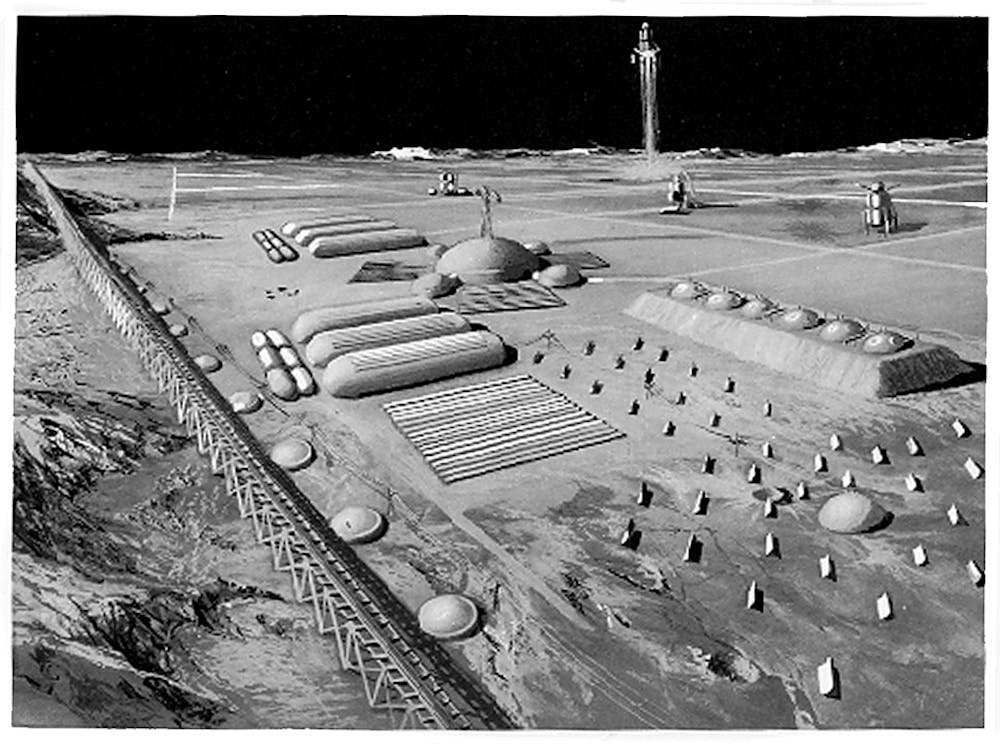
In Florida last week, Republican presidential hopeful Newt Gingrich asserted that, under his leadership, the US would establish a “permanent moon base” by 2020. What’s more, he claimed, “it will be American”, and at some point “those Americans living on the moon … can petition to become a [US] state”.
Of course, many will dismiss such claims as mere political grandstanding. No doubt there are also many weighty questions about the feasibility of Gingrich’s promises – not least technical considerations, logistical problems and the overarching spectre of continuing global and national financial uncertainties.

The (perhaps) much more achievable advent of commercial space tourism over the next decade or so – see the claims of companies such as Virgin Galactic – already raise broad ethical questions about our “place” in the universe. A permanent space “colony” ratchets up those issues very significantly.
But Gingrich’s proposal also raises interesting legal issues that go to the very heart of how humankind’s past, present and future activities in outer space are to be regulated.
The law of outer space has developed as a discrete body of law within general public international law. Since the launch of Sputnik 1 by the USSR in October 1957, this process of evolution has been remarkably rapid, largely driven by the need to agree on rules to regulate activities in this new “frontier”.
The international regulation of outer space is primarily governed by a series of United Nations Treaties, the first of which, the 1967 Outer Space Treaty, represents a framework instrument that sets out the basic parameters for outer space activities.
The treaty confirms that outer space is regarded in law as a “global commons” – an area beyond the territorial jurisdiction of any one state (country). Instead, it is an area belonging to humanity, which has a significant interest in ensuring that the commons is not destroyed (think, for example, of another commons, the high seas, and the international laws that strictly control pollution of that area).
The legal characterisation of outer space encompasses a fundamental rule – the so-called “non-appropriation” principle. In general terms, this confirms that outer space (which includes the moon and other celestial bodies) is not to be subject to ownership rights; it prohibits, among other things, any sovereign or territorial claims to outer space. (It also applies to claims made by private entities that they somehow “own” parts of space).
This principle has been widely accepted, even by the major space-faring states. In the period following the launch of Sputnik 1, there were no significant protests by states claiming its orbiting trajectory encroached upon their respective sovereign territories.
In essence, all countries had acknowledged the fundamental legal character of outer space differed from that of the airspace beneath it, and that states had the right to engage in activities in outer space without seeking the prior permission of any other state.
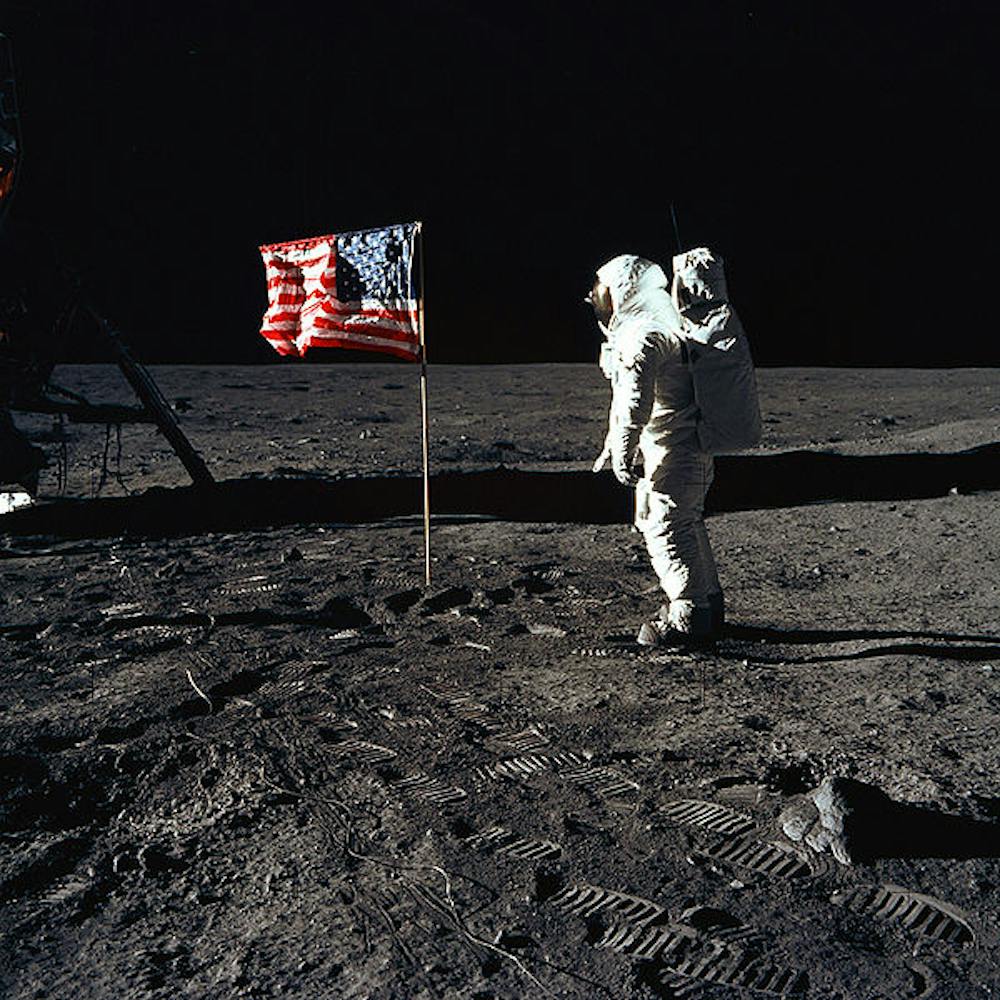
Indeed, by the time that the Outer Space Treaty was finalised, both major space superpowers of the time – the US and the USSR – had already been engaged in an extensive range of space activities. But neither country had made a claim to sovereignty over any part of outer space, notwithstanding the planting by the Apollo 11 astronauts of an American flag on the surface of the moon, which was simply a symbolic act of chest-beating.
Not only is this principle of non-appropriation well-accepted by all stakeholders, it also helps to protect outer space from the possibility of conflict driven by territorial or colonisation-driven ambitions. In this regard, it is a necessary requirement to promote the exploration and use of outer space for peaceful purposes.
This is all the more important given the military uses of satellite technology – already a sad but undeniable reality of contemporary conflicts. That, and the development of space weapons technology, makes outer space an even more strategic and significant area over which to otherwise exercise influence.
Just as the exploration and use of outer space is impacted by terrestrial concerns – including economics, politics, social and fundamental human rights – it also serves as a model for our future activities on Earth. There are many lessons we can learn from our (over)exploitation of Earth’s natural resources.
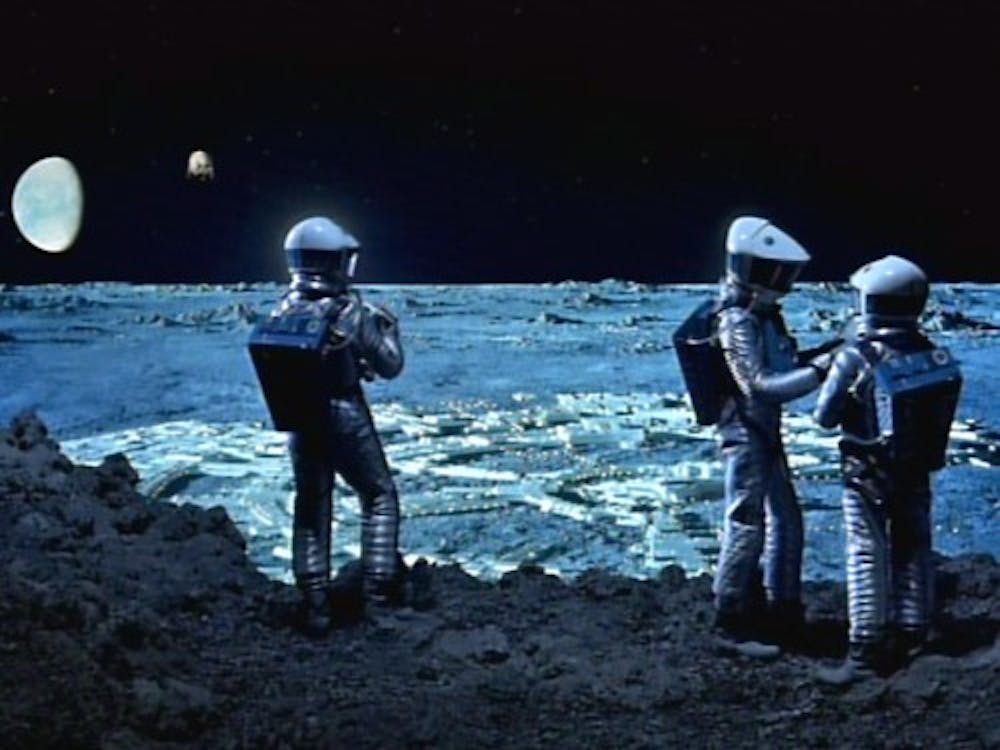
Should we adopt an “efficiency” approach to the exploitation of the resources of outer space – i.e plundering it as quickly as we can, irrespective of the longer-term consequences? Or, rather, should our future activities in outer space – and ultimately on Earth – be more considered and measured, taking into account the differing expectations and capabilities of the various countries on Earth?
Outer space belongs to all of us. Our use of it should reflect underlying notions of cooperation and shared benefit, which must remain as the cornerstones in this next phase of human achievement. International law has a crucial part to play in this regard.
Any suggestion that the legal framework is somehow irrelevant and that it is acceptable to claim national identity over a part of the moon threatens far more than Gingrich’s political rivals in tomorrow’s Florida primary.