Relations between Iran and the United States and its ally Israel have descended into the worst crisis in years. Concern is growing that the situation could quickly degenerate into conflict.
The origins of this latest spike in tension lie in the report on Iran’s nuclear programme by the International Atomic Energy Agency in November, 2011. That report expressed concern about aspects of Iran’s nuclear programme but reinforced the 2007 US intelligence assessment that Iran abandoned its nuclear weapons programme in 2003 and had not revived it.
This was confirmed by US Secretary of Defence, Leon Panetta, earlier this month.
Powerplay
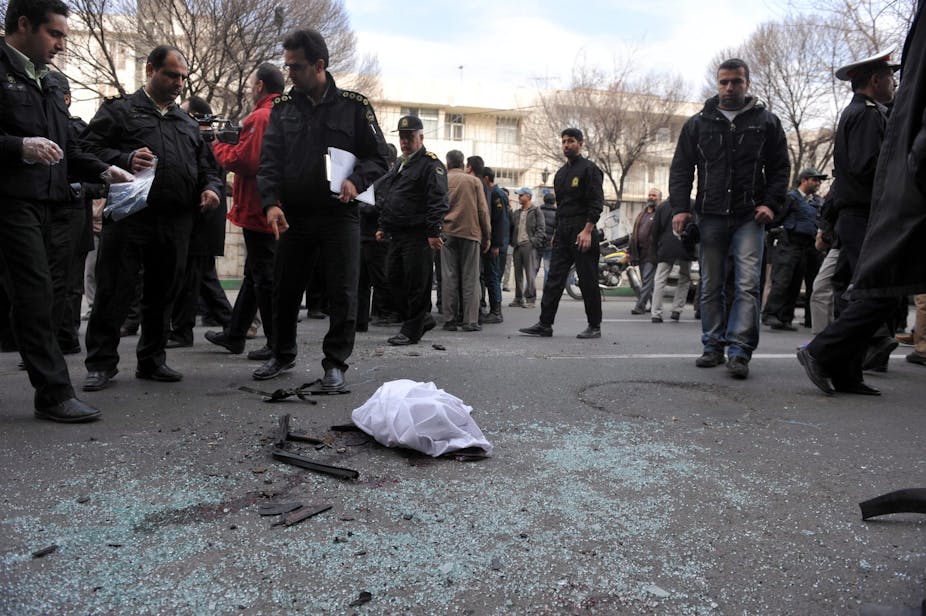
Iran is engaged in a struggle for regional hegemony with the US and Israel. Its nuclear programme has been subjected to a sabotage campaign, including attacks on individuals working for the nuclear establishment. The latest was the bombing death of a mid-ranking official at the Nantaz uranium enrichment facility. Israel has been accused of involvement in the campaign.

Tehran has responded aggressively. It announced its Ferdow plant near Qum had begun enriching uranium. Officials have vocally mused about closing the Strait of Hormuz, through which about 20% of the world’s traded oil supply passes. Iran has conducted military exercises in the Persian Gulf, tested a new short-to-medium range missile and threatened US warships should they approach the region.
All in the timing
The Obama administration’s handling of the crisis has highlighted the President’s weakness. Despite his desire to avoid action against Iran in an election year, domestic and external pressure is driving him to emphasise toughness while promoting negotiations, leaving the appearance of a weak and incompetent administration.
The issue is hostage to the election campaign. Obama reluctantly accepted drastic new sanctions adopted by Congress, which target Iranian’s Central Bank and are little short of an act of war. This has not been enough for Obama’s rivals and, with the exception of Ron Paul, Republican pretenders have attempted to outdo each other in their enthusiasm for war. Rick Santorum, for example, described the murder of Iranian nuclear scientists as “a wonderful thing”.
The neo-conservative network, long a supporter of war with Iran, has joined in with an article in Foreign Affairs magazine by Matthew Kreonig, “Time to attack Iran".
With friends like Israel …
Israel is the other threat to Obama’s Iran policy. In what may be an attempt to shore up his control of the far right in Israel and to undermine Obama’s re-election prospects, Prime Minister Netanyahu is threatening to attack Iran.
He argues that a nuclear-armed Iran would represent an existential threat to Israel and that Iran’s nuclear ambitions must be blocked. There is concern that Netanyahu will attack Iran or provoke Iran into violent reaction and draw the US in. Holding Netanyahu back is opposition from Israel’s security establishment.

The President, Defence Minister and former heads of armed forces Mossad and Shin Beit have all argued that, despite the rhetoric from President Ahmadinejad and other regime figures, were Iran to develop nuclear weapons, it would not attack Israel.
Unintended Iranian consequences
Iran’s ability to respond to this pressure is limited. Despite its bluster it is not militarily powerful. But pressure is building. Sanctions are beginning to bite and fear of an attack is growing. Parliamentary elections are due in March and the deteriorating economy poses a threat to the regime’s control. Ahmadinejad is struggling with domestic challengers and has shown himself willing to exploit confrontation with the US and Israel in order to strengthen his position.
Iran may initiate an assassination campaign in response to the murders of people involved in its nuclear programme. It could carry out its threat to disrupt oil supplies. While the regime has not decided to develop nuclear weapons, it is seeking the option of developing a weapon if needed. Tehran has indicated it is ready to resume negotiations over its nuclear activities with the five members of the UN Security Council and Germany (P5+1).
The campaign against Iran may, however, convince the regime that the West is not serious about negotiations, and could lead it to authorise nuclear weapons development.
Jaw jaw not war war
While Ahmadinejad and Khamenei represent a detestable regime and there are grounds for concern about Iran’s intentions over nuclear weapons, enhanced diplomacy rather than military action is needed. Experts in the US and Israel have warned that an attack would ultimately be unsuccessful.
Sanctions also have little impact. When sanctions started, Iran had no centrifuges. Sixteen years and many sanctions later, Iran has about 8,000 operational centrifuges and a supply of low enriched uranium. The danger is that key people in Washington and Tel Aviv are not listening.
Join the conversation
Comments (16)
wilma western
(logged in via email @bigpond.com)
I am totally amazed that the 4 blokes who have commented so far can have such an insouciant attitude to possible war with Iran when the schemozzles in Iraq and Afghanistan are still unfolding and US government debt is in the trillions . Several times over the last decade tensions between Iran and Israel plus the US have come to a head with dire warnings and much urgings from pro- Israel lobbies - see Scott Ritter's book Target Iran (2006) for example. Elections in both the US and Iran probably…
show full comment
James Walker
(logged in via Facebook)
Why are we like this? Because we've heard it all before. Iraq is a perfect example - a decade of 'talks' for what? Millions dead under Hussein, and we end up having a war anyway. If you can't avoid the war, then aim to (i) avoid the atrocities that occur beforehand, and (ii) learn The Lesson of Munich: never give a dictator the resources that allow them to make an upcoming war *worse*.
wilma western
(logged in via email @bigpond.com)
The conduct and outcome of Iran's elections are a vital aspect of this . If Ahmedinejad is exploiting bellicose talk from Israel ,US politicians and European leaders to justify nuclear deterrence policies and crackdowns on Opposition groups , it would seem that anti- Iranian tactics could be counterproductive if the aim is to decrease the power of the present Iranian regime. If the aim of sanctions is to undermine the regime economically as well as politically ,won't that depend on whether China and India take the opportunity to increase their oil imports from Iran and reserves of cheaper Iranian oil? If the embargo results in higher oil prices from the Saudis delivering via their pipeline to European customers, how will that help in the current financial crisis? Quite a few issues needing deeper thought and better information.
Yuri Pannikin
Director (logged in via email @gmail.com)
Anthony wrote: "While Ahmadinejad and Khamenei represent a detestable regime and there are grounds for concern about Iran’s intentions over nuclear weapons, enhanced diplomacy rather than military action is needed."
This sort of academic double-speak is of no value at all. Diplomacy does not work with these despotic regimes. Diplomacy has been tried endlessly with Iran . . . and nothing changes.
Yes, they welcome talks with the Security Council because it makes them look like they are listening and cooperating. Nothing will change.
Frankly, I am amazed that this sort of naive, anti- US and Israel nonsense is taught at university level.
Mark Carter
(logged in via Facebook)
While I am firmly on the side of robust action on Iran to thwart their nuclear religious superpower ambitions I can't support calls like these for censorship of opposing views. Comparing academics who's job it is to consider all the arguments to openly treasonous direct action by unions is totally wrong.
Our democracy and our freedoms are our strength- if we can't win an argument through the quality of your case then we don't deserve to win.
It is true that the debate is a bit one-sided right…
show full comment
Yuri Pannikin
Director (logged in via email @gmail.com)
I was not suggesting censorship, even if it was possible. What I was suggesting is that lecturers in tertiary or any other teaching environment should present both sides of controversial subject matter.
The idea that balance is achieved by various lecturers spruiking their own socio-political *opinion* seems about as far away from genuine academic teaching and learning quality as is possible to imagine.
James Walker
(logged in via Facebook)
agree with most of what you say, but mocking the article =/= censorship.
James Walker
(logged in via Facebook)
Yuri - during the Korean war, dock workers went on strike in a deliberate effort to stop supplies being sent to Australian troops. They still haven't been punished. When active treason is normalised, why are you surprised that licking the boots of tyrants is still in fashion?
Yuri Pannikin
Director (logged in via email @gmail.com)
I hear what you're sayin' James.
Mark Carter
(logged in via Facebook)
Well lets face it, its either conventional war with Iran soon or its nuclear war with them later.
The ideas that the current Iranian regime either won't develop nukes as they claim or when they do they won't use them are ridiculous. The whole Middle East will be held hostage by a nuclear Iranian dictatorship theocracy.
I don't buy any of that 'the us and israel have nukes so why shouldn't Iran' claptrap. Iran is run by a coven of religious psychotics, letting them develop nuclear arms would be a disaster for the planet.
My fear is that the democratic world has lost its nerve and capability to deal realistically with this thanks to the Iraq fiasco. I guess we will find out.
James Walker
(logged in via Facebook)
@Mark - a third option is that Iran disintegrates from internal stresses before a war becomes inevitable. Of course, a nuclear power in a state of anarchy isn't acceptable either: but given the ease with which viruses can take out their computers, I suspect the spooks can keep the problem under control. If not? Oh well, no one will miss the current regime. Replacing it with another islamic state won't solve anything though: the smart thing would be to require a return to the laws of one of the historic Persian empires (wtf are we calling the place Iran? They chose that name to suck up to the *Nazis*, of all people! Persia is a name with a glorious heritage): religious freedom was practiced by the Achaemenid empire, et etc.
Mark Carter
(logged in via Facebook)
I'm never in favour of approaches based on crossing our fingers and hoping for the best. While it would be nice if Iran collapsed under the weight of its own nonsense I don't think gambling on it happening before they get the bomb is very prudent.
By the very nature of the enterprise its hard to say one way or the other wether the covert stuff is having sufficient effect. (I don't agree with US Republican imbecile hopeful Santorum that the solution is to make the covert actions overt "to show them we mean business"!)
James Walker
(logged in via Facebook)
Luck doesn't enter into it. Either Iran collapses (all good), behaves (incredibly likely, but good), starts negotiating in good faith (unlikely, but good) or starts making real progress on nukes (incredibly bad, we invade). All options are covered.
The US has over half a century of nuclear knowledge to fall back on, they will find it easier to judge Iranian progress than the Iranians will.
Benjamin Barzel
(PhD Candidate in Neuropharmacology at Baker IDI Heart & Diabetes Institute)
Excuse me Anthony but the capital of Israel is Jerusalem, not Tel-Aviv. I'd expect an international studies lecturer to be aware of such sensitivities.
Christopher Hayward
Self Employed (logged in via email @internode.on.net)
In ten years time Israel will be another nutty psychotic theocracy anyway so let em nuke it out last one standing gets a radioactive parking lot and we wont have any more of our people die over that pathetic region.
Let them fight their own wars we can still get the oil afterward so whats the problem.
James Walker
(logged in via Facebook)
unlikely - Israel's been a democracy for two generations, while under pressure that make the war on terror look like a side show.