The Conversation
Subscribe
  • Academic rigour, journalistic flair
  • For curious minds
  • Expert news and views
  • Debate and ideas
  • From the curious to the serious

Hot Topics

  1. Gay marriage
  2. Australia in the Asian Century
  3. Convergence review
  4. Federal Budget 2012
  5. War on drugs
  6. Medical myths
  7. Bob Brown
  8. Square Kilometre Array
  9. Explainer
  10. Transparency and medicine

Does religious faith make people healthier and happier?

As immigrants from around the world have joined Australia’s cultural mix, an inevitable rise in religious diversity has followed. But has this made for a healthier society? A recent VicHealth study showed that while religion can protect against illness, religious discrimination can harm health. This…

Gf8c8jdf-1324442943
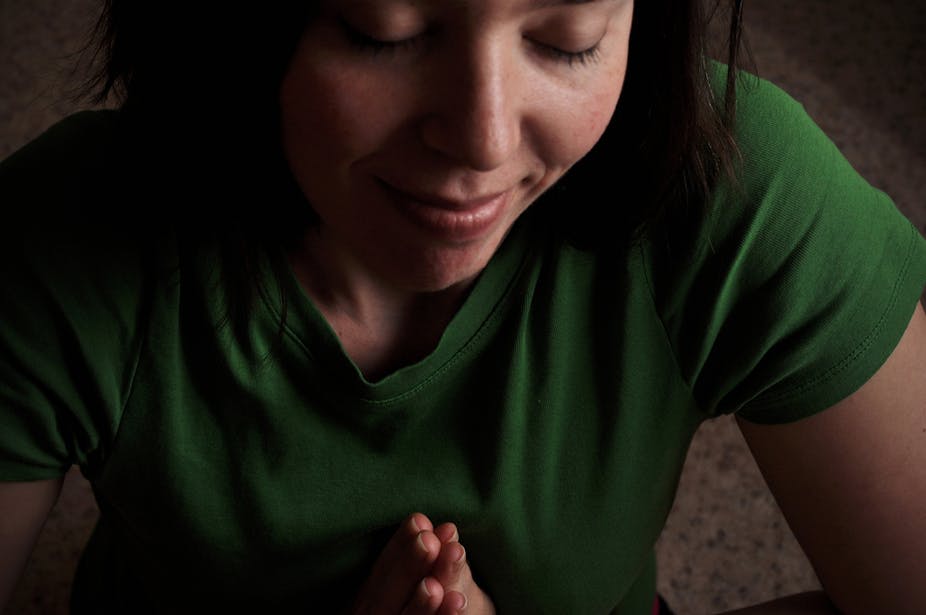
The findings of the study don’t suggest that religion should be adopted as a tool for promoting health. Gauri Ma

As immigrants from around the world have joined Australia’s cultural mix, an inevitable rise in religious diversity has followed. But has this made for a healthier society? A recent VicHealth study showed that while religion can protect against illness, religious discrimination can harm health. This has led to a renewed call to embrace and respect religious diversity.

Most Australians still adhere to Christian beliefs, but people who follow the Buddhist, Islamic and Hindu faiths are increasingly making Australia their home, expanding the religious landscape.

The Australian government has signed various international human rights agreements protecting religious freedoms, including the 1948 Universal Declaration of Human Rights. And religious discrimination is unlawful in Australia under the Human Rights and Equal Opportunity Commission Act of 1986.

Despite these legal protections, members of some religious groups living in Australia are unable to express their right to religious freedom in their daily lives. Muslim Australians, in particular, have faced higher levels of religious discrimination in recent years. Discrimination against Jewish Australians also occurs with worrying frequency.

Prayer beads Moe M

A study exploring the link between religion, religious discrimination and health was undertaken as part of VicHealth’s broader program of research into preventing race-based discrimination. It involved comprehensively reviewing the scientific literature – both from Australia and internationally – on the links between religion and health, as well as religious discrimination and health.

The findings suggest that religious beliefs and practices can protect the health of people of faith, with the link being most evident between religion and mental health. Religious beliefs and practices may protect against depression and reduce the risk of anxiety and of suicide. Religious people are also less likely to risk their health with alcohol, drugs and tobacco.

The link between religion and physical health isn’t as clear, but there’s evidence that people who regularly participate in religious activities may live longer.

It’s important to be clear that the good health associated with religion only occurs when people are able to exercise control and choice over their beliefs and practices. When people practice religion as a result of external pressures, and not internal beliefs, their health may actually be negatively affected.
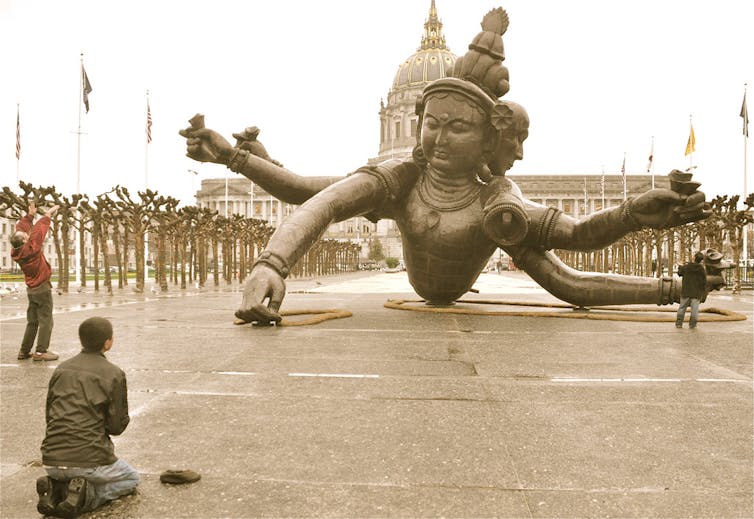
Julie Blaustein

The reasons behind the religion and health link are not well understood, but there’s some evidence that religious practices (like praying) can help to reduce stress. Also, when people are part of an organised religion, they generally have a strong social network, which benefits both physical and mental health.

Religion can also be associated with positive emotions, including a sense of optimism and purpose to life, and can provide a healthy way of coping with stress. Attendance at places of worship seems to be particularly important for physical health, as it may keep people active and reduce the risk of physical disability.

At the opposite end of the spectrum, it’s quite clear that religious discrimination has the potential to make people unwell. Such prejudice appears to be associated with anxiety, depression, distress, sub-clinical paranoia and decreased life satisfaction. Experiences of religious discrimination may also prompt people to take risks with their health – manifest as smoking and alcohol or drug abuse.

Fr Lawrence Lew, O.P.

There are a number of reasons why discrimination is bad for health. It can produce negative emotions such as stress and fear, and it can cause people to adopt risky coping strategies and can affect individuals’ self-esteem and sense of belonging.

Crucially, discrimination can restrict people’s access to resources such as housing, employment and education – all of which are vitally important for health and wellbeing. At its worst, discrimination takes the form of physical attacks or violence, which clearly impact on the physical and mental health of those who are targeted.

The findings of this study don’t suggest that religion should be adopted as a tool for promoting health (as has been the case with exercise and a nutritious diet). Rather, they highlight the importance of ensuring all Australians have the opportunity to practice their faith, without discrimination, and that people aren’t excluded from society because of their religious beliefs. The findings also suggest that religious beliefs and practices may need to be better accommodated in schools and workplaces.

Perhaps most crucially, the findings highlight the importance of improving inter-faith understanding and dialogue in Australia – not only from a human rights perspective, but as part of a broader health promotion agenda.

Join the conversation

Comments (23)

  1. Permalink
    rob alan

    rob alan

    BotWatch (logged in via email @orakk.net)

    Question seems foreign to me.

    Where I live, in the real world. Evidence suggests bad people do bad things irrelevant of belief systems. Evidence all around us also suggests good people do good things irrelevant of chosen or not belief systems.

    I'm a content atheist living amongst a varied bunch of content 'of & not of faith' folks who all kick in helping the local community via voluntary endeavors. Survival as a community trumps talkFest out our way be my guess.

    1. Permalink
      Stuart Smith

      Stuart Smith

      (logged in via Facebook)

      I must contend on that Rob. All people adhere to a belief system or world view of some sort that will define meaning; provide a code of ethics or morality in some form; and in varying degrees moderate, guide or initiate behaviour. Whether someone does something good or bad in their mind will be framed by this world view and has a near absolute moral or legal value according to our criminal or civil laws; laws that are themselves the product of multiple belief systems. Even the absence of a defined…

      show full comment

  2. Permalink
    Peter Miller

    Peter Miller

    (logged in via email @perpetualocean.com)

    "The link between religion and physical health isn’t as clear, but there’s evidence that people who regularly participate in religious activities may live longer."

    That's a fairly contentious speculation. Source?

  3. Permalink
    Roger Powell

    Roger Powell

    Engineer (Retired) (logged in via email @exemail.com.au)

    This is not the first time I have heard the story that religions make people happy. That may or may not be true but it is no reason to believe that any of the religious beliefs the 'happy ones' espouse are not just a pack of nonsense.

    I've read data elsewhere that the US prisons are heavily over-populated with christians and other religious folks, whilst Atheists (15% of the US population) form less than 1% of the prisoners. So, by correlation, religion must not only make people happy, it also makes them steal and rape.

    1. Permalink
      Peter Miller

      Peter Miller

      (logged in via email @perpetualocean.com)

      There's also a fairly significant 'correlation does not equal causation' problem in a claim like that. To be able to claim that life expectancy and health are tied to religion you have to rule out hundreds of other factors: diet; lifestyle; racial characteristics; genetic pre-disposition (religion tends to run in families) etc. My feeling is that if the authors had any good science to support this, they'd have properly attributed it.

      Further to that, 'religion' is a BIG catch-all... Does it include Paganism? Rastafarianism? Sufism? Satanism? Scientology? Can I just have ANY religion and be assured of a longer life?

      And further to THAT, why does it matter anyway, when you're going on to eternal life?

      1. Permalink
        Dustin Welbourne

        Dustin Welbourne

        (PhD Candidate Evolutionary Ecology, Biogeography + Science Communicator at University of New South Wales)

        I interviewed an experimental psych working on wellbeing a few months back about this very issue. He had suggested that there does appear to be an increase in psychological wellbeing in people that are “religious”. However, he went on to state that it does not appear to be the religion but merely the belief in something greater than oneself as they have found that atheistic people have improved wellbeing when they also identify with a grandeur in the world.

        The ability to find awe in a sunset, I believe was the example he used at the time. Thus, from his point of view wellbeing is linked to belonging or being a part of something larger.

        It is certainly an interesting topic area.

        1. Permalink
          Peter Miller

          Peter Miller

          (logged in via email @perpetualocean.com)

          When it's framed in that way - 'the belief in something greater than oneself' - it does speak to a more substantial idea. Unfortunately, you won't ever get people with a religious agenda putting it like that because it allows that atheism and other rational appraisals of the universe have value.

          I'd be willing to speculate that even people who are just happy and content with their place in the order of things live longer and are healthier - no matter if they're religious or not.

          1. Permalink
            Dustin Welbourne

            Dustin Welbourne

            (PhD Candidate Evolutionary Ecology, Biogeography + Science Communicator at University of New South Wales)

            Certainly.

            As mentioned above, the correlation/ causation problem is ever-present in assessing these types of questions. Attempting to disentangle them is certainly not easy. I suspect that neuroscience as it grows will likely be the great ‘un-picker’ in many of these questions.

      2. Permalink
        Roger Powell

        Roger Powell

        Engineer (Retired) (logged in via email @exemail.com.au)

        Further to that again, why would a life spent prostrating oneself in fear of one's god make anyone happy? All that pleading with god to forgive all your sins, worried that you may end up in hell.

        So where does the happiness and good health come from?

  4. Permalink
    Jay R

    Jay R

    Mining Engineer (logged in via email @hotmail.com)

    From my experience, religious faith removes the science and fact around becoming healthier and replaces it with chance.

    Chance that the particular religion you follow encourages things to promote healthy and happy living. Pick any good or bad practice and there will be a religion that supports it.

    The term itself - 'faith', means believing blindly without reason. So even if statistics show religion to be improving health, I could only put it down as good luck. Previous centuries have seen the same religions hold back advancements in medicine. Now that most religions have the common sense to listen to medical science and follow it, do we credit this to religion?

    Perhaps the reason we see more mental health issues in non-religious people is due to common need for religious people to attack or at least harass the non-believers in order to spread faith. There is little support from society for those who choose to be atheist.

  5. Permalink
    John Harland

    John Harland

    bicycle technician (logged in via email @gmail.com)

    In my experience, and I cannot cite wider study, organised observance of religion tends to happen through family pressures.

    It may be that it is the intact family that is the crucial issue here. It may be that the health outcome is more closely correlated to supportiveness of the family than to religion.

    Some religions are a genuine attempt to understand the world around us. Not in the same way as science, but deserving respect in their search.

    Others insist on blind faith in doctrine - very similar to the way science is often taught in schools.

    Is it the people who accept in blind faith who are healthier, or those who are searching for meaning?

    To what degree can we separate faith-base religion from religious prejudice?

  6. Permalink
    rob alan

    rob alan

    BotWatch (logged in via email @orakk.net)

    'All people adhere to a belief system or world view of some sort that will define meaning; provide a code of ethics or morality in some form; and in varying degrees moderate, guide or initiate behavior.'

    Straight off topic. Question was, 'Does religious faith make people healthier and happier?"

    'or world view' is not the question. On despot behavior being 'bad' we are in my community all agreed? For any one has an informed world view contentment is difficult whether of or not of faith.

    We grow and share home grown food, alt power is big round here which all helps propagate contentment I think. those of us on pensions but able help others around us pending on latent skill base. Is all no big deal and helps with personal worth. Wealth is irrelevant also.

    Excepting outside events of which we have little say in, I do not lie when describing my local community as being a content community all round, regardless of belief/no belief in (*).

    1. Permalink
      Stuart Smith

      Stuart Smith

      (logged in via Facebook)

      It’s not off topic in the sense that I was addressing your opening statement of “Evidence suggests bad people do bad things irrelevant of belief systems”. In making your statement you provided no evidence, only a general assertion. Even that assertion was philosophically flawed. The academics contributing to this article have a wealth of data to draw from and from that would be able to identify patterns and trends that have led them to their conclusion. An anecdote describing the community you…

      show full comment

  7. Permalink
    rob alan

    rob alan

    BotWatch (logged in via email @orakk.net)

    'religious beliefs and practices can protect the health of people of faith'

    Never heard of faith full suicide bombers Stuart? Never been abused by a trusted(tm) member of catholicism? 'In god we trust', fear this. The crusades? Happy happy happy.

    To discount my 50+ years worth of observations as irrelevant smacks of the sort of contempt reasoned atheists have put up for centuries. I present an actual example and you say bullocks, hilarious.

    1. Permalink
      Stuart Smith

      Stuart Smith

      (logged in via Facebook)

      Now who is going off topic Rob? You have switched the focus from the premise of the article [that religious beliefs and practices can have a positive effect on mental health primarily] to the failings of religious practitioners and various religions. If your sarcastic slant is that religious belief only causes pain and unhappiness [and therefore poor health] then I suggest you say so and present better evidence. You point to extremes of behaviour and then generalise them to apply to all religious…

      show full comment

  8. Permalink
    Joseph Bernard

    Joseph Bernard

    Director (logged in via email @parasoft.com.au)

    Religion is a personal choice and right, but it affects society at a group level. Not all religions are the same and happiness is relative.. What makes an individual happy within their lives may not make the rest of society happy..

    Religious rights are a person’s right as long it stays within our laws of our land.. When these "religious" rights include the desire to implement "Sharia" law for example, then what? Will this then lead to a happier society? Recent example of a young man beaten with electrical cable by men who broke into his home in the middle of the night as part of a sharia punishment for drinking.

    Before we support any school of thought we must understand what that school of thought is promoting, especially at a community or group level. We may just find that we are enabling a divisive cult

  9. Permalink
    John Harland

    John Harland

    bicycle technician (logged in via email @gmail.com)

    Was the break-in sanctioned by the local religious authorities or was it vigilantism?

    1. Permalink
      Joseph Bernard

      Joseph Bernard

      Director (logged in via email @parasoft.com.au)

      From the report that I had read, the man that was attacked had been a recent convert to islam ( a few months) and had a friday night out with His friends where He had been drinking. The Attack was reported to be a sharia court punishment where the man had a number of lashes using cord off his computer, but the young man has refused to discuss the attack.

      When you understand that Muslims hold Sharia Law (so called Law of God) above the Law of the Land then see that this is an accepted punishment. This is just one of the doors we open. Sharia law allows for slavery and sex slaves, also the more commonly know cutting off of hands and stoning. .. The only thing stollen was the electrical cord.

      Are you aware that there has been a number of attempts to hand Sharia law recongised in this country?

  10. Permalink
    John Harland

    John Harland

    bicycle technician (logged in via email @gmail.com)

    Whilst I share your unease, it is worth pointing out that other groups hold their own values above the law of the land.

    Traditional European-Australian culture values sticking by your mates and not dobbing on people well above law-abidance.

    1. Permalink
      Joseph Bernard

      Joseph Bernard

      Director (logged in via email @parasoft.com.au)

      May i say that "Sticking by your mates" is not cited as a religious law and people generally understand that "Sticking by your mates" will not protect you when Breaking the Law.

      Topic is about happiness and does Religion improve happiness.. There is a question about religious rights and my point was "Religious rights are a person’s right as long it stays within our laws of our land.."

      Should we protect a person's right to be Religiously happy to stone a women to death for adultery or kill a person for blasphmey?

  11. Permalink
    John Harland

    John Harland

    bicycle technician (logged in via email @gmail.com)

    I think this risks splitting hairs but for many Australians of my generation those values were held higher than their religious beliefs.

    And it did include when you were breaking the law, even serious breaches.

    Australian law has been ridiculously tolerant of men who have killed their "adulterous" partners. Not by stoning, to be sure, but by almost every other conceivable means.

    And although it wasn't a killing, I was bashed once for not taking someone's football team seriously. That was seen as blasphemy.

    We need to deal with the challenges of people's adherence to codes they hold to be above the law. But let's keep it real. We won't get far by being hypocritical about our own history and society, or trying to draw too sharp a division between religion and other stronly-held beliefs.

    1. Permalink
      Joseph Bernard

      Joseph Bernard

      Director (logged in via email @parasoft.com.au)

      Hopefully we are working towards a better society and we learn from the past so that we do not repeat the sins of the past. Maybe we can ignore all the detail and hope that it all comes good or maybe we can just apply critical thinking to better understand what we are doing so that the light at the end of the tunnel is not an impending Locomotive.

      Of course we can trust that everyone is doing the right thing and believe that the GFC will not happen again.. or maybe watch 'inside job' and wonder how long it will take to crash again. Religion is no different. Better face the ugly truth rather than pretend that everything is ok.