


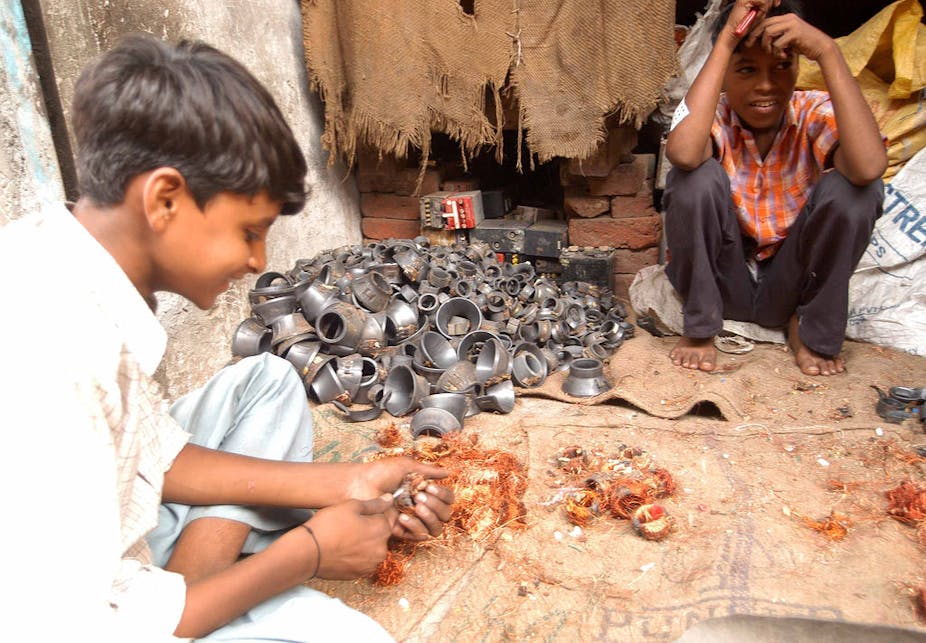
E-waste from used electrical and electronic gadgets such as desktop computers, laptops and iPhones is one of the fastest growing waste streams in the world. Rapid uptake of information technology around the world coupled with the advent of new design and technology at regular intervals is causing the early obsolescence of many such gadgets.
We all know the benefits of electrical and electronic gadgets. But we don’t know nearly as much about the adverse effects they have once we throw them away.
In the United States, producer of the largest amounts of e-waste in the world, it is estimated that over 100 million computers, monitors and televisions become obsolete each year. That amount is growing every year.
The European Union generated an estimated 9.3 million tonnes of e-waste in 2005. This included 40 million personal computers and 32 million televisions.
Each year over 130 million mobile phones in the United States and over 105 million mobile phones in Europe reach the end of their life and are thrown away.
E-waste has become a serious social problem and an environmental threat in many countries. The United Nations estimates that collectively the world now generates 20 to 50 million tonnes of e-waste every year. By 2020, it estimates e-waste from old computers in South Africa and China will have jumped by 200-400% and in India by 500% from 2007 levels.
Most of the used electrical and electronic gadgets in Australia end up in landfill. The Australian Government reported that in 2007-08, 31.7 million new televisions, computers and computer products were [sold in Australia]. In the same period, 16.8 million of these items reached the end of their life: 88% went to landfill and only 9% were recycled.
By 2027-28, the government estimates 44 million televisions, computers and computer products will be reaching the end of their life.

E-waste contains more than 1,000 different substances. These include toxic metals such as lead, arsenic, cadmium, hexavalent chromium and flame retardants used in the plastics.
There are growing concerns that most of the e-waste generated in developed countries is ending up in developing countries. Some of the e-waste collected for recycling in Australia may end up in these countries (though this may be resolved once new regulations become effective).
These countries are economically challenged and lack the infrastructure for environmentally sound management of e-waste.
The toxic waste causes adverse socio-economic, public health and environmental impact. Research studies have identified increased levels of trace elements such as lead, zinc, silver, cadmium and copper and a number of other chemicals in these environments. On the positive side, e-waste also contains valuable materials such as gold and palladium which can be recovered.
Asia – including Philippines, Hong Kong, Indonesia, Sri Lanka, Pakistan, Bangladesh, Malaysia and Vietnam; and Africa – including Nigeria, Kenya, Senegal and Ghana – are the latest dumps for e-waste generated in advanced economies.
Managing e-waste in these countries is not easy: most have neither a well-established system for separation, storage, transportation, treatment and disposal of waste nor any effective enforcement related to managing e-waste. Most dispose of e-waste alongside domestic waste in open dumps, causing severe damage to the environment and human health.
Threats from the ever growing e-waste stream could only be minimised by producing less of it: we need to find alternatives to toxic materials. Good examples of this include lead-free soldering and the development of halogen-free brominated flame retardants in electronics manufacture.
As consumers we need to make our contribution to producing less e-waste by practices such as sustainable consumption and 3R (Reduce, Reuse, Recycle). Don’t buy what you don’t need, and recycle devices that have reached the end of their life.