
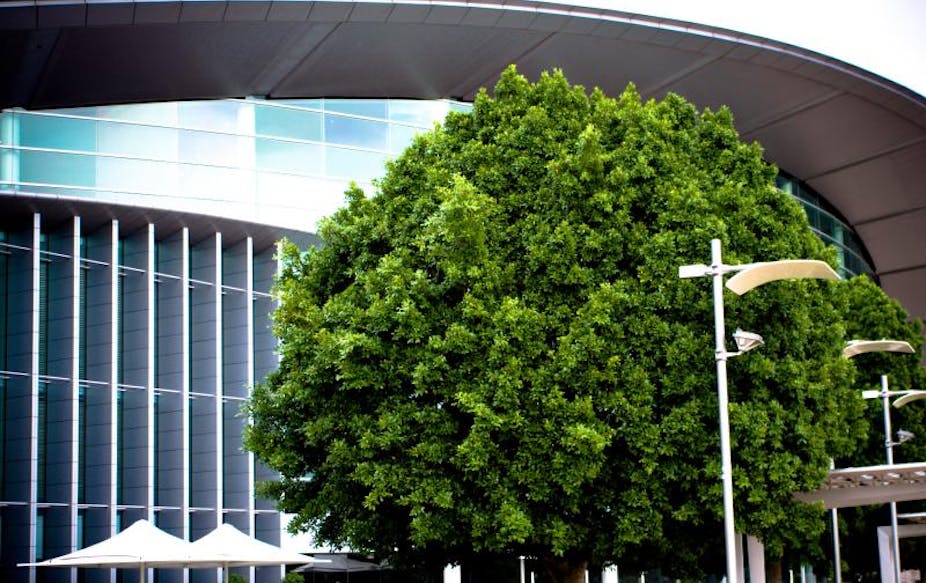
Perhaps it is a pity that so many Australians think of our parks, gardens, streetscapes and urban landscapes only in terms of their aesthetics. While green spaces are beautiful and decorative, these attributes can mask the many functions vegetation serves in cities, to the point where its economic, social and environmental benefits are overlooked. Yes, trees are beautiful; but more than that, they save our cities a lot of money.
Cities are biodiversity hot spots because of the variety of habitats available in public and private open space, including front and back yards. Urban landscapes and trees have been wonderful but silent assets in our cities for decades and even centuries.
They are major urban infrastructure assets. I often hear it said that; “There are better things to use water on than plants and gardens”, but I challenge you to name them. What else delivers so many benefits immediately: benefits that last centuries into the future, which prolong healthy lives and make cities both sustainable and livable?
At a time of climate change, it is worrying that both private and public open spaces are threatened by urban renewal and development that puts at risk long-term sustainability. In many of these developments there is insufficient open space - public or private - to plant large trees, and the opportunities for vegetation to ameliorate the heat island effect, lower wind speed, provide shade and reduce energy use are lost. This affects the economic viability of such developments, as well as its long term environmental sustainability.

The shade provided by trees drops temperatures by up to 8°C: there is real economic value in that. Shade can reduce air conditioner use by 12-15%, which also decreases carbon emissions from our largely brown-coal-generated electricity.
When 11 million trees were planted in the Los Angeles basin, it saved US$50 million per annum on air conditioning bills. Large trees were removed from school grounds in the name of safety after the Black Saturday fires, without thought of the shade they provided. Consequently, large shade sails had to be provided to protect students from excessive summer sun.
It is more difficult to place a value on reduced wind speeds (up to 10%) due to the presence of vegetation, or on protection that trees provide from hail. However, we do know that under climate change winds will be stronger and that severe storms will be more prevalent. Indeed, Victoria has already suffered the effects of several major wind and hail storm events over the past few years.

Urban vegetation also removes atmospheric pollutants. It was calculated that the vegetation of New York provided US$10 million of benefit in pollution removal in 1994. Sadly there are few similar studies for Australian cities. However in the only study of its kind, economists found that each Adelaide street tree provides a minimum annual benefit of $200 per year and that it was an under-estimate of the real value.
Vegetation also holds and absorbs water during more intense rainfall events - unlike concrete and paved surfaces. The economic value of reducing localised flooding could be substantial.
Vegetated landscapes, especially those containing trees, improve human heath, extend life spans, reduce violence and vandalism, and lower blood pressure. Vegetation humidifies the air, easing breathing and reducing the need for medication in those with respiratory difficulties. In reducing the urban heat island effect, trees can also substantially reduce the excess deaths that occur, predominantly among the elderly, during heat waves. It is often forgotten that the fires of Black Saturday killed 172 people, but the heat wave surrounding it was responsible for 374 deaths.
There is ample evidence that treed landscapes foster both active and passive recreation. Green and leafy environments will be one of the vital strategic tools in dealing with children lacking exercise and becoming obese, encouraging an ageing population to exercise and curbing ever-increasing health costs. The human health benefits can save society a truck-load on medical and social infrastructure costs.

Melbourne is one of Victoria’s biodiversity hot spots. The parks, gardens, streets and front and backyards provide a very diverse range of plant species that generate a myriad of habitats and niches for wildlife. High density urban developments and inner city renewal make it virtually impossible to grow trees in places that were once green and leafy. We rarely ever see the real costs of such developments.
In the past decade tree populations in many Australian cities have declined, particularly with the loss of private open space. While the costs, damage and nuisance values attributed to trees are widely known, the benefits they provide are often subtle and under-appreciated.
Urban vegetation provides economic and ecological services to society. They are assets which warrant the expenditure of resources such as labour, energy and water. Such expenditure is not wasted: trees and urban landscapes provide far more economically and ecologically than they use. In any comprehensive and fair calculation urban trees and landscapes are worth more than they cost.