The Conversation
Subscribe
  • Academic rigour, journalistic flair
  • For curious minds
  • Expert news and views
  • Debate and ideas
  • From the curious to the serious

Hot Topics

  1. Gay marriage
  2. Australia in the Asian Century
  3. Convergence review
  4. Federal Budget 2012
  5. War on drugs
  6. Bob Brown
  7. Explainer
  8. Square Kilometre Array
  9. Medical myths
  10. Transparency and medicine

Gentlemen’s rules are out, scientists: it’s time to unleash the beast

War has been declared, and those who recognise the fundamental role science plays in everyday life need to decide where they stand. Building on the budgetary and rhetorical slights of recent months, rumours are now afield that the Gillard government is looking at cutting the National Health and Medical…

Flickr_image_2
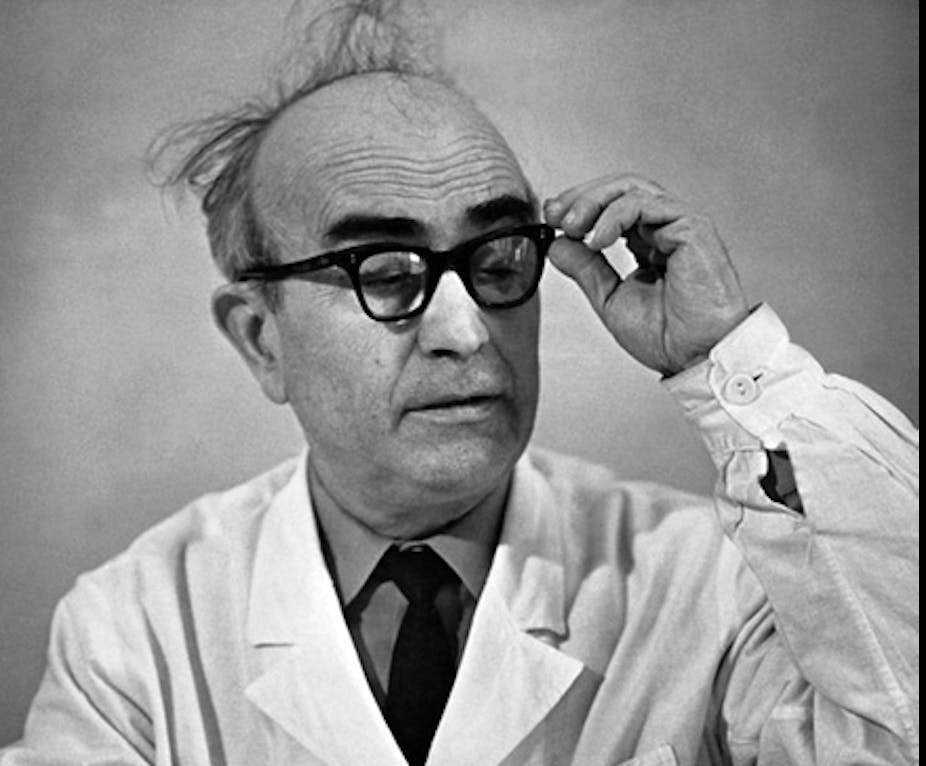
Getting the results science needs might mean no more Dr Nice Guy. Ion Chibzii/Wikimedia Commons

War has been declared, and those who recognise the fundamental role science plays in everyday life need to decide where they stand.

Building on the budgetary and rhetorical slights of recent months, rumours are now afield that the Gillard government is looking at cutting the National Health and Medical Research Council budget by $400 million.

Let’s hear that again. Four. Hundred. Million. Dollars. This is not blue sky research, not theoretical explorations at the edges of science, but health and medical research. Could any science be more obviously in the public interest?

The more politically aware of our colleagues have already suggested that this could be an ambit claim, the government threatening lots before taking only a little. This is one of the oldest tricks in the politics of budgeting, and it should be called as it is: simply appalling.

But here’s the thing: rather than whine about how unfair this is, bang our fists on our lab benches in outrage – and then dutifully accept the crumbs we’re given – how about we act?

Science is political. The science we do is inherently shaped by the funding landscape of government and the problems and issues of society. This means that to have any influence on how science is organised and funded in Australia, we as scientists and science communicators must act in ways that matter in the arena of politics.

But our scientists and science communicators are a remarkably polite species, playing – and self-limited – by the rules and niceties of science.

The Inspiring Australia Conference held in Melbourne last week was yet another in a long line of science communication conferences that exemplified this trait.

We are well-meaning and passionate people, but hamstrung by an inability to force our political and industrial leaders to support the strong role for science in Australia that mainstream Australians want.

Our scientists and science communicators need to play on the political stage. But you can’t expect to get traction playing only by the “gentlemanly” rules of science. Others don’t. So what can we do?

1) Get involved in opinion writing, and support those who do. Get your stories and arguments out there in The Conversation, The Drum or Crikey, or in any newspaper in Australia. Don’t aim for just the stuff you read, aim for the stuff read by voters in key marginals. Tailor what you’re writing for that audience.

2) Get out there on radio and TV. And again, don’t just go to the ABC, go to as many different outlets as possible. You might despise the stance of any particular shock jock on any number of issues, but if you can get to their listeners then that is a win. You never know – on your particular issue, the shock jock might agree with you.

3) Use stories. One image of a sick child suffering is a very powerful tool, but a more positive version is to play on success stories, “I had X, but research into it improved my life”. People love stories, and we communicators know this very well, as do those who communicate against us.

4) Write letters to government departments, questioning the implications of any funding decision. Follow Bernard Keane’s advice and be creative in your questions. For example, you might write to the Minister for School Education and ask them how a decline in medical research might affect childhood obesity and schooling policies.

5) PhD students should be trained in a culture that recognises that alongside scholarly communication with peers, their work belongs in a discourse with society. Supervisors should make it clear to students that they must know not only what is happening in the Advanced Journal of X, they must also pay some attention to each and every media outlet.

Of course we recognise that not all scientists and science communicators are able, motivated or even allowed to do this. Many are located in organisations that dictate the extent and manner in which they can express personal opinion in the public sphere.

So it is time to draw on colleagues and supporters in other areas to use the freedoms they have. Academics, use your pulpits! We’re probably best placed to begin making more noise. In fact, it’s our job.

Political communication is not beneath us. It is what we as scientists and science communicators must do.

Join the conversation

Comments (25)

  1. Permalink
    Stephen Prowse

    Stephen Prowse

    (logged in via Facebook)

    This is a great article but we need to get well thought through and well developed arguments together rather than just saying science is important. Government, both politicians and bureaucrats understand and respond to money and popularity. We can scream and yell until we are blue in the face but until we can show a clear return on investment and/or show how R&D outcomes affect the chances of re-election, science in this country will struggle. And after experience in a past life, even that is not necessarily enough. The climate change debate in this country clearly shows that even the public has little time for some science and does not understand science.

    So gather together some well thought through arguments, avoid self serving, self interested posturing and head to Canberra. I am!

    1. Permalink
      Rod Lamberts

      Rod Lamberts

      (Deputy Director, Australian National Centre for Public Awareness of Science at Australian National University)

      Thoroughly agree, Stephen. We can't just bleat generically, "but science is important so give us money"... Cogent, politically relevant arguments are necessary for nudging desirable political action.

  2. Permalink
    Brenton Short

    Brenton Short

    (logged in via Facebook)

    I wrote to a good number of MPs about this earlier in the week expressing my outrage, and managed to get a reply from Adam Bandt, Federal member for Melbourne. He will be marching in support of Scientists, and is talking with rearchers at WEHI in Melbourne.

    Kudos to him for getting involved and supporting research.

  3. Permalink
    Michael J. Biercuk

    Michael J. Biercuk

    (Senior Lecturer in the School of Physics at University of Sydney)

    Hi Rod & Will,

    I take your point and agree with most of your article, but I wonder about this statement,

    "This is not blue sky research, not theoretical explorations at the edges of science, but health and medical research. Could any science be more obviously in the public interest?"

    Why dilute your strong argument with presentation of a totally subjective statement at the outset of your piece?

    First, it's unnecessarily insulting to science outside of medical research. Moreover, I'd say the…

    show full comment

    1. Permalink
      Rod Lamberts

      Rod Lamberts

      (Deputy Director, Australian National Centre for Public Awareness of Science at Australian National University)

      Hi mike,

      That wasn't the intent of the comparison. It was really to point out that medical research should be something that even the least science-aware policy maker could see as important, even if they can't see value in other areas of science, politically speaking. I appreciate we could have made that point more unambiguously. Our focus on medical research at the start was to capitalise on a political issue happening right now, hopefully helping to open the way to further, broad science support as a consequence. The fact that people are rallying in at least 3 cities is a superb start as far as I'm concerned. In fact I, like you, am actually interested in all the sciences being better acknowledged and supported. But to engineer this, we have to act in ways that are relevant to policy makers, and the medical research cuts were an opportunity not to be missed.

    2. Permalink
      Will J Grant

      Will J Grant

      (Researcher / Lecturer, Australian National Centre for the Public Awareness of Science at Australian National University)

      Good points Mike - perhaps you have caught us engaging in the hyperbole of rhetoric. We certainly don't wish to isolate and reify medical research at the expense of other fields. We questioned the cuts to the ALTC and the AAS last week, and we believe all fields of research should be adequately funded.

      Medical research is, however, the issue of the day, and I would say that it is a field of science at the heart of the modern public interest. If the government doesn't get the importance of science there, what hope for the rest of us?

      1. Permalink
        Michael J. Biercuk

        Michael J. Biercuk

        (Senior Lecturer in the School of Physics at University of Sydney)

        I agree with you there.

        Thanks for the clarification and for entertaining my commentary. The heart of my reply is that we should be uniform in our presentation that science broadly is absolutely essential to the public. I appreciate your work on the same issue!

  4. Permalink
    Jason Lodge

    Jason Lodge

    (Lecturer, Griffith Institute for Higher Education at Griffith University)

    Colleagues, completely agree with your sentiments here, well done. Perhaps we need to consider a more coordinated approach to influencing public policy and engaging with the general population. Perhaps a representative body would help give us more power to lobby and increase our profile outside the university and research sectors.

    Something official sounding and authoritative to capture public attention and give us a united voice on the national stage (whilst also having a dig at the quacks…

    show full comment

    1. Permalink
      Liese Coulter

      Liese Coulter

      (logged in via Twitter)

      "Once burned, twice shy" is a starting place for many sciencey people with experience over the last decade or two but we also pass that fear on to the new communicators and science practitioners coming on board. Point 5 could go much further and start sooner in the process-with broader conversations at research design.

      Science is in a new phase of information exchange where even sharing the research agenda can help. People in dark rooms are making decisions today about an increasingly uncertain future and science cannot wait to illuminate every corner before we show some glimmers of where we are headed. I think that in the current environment science needs to involve a conversation from start to finish. If we work on the questions decision makers are asking they may value the answers a lot more. The long process that generates credible information from health to hurricanes is largely invisible until we spit out a bit of news.

    2. Permalink
      Rod Lamberts

      Rod Lamberts

      (Deputy Director, Australian National Centre for Public Awareness of Science at Australian National University)

      I agree a body could be useful, but we need to also be wary of falling into the 'someone should organize something somehow' trap, too. If too much energy goes into dickering over details of the shape, make-up and guidelines (and of course funding models), a lot of good work make be stalled along the way. In y experience, it's hard enough for a group from one discipline or area to agree on how they might be represented, better yet across the vastness of all the sciences!

      Not saying a body might not be useful, but it shouldn't inadvertently become a reason not to act now, such as in ways we suggest in this piece. We who can, and are motivated, should keep making noise. But there's no reason a national group can't be contemplated as we go as well.

      1. Permalink
        Jason Lodge

        Jason Lodge

        (Lecturer, Griffith Institute for Higher Education at Griffith University)

        Too true Rod and indeed action needs to be taken now, I agree. At the same time I am seeing all sorts of coordinated lobby groups opposing action on climate change and spouting alternative health nonsense based on absolutely no empirical evidence and being quite effective. They seem to be able to do it, why can't we with our wealth of combined knowledge?

        I take your point though, it's the old herding cats problem and perhaps I am being naively ideological. I would think though that if we can't come…

        show full comment

  5. Permalink
    Jaye Chin-Dusting

    Jaye Chin-Dusting

    (logged in via Facebook)

    Executive Director, BakerIDI Heart and Diabetes Institute.
    Great article - Viva la Revolucion! In 20 years in the business I have not seen such cohesive momentum within the industry. I do believe the time has come.

  6. Permalink
    Hamish Innes-Brown

    Hamish Innes-Brown

    (logged in via Facebook)

    Some great advice on how to get through to ministers etc there. I think a lot of people are writing letters (my entire workplace was given a standard 'form letter' to print out and send off), but I think these kinds of things are going to be ignored. Asking direct questions that demand a response is a much better way to go. Will definitely be turning up to the rally on Tuesday!

  7. Permalink
    Jess Drake

    Jess Drake

    (logged in via Twitter)

    Great article (again!) guys.

    What are your thoughts on scientists that speak up and then get reprimanded for doing so? Where the negative-side comes from industry, government and peers...

    1. Permalink
      Rod Lamberts

      Rod Lamberts

      (Deputy Director, Australian National Centre for Public Awareness of Science at Australian National University)

      Thanks Jess,
      I would love to see such people supported and defended in meaningful, tangible ways by their colleagues. Could be a big ask I realise, and one that might in part involve the dreaded, and glacially slow process of "culture change"...

      But as we were saying in the piece, not everyone is in the same position to be, or is personally as capable of being, 'noisy'.

      I don't think we can blame people who have jobs for wanting to keep them. We can blame people for not doing what they can within their circumstances though, assuming they feel things aren't right and would like them to be different.

      There's another 2 cents from me :-)

      1. Permalink
        Sean Lamb

        Sean Lamb

        (logged in via Facebook)

        Frankly I see this as a positive move. It is about time health science research took a haircut - good lord, since there seems to be a positive correlation between increasing health research funding and childhood obesity I think you could have chosen your analogy more carefully.

        Having been involved with medical research in three countries at the level of technician and research assistant I have become increasingly cynical about the quality of health research and, the many centers of excellence…

        show full comment

        1. Permalink
          Will J Grant

          Will J Grant

          (Researcher / Lecturer, Australian National Centre for the Public Awareness of Science at Australian National University)

          So, the solution for 'scientists publishing rubbish', as you put it, is cynicism? Rather than to utilise the scientific method and critique such rubbish in the public peer reviewed literature?

          At heart, we know that the great bulk of submitted grant applications - perhaps as much as 80% - are of a quality likely to produce useful results. Yet we fund barely 20%. Reducing that to 15 or 10% - as cuts to the NHMRC will do - will not improve the culture of science. These cuts will only reduce the amount of high quality research we can fund.

          1. Permalink
            Sean Lamb

            Sean Lamb

            (logged in via Facebook)

            If my sources of statistics is accurate NHMRC funding has gone from $170 million in 2000 to around $785 million in 2010. Thats an enormous increase and while I dare say there has been commensurate increase in publications, that does not mean that the interests of the taxpayer or the general health of the Australian public have really received much benefit from this increase in expenditure.

            I presume that $400 million (if it is not a softening up figure) is going to be spread over the period of the forward estimates and so will in fact represent funding being frozen at about 2008 or 2009 levels - which is still an enormous increase since the year 2000.

            Hospital based science is notorious for producing poor quality research and for it to get a little bit of a haircut would be no bad thing, in my opinion

  8. Permalink
    Hot Water Service

    Hot Water Service

    (logged in via Twitter)

    As others pointed out, this is a good article but for the unecessary and inaccurate statement "This is not blue sky research, not theoretical explorations at the edges of science, but health and medical research. Could any science be more obviously in the public interest?"

    One particular example, that is so much more in the public interest than medical research is the issue of climate change - if we stuff up the environment of our planet enough we won't have to worry about medical research! Or…

    show full comment

    1. Permalink
      Will J Grant

      Will J Grant

      (Researcher / Lecturer, Australian National Centre for the Public Awareness of Science at Australian National University)

      I'm certainly with you on the importance of climate change research and action - I've argued elsewhere for it almost ad nauseum.

      This article was written at a time when funding for the NHMRC was rumoured to be on the chopping block (when it was the issue of the day), so we were arguing in its defence.

      It's also important to remember that the framing of different types of science ('blue sky research', 'applied research') is obviously flawed and problematic when you look up close. Yet if we do not frame our arguments in a way conducive to the political debate of the time (if we ignore the fact that different sciences are *already framed* in the public eye) then we will always have our arguments framed against us. This is a political argument, so we need to take political steps.