


Will paying a price for carbon dioxide emissions make our lives miserable and destroy the economy? No. In fact, the carbon price could make households and businesses better off if they take a few important steps.
A carbon price is an important response to the climate change challenge. At present, those who dump greenhouse gases (particularly carbon dioxide) into the atmosphere don’t pay for the damage they do, or to help repair that damage. A carbon price creates a price disincentive to keep doing this, while making emission reduction more financially attractive.
The aim is to change behaviour, not hurt people or businesses.
Businesses (apart from a few hundred really big ones) won’t have to fill out any forms, estimate their emissions or deal with more bureaucracy when the carbon price begins operation from mid 2012.
It’s quite different from seeking voluntary certification to be declared “carbon neutral” for marketing purposes – which does involve thorough documentation to satisfy the ACCC that the claims are valid.
In fact, neither businesses nor households have to do anything in response to the new carbon pricing scheme: it’s not like income tax or GST.
Greenhouse-intensive industries are being given transitional assistance to reduce competitive impacts, and to give them time to make changes, so they don’t have to pass high carbon costs onto us in the future.
For example, brick-makers can phase out their old, inefficient kilns, and shift to modern, efficient ones – halving their energy and carbon costs, and saving more than enough money to avoid passing carbon costs on to customers.
Similarly, the cement industry is already improving energy efficiency, shifting to lower greenhouse-impact fuels, and blending cement with low emission “extenders” such as blast furnace slag and fly ash from power station waste.
Again, the combination of lower energy costs and lower emissions will mean carbon costs can be absorbed rather than being passed on to customers. And this innovation will mean you can choose alternative, lower polluting products and keep your costs down too.
All households and almost all businesses, if they make no changes, will experience a very small increase in the costs of goods and services purchased (on average about $10/week for households, according to the government).
This is the effect of large emitters (including energy suppliers) passing through some of their carbon costs. Fossil fuel sourced electricity and gas will comprise almost half of this.
The government has committed to compensate most households fully or partially for these cost increases.
But, regardless of compensation, businesses and households can convert costs into benefits fairly easily over time.
First, consider energy. The carbon cost impact depends on the amount of carbon dioxide released by each unit of energy consumed. Renewable energy sources like hydroelectricity and solar won’t pay the carbon price, because they don’t emit greenhouse gases.
The rest of us will see electricity prices rise from today’s 20-25 cents by 2.5 to 3.5 cents per unit due to carbon costs. This is about a third as much as electricity prices will rise anyway, due to increasing electricity supply investment.
Typical households can offset the carbon cost on energy by reducing electricity usage by 10 to 15%. That’s easier done than many realise.
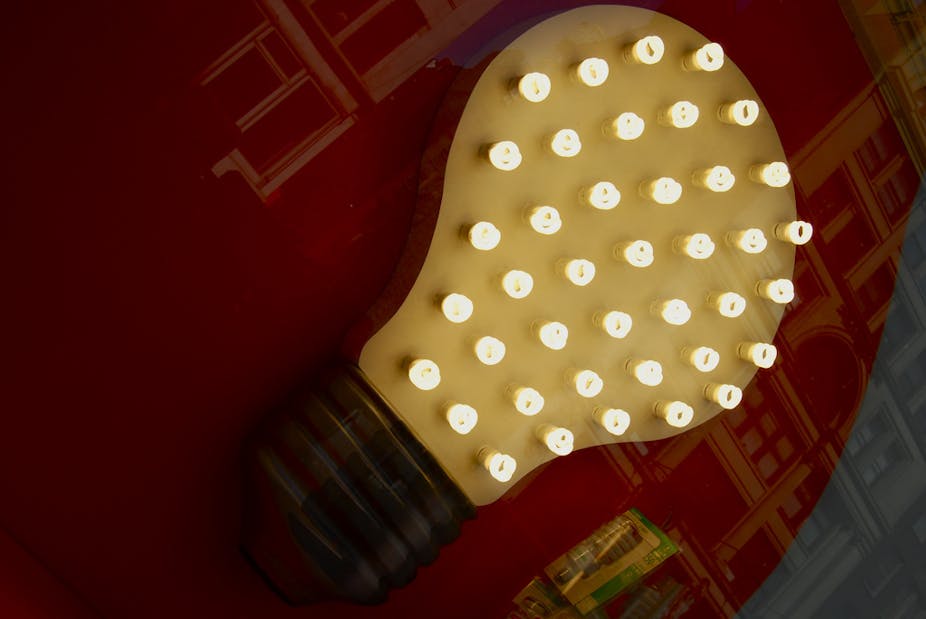
Switching off the old fridge in the garage could save 10%. Replacing most-used lights with energy efficient ones can save 5 to 10%. Buying more efficient appliances can also help. And there are lots of other ways to save.
Each tonne of greenhouse gas a household saves by cutting home energy use saves around $230 – as much as paying to emit around 10 tonnes of greenhouse gas. So savings on energy bills can more than offset the carbon cost built into electricity prices.
EPA Victoria’s new Australian Greenhouse calculator can help households and small businesses to estimate their carbon footprint, then work out ways to cut emissions – and save money.
Households and business can also reduce the carbon cost impact on goods and services by choosing products supplied by low emission businesses, food that’s less heavily processed, and so on.
Suppliers of goods and services that are energy-efficient and use renewable energy will pay lower carbon costs, and their prices will be cheaper than their higher emission competitors. So businesses that cut energy waste, choose low emission suppliers, and sell products and services that help their customers save energy will avoid carbon costs and grow market share.
Because the carbon tax isn’t like a GST or an income tax - because it’s a tax on pollution - reducing the amount of pollution your lifestyle creates will mean you’ll pay less. You may even profit.