There is no doubt that the greatest challenge currently facing agriculture is our capacity to feed an anticipated population of 9 billion by 2050.
Not only is there an increasing demand for food, but the form in which food is consumed today places additional constraints upon the system. With increasing income and greater urbanisation, diets are including more meat, dairy products and oils. In order to meet the increased demand, the FAO estimates that by 2050, food production will have to double.
This will be made all the more difficult by increased urbanisation, which places increasing pressure on the availability of arable farm land and water. Rising energy costs and the increasing demand for renewable energy could see more farmland allocated to the production of biofuels.
Agriculture doesn’t just have to contend with a steady decline in a rate of productivity growth. It now faces the increasingly unpredictable impact of climate change.
Within the Asia-Pacific region, Australia is expected to play a major role as a reliable supplier of good quality food. However, in order to take full advantage of these opportunities, industry must first address some key challenges domestically.

Australia is one of the oldest and driest continents on earth. After more than 150 years of intensive agriculture, much of the landscape is affected by salinity. The Commonwealth Department of Sustainability, Environment, Water, Population and Communities estimates that by 2050 17 million hectares will be threatened.
The development of commercial tree production systems, improved farming practices and the adoption of new crops offers some potential to ameliorate affected land. However, in other instances, more drastic measures may need to be implemented.
Climate change is and will continue to have a significant impact on Australian agriculture. Changing rainfall patterns, warmer temperatures and an increase in the frequency and severity of adverse weather events mean some adjustments within the industry seem inevitable.
Improved weather forecasts may help farmers make better decisions about what to grow, when and where, but in other instances, without a significant public investment in infrastructure, much of the marginal cropping land will be surrendered.
Water is and will increasingly become the most limiting constraint in Australian agriculture. Not only is agriculture the biggest user of water, but competition for the resource is expected to intensify between urban and industrial users and the needs of the environment.
Since European colonisation, productivity within Australian agriculture has progressively increased, thanks to the greater use of inputs like fertiliser and improved farming practices. However, as the costs of production continue to escalate, it is becoming more difficult to extract any additional gains in productivity.
Worldwide, the dramatic increases in production which accompanied the green revolution are diminishing, largely as a result of a significant reduction in public research and development expenditure.

Today, the situation is aggravated by consumers' increasing demand for food that has been produced in a more sustainable manner. Much has been done to mitigate the damage and to rehabilitate degraded lands, but there is on-going need to explore the economic, environmental and social implications of adopting “low input” systems (less water, less fertiliser etc), judiciously applying fertilisers and chemicals, minimising tillage, applying more organic mulches, using crop rotations, companion planting and integrated cropping systems, and indeed, exploring opportunities for the introduction of gene technology.
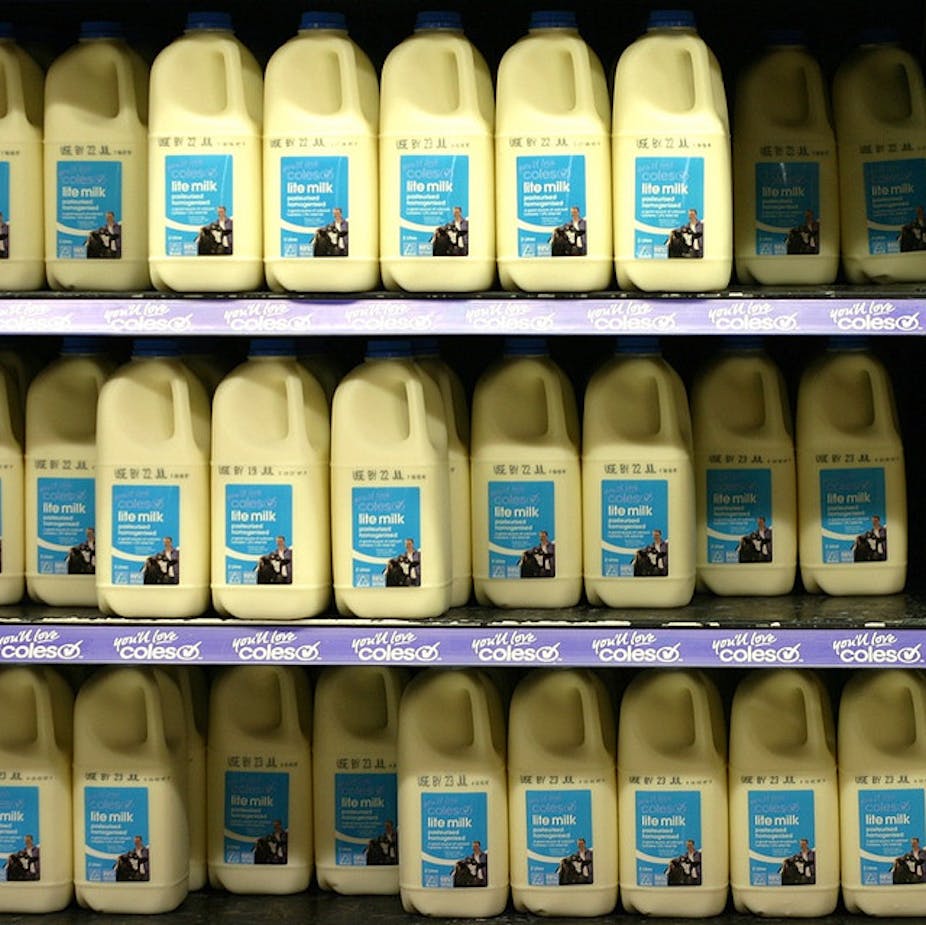
In society today, food has been greatly devalued. As competition between Australia’s two largest food retailers intensifies, advertising that “quality costs no more” or “at no additional cost to you” does little to encourage the investment that is so desperately needed.
Furthermore, Pratley and Leigh highlight the impending crisis in agricultural education in Australia. They note that there has been a steady reduction in student enrolments across the country. Agriculture, it seems, is failing not only to attract the necessary investment, but also to attract the brightest minds.
While much has been done to improve food safety, for the majority of urban consumers there is a significant disconnect between the availability of food and the manner and form in which it is produced. Consumers are demanding more healthy and nutritional food. But the vast majority continue to indulge in highly processed foods containing large amounts of salt, sugar and fat, accompanied by an abundance of artificial colouring agents, flavour enhancing compounds and preservatives.
For industry, the challenge is to get closer to the consumer, to gain a greater understanding of how, why and when food is consumed, and to deliver new innovative, value-added products which capture the consumer’s changing needs.
Join the conversation
Comments (10)
John Harland
bicycle technician (logged in via email @gmail.com)
If we are serious about feeding 9 billion people it may be that we need to be looking at integrating our food production far more with our cities than with our wide-open spaces.
Cities produce a wealth of organic wastes, carbon dioxide and waste heat to help plants grow. If we build on the principles of traditional intensive food systems of east Asia we may be able to produce a wealth of both plant and animal (fish and crustacean, mainly) food with relatively low environmental impact.
Stephen Mushin and others are doing some interesting work in this general direction at the CERES Environment Park in Brunswick (Melbourne)
Marian Macdonald
(logged in via Twitter)
The stories about the great need for farmers to do so much more with less always leaves this farmer grimacing. We are told how important our role in feeding the world will be but paid as if there is a glut of food.
The productivity of Victorian dairy farmers has been falling for a while now because there is a reluctance to invest in feeding the world when returns are so low it's difficult to feed our own families.
Tim Scanlon
(Climate and Agronomic Extension at Department of Agriculture and Food - Western Australia)
I feel your pain Marian.
When people talk of the food glut they are quoting hard figures and missing a lot of the reality of the market place. They often don't account for spoilage nor consumer demand, let alone market pricing (essentially subsidisation that occurs). Another issue is shrinkage, a neat term economists use for theft, which is less of an issue in Australia, but in some parts of the world is rampant. Even food aid suffers from massive amounts of shrinkage.
I think this video is quite good and more people, especially those in cities, should watch:
http://www.youtube.com/watch?v=fFUZ_j2cCe0
Marian Macdonald
(logged in via Twitter)
Yes, it's a great little animoto. I think farmers should watch it, too. Lifts the spirit!
Mark O'Connor
Author (logged in via email @australianpoet.com)
My friend Peter Green remarks in an email that this article makes some worthwhile points, but still assumes that the problem of feeding an ever-expanding Australian population is merely a "challenge" (with the assumption that we will, as ever, be up to the task). It doesn’t seem to consider that the challenge imposed by indefinite population growth might be better avoided. (For how, see the book Overloading Australia -- www.australianpoet.com/overloading.html )
Peter Batt's article touches rather…
show full comment
John Harland
bicycle technician (logged in via email @gmail.com)
I stand guilty of hyperbole.
Like you, I don't see broad-acre farming and grazing diminishing. It is the expansion to feed extra people that might be met with intensive urban systems.
I agree with you, Tim, on the challenges to be met. A point to make, though, is that we may more readily be able to make multiple use of recycled water in the urban environments and to have some control over evaporation through growing in semi-enclosed areas.
In the context, I should make clear that I am a board member of the CERES Environment Park. However, although I have used Steve Mushin's research as a current example, my own ideas on the subject have been festering since I was studying Agricultural Science several decades ago and aspiring to the work Tim is doing. (-:
Tim Scanlon
(Climate and Agronomic Extension at Department of Agriculture and Food - Western Australia)
I agree, especially on the water use. I'm inspired by the 'green buildings' concepts and would like to see some prototypes put into action so that the kinks can be worked out.
Currently a lot of the water in cities is not collected, either the runoff, the grey water or water that would need purification. It is simply allowed to "escape" (escape being a loose term). Just the road runoff would provide ML of water to grow food with, but would take a drastic rethink and restructure of our cities.
It would also allow greater urban density, thus freeing up productive land. Currently one of the minor threats to agriculture is peri-urban or hobby farm styled land use. It is largely unproductive and is usually associated with prime agricultural land - excuse my cynicism here - primarily because it is a prettier place to live. Of course urban density would have to apply to rural towns and cities too, as it is unrealistic (IMHO) to have massive cities.
Russell Hamilton
Librarian (logged in via email @gmail.com)
I've read that although there are many starving/malnourished people in the world, there is enough food for everyone - the problem is politics. Perhaps Zimbabwe and Cambodia are examples of what can go wrong; I also read that even during the Irish Famine food was being exported from Ireland.
I'm not sure how we can improve the distribution of food from where there's too much to where there's too little, but it might be something to consider, rather than just demand the environment be pushed to produce more and more and more. Can't we be more serious about equity and reducing waste?
John Harland
bicycle technician (logged in via email @gmail.com)
We don't have to go back to the Irish famine for examples of the export of food from countries suffering famine. It has been reported repeatedly from countries in Africa particularly, but elsewhere as well.
To add to the imbalance of it, the exported food is commonly fed to cattle and pigs in wealthy countries.
It is not really all that different from the the pockets of severe malnourishment in otherwise well-fed (or even over-fed) countries such as the USA and Australia while crops are destroyed to maintain prices and to feed animals that die to feed wealthier people.
Food distribution certainly is an important part of the issue but it is not the entire story. We do need to change our ways of producing food, as well.
Tim Scanlon
(Climate and Agronomic Extension at Department of Agriculture and Food - Western Australia)
Just a little addition from me, Western Australian cropping production, the major underpinning of our export market, has been analysed by GRDC and myself (and others). The increased production that had been seen from technology, innovation, etc had been providing a reliable 2-3% improvement in agriculture per year. Since 2000 this has been nullified by the seasons, which are undoubtedly tied to climate change impacts on rainfed systems. This appears to also be the case for grains production nationally…
show full comment