


Straights, gays, and those vacillating somewhere on the periphery, have equally demonstrated a penchant for the game. Sitting back, stroking one’s chin and speculating on sexuality. Who’s gay? Who’s confused? Who’s flagrantly daring to deceive us all?
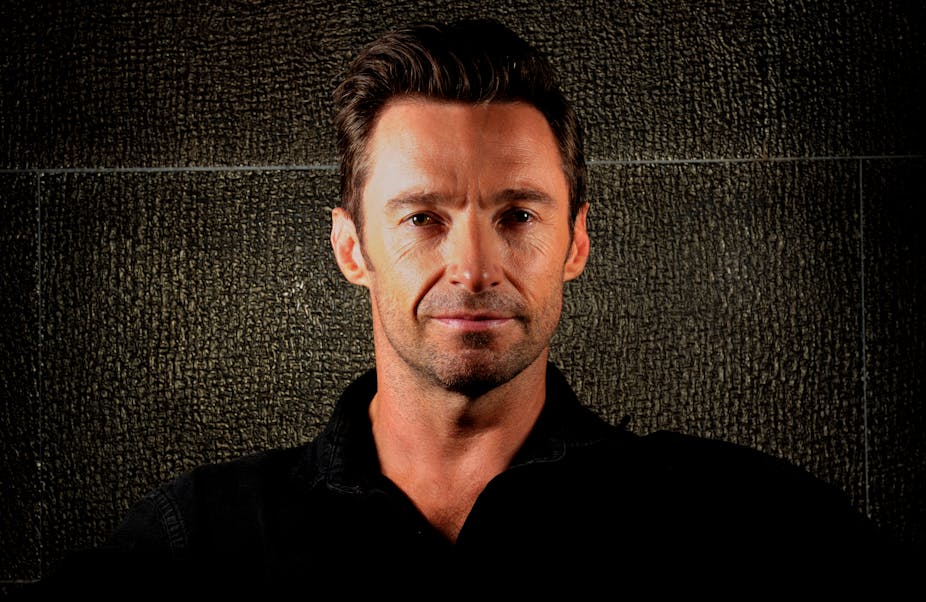
In recent days Hugh Jackman, not unlike every other man deemed too handsome or bestowed with too much rhythm or colour coordination to be straight, has again been hounded by gay rumours.
While there’s an obvious story here about gender stereotyping - not to mention one viciously ugly and sexist attack on the woman he’s married to - a more interesting tale is the preoccupation with outing.
Just what underpins this fixation with uncovering sexual truths?
Perhaps the most obvious explanation is our fervour for a good ol’ fashioned witch-hunt. Such an idea reminds us that homosexuality is still too frequently deemed an abnormality and as such, anyone daring to live such a renegade lifestyle must be exposed for the deviant that they are. Narrow-minded, God-bothering conservatism thus underpins an apparent imperative to know precisely what stimulates those who teach our children, represent our electorate or drive our taxis.
At the other end of the spectrum are those who advocate for sexual identities to be owned, to be embraced, to be championed. Such a view positions the closet as a wretched place to be; that if more people out-and-prouded themselves, homosexuality could, triumphantly, become mainstream and acceptable. Implied here is that role models a’plenty would emerge if only those pesky celebrities would spring from their dark and dreary cupboards.
A more interesting explanation is a cultural obsession with labelling, categorising and rationalising. Evidently a fixation exists to quickly lock others in as either straight or gay, one or the other, and to have a sexual “truth” known and documented, so that we can all sleep better feeling we haven’t been duped.
Such behaviour, of course, is testimony to a widespread inclination to sideline all of those uncomfortable sexuality conversations. Rather than accepting sexuality as fluid, as God forbid changeable, instead, there’s an effort – be it well-intentioned or maliciously motivated – to out people; to force a sexual decision. To have something to point to that seemingly explains behaviour/career choice/dance prowess/spouse. To, in the process, pretend that we have our own sexuality all figured out.
While engaging in such a pastime, jubilantly, we don’t ever have to consider that our most dearly beloved may have had the odd same-sex fantasy. That way, we don’t ever have to consider our own capacity for same-sex attraction. That way we can simply pretend that the homosexual is other, is less than, and that this fundamental difference justifies granting disparate rights and dignities.
Not only does forced outing neglect an individual’s potential disinclination to have sex put at the forefront of their identity, but more problematically, it presupposes that “coming out” is something owed to others. Most disturbingly, and as relevant to celebrities, forced outing implies that declaring a fixed sexual identity is somehow the right thing to do for fans and for a “gay community”.
Not every gay person actually wants the burden of being a role model, of championing any causes or figure-heading any movement. Similarly, not every person who is intimate with someone of the same sex actually identifies as gay and thus not every seemingly closeted person has a closet to come out of.
Far more interesting than Hugh Jackman’s sexuality is the persistent public interest in it. Fans have fallen in love with a screen version him. Neglected, amidst all their fervent fandom, is that the person they love is an actor and is an embodiment of their projected fantasies. This is part of the Hollywood game. And in such a game, outing him – or any celebrity - is a complete waste of time; the artifice will always be more tantalising.
I wonder just what would happen if, rather than playing the sexuality speculation game, instead, we accepted sexuality as something malleable and expandable and reconstructable and not always easily classifiable. To, perchance, allow ourselves to live and let romp without needing to pathologise.
Of course, it’s just so much easier to sit around and ponder which celebrity’s pants look a little too tight or whose eyebrows are just a tad too plucked.