
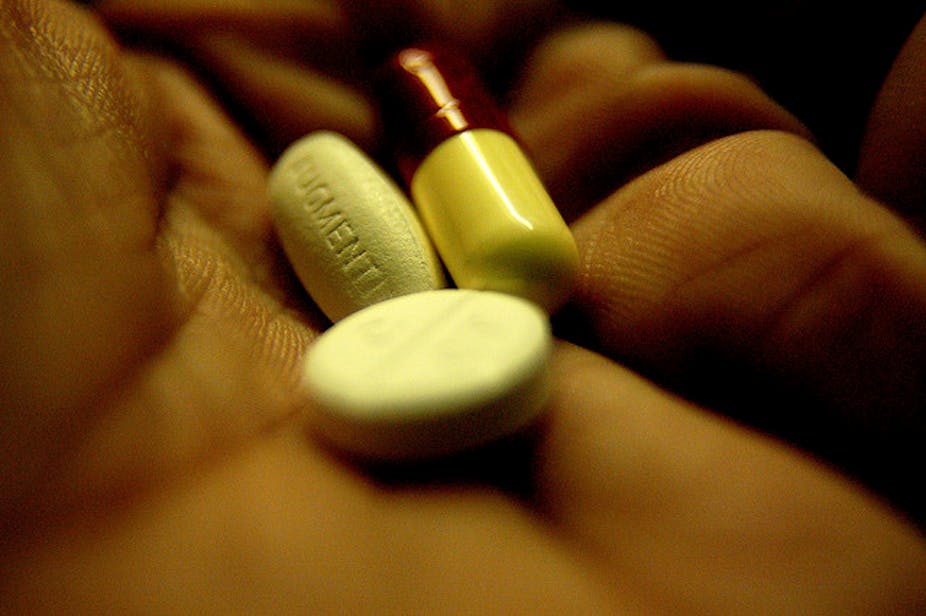
Pharmacists are among the most trusted professions in Australia, regularly coming in the top ten of the annual Reader’s Digest survey alongside paramedics, fire fighters, pilots and assorted medical professionals.
This makes it all the more frustrating to hear about a new partnership between the Pharmacy Guild of Australia, (which represents about 90% of commercial pharmacy owners) and Blackmores.
The partnership aims to up-sell supplements to customers when getting a prescription filled.
From October, pharmacists’ computer systems will prompt them to discuss a Blackmores Companion range product with patients picking up a prescription for one of four popular medications.
Patients will also be given a leaflet explaining how the supplement can alleviate the side effects of the medications.
The Blackmores Companion range will carry the Pharmacy Guild’s Gold Cross logo.

Christine Holgate, CEO and managing director of Blackmores, told Pharmacy News the range gave Blackmores the opportunity to provide the “coke and fries” for these pharmaceutical medicines while “also providing a new and important revenue stream for community pharmacy".
The Pharmacy Guild has denied the scheme is commercially motivated but President Kos Sclavos told Pharmacy News the deal represented a “huge opportunity for the male market”, as many men are reluctant to see a GP and may be more likely to visit a pharmacy.
It doesn’t take a genius to figure out this scheme is potentially very lucrative. Particularly when the new line of supplements are designed to be paired with prescriptions for statins, antibiotics, anti-hypertensives and proton pump inhibitors for gastrointestinal disorders.
These are all very popular pharmaceuticals, which account for more than a third of the 183.9 million scripts dispensed in Australia every year.
The Pharmacy Guild has always maintained that it’s more concerned about patients’ health outcomes than profit. And this drove its 2009 fight against a proposal for Big Supermarket to include pharmacies within their operations.
At that time, the Guild argued the objectives of supermarkets and pharmacies were incompatible because supermarkets had to put the interests of shareholders first and make a profit.
Pharmacists, on the other hand, were primarily concerned about their patients’ health.
I’m sure all good pharmacists care about their patients but in this deal, the Guild is clearly putting profits first.
But let’s consider for a moment that the Guild does have the best interests of patients at heart when they recommend a $15 bottle of CoQ10 with your statins.
So what is the evidence for the new Blackmores Companion range?
• “BIOTIC Companion” is what the pharmacist is encouraged to recommend for patients picking up a prescription for antibiotics.
It contains the probiotic strain Lactobacillus reuteri to reduce antibiotic-associated bloating, flatulence and diarrhoea.
While there is some evidence that certain probiotics may reduce the incidence of antibiotic-associated diarrhoea in some people, their routine use for this purpose isn’t recommended by medical authorities.
There have been a few cases where probiotic organisms have invaded the gut of immune-compromised patients and caused serious blood-stream infections.
• “ANTIHT Companion” will be recommended for patients with prescriptions for blood pressure-lowering medication. It contains zinc gluconate, which is claimed to complement the use of antihypertensives.
While there are occasional reports that antihypertensive therapy may lower zinc levels I’m unaware of any independent medical authority recommending routine zinc supplementation with anti-hypertensive therapy.
• “STAT Companion”, containing Coenzyme Q10 and vitamin D3, will be recommended for patients picking up a script for statins to lower cholesterol.
There is variable evidence that Coenzyme Q10 and/or Vitamin D is useful for treating statin-associated myopathy (muscle pain), which is rare and usually only occurs with high doses of statins.
The routine use of CoQ10 and Vitamin D in statin-treated patients is not recommended by medical authorities.
• “PPI Companion”, which contains magnesium will be recommended to aid use of proton pump inhibitors (PPIs).
While there are occasional reports of clinically significant magnesium deficiencies in patients receiving long-term PPI therapy, the remedy is to stop the PPI, not routine supplementation with magnesium.
The fine print of the material provided by Blackmores contains a statement that if a nutritional deficiency is suspected, pharmacists should refer customers to their GPs for further investigation.
It’s likely pharmacists do this anyway, since part of their role in primary health care is to discuss the possibility of serious medication-related complications with their customers and, where necessary, refer them back to their GP for appropriate investigation.
What should not be part of their role as trusted health professionals is dishing out “companion supplements” as the “fries and Coke” of prescriptions in order to “give pharmacies a new revenue stream”. The practice lacks an evidence base and is unethical.
It may put added financial burdens on patients who feel compelled to buy these products. It also adds unnecessary complexity to patients' often complicated combinations of medications.
This “initiative” by the Pharmacy Guild and Blackmores deserves wide condemnation.
Join the conversation
Comments (26)
Luke Weston
Physicist / electronic engineer (logged in via email @gmail.com)
“Alternative” medicine which is scientifically, clinically demonstrated to have real usefulness and real efficacy as well as reasonable safety… then becomes actual medicine.
.
If there was legitimate scientific, clinical evidence that some sort of particular mineral supplement, for example, was responsible for improved patient outcomes, reduced adverse side effects, etc, specifically when co-administered routinely for all patients with a particular prescription pharmaceutical, then that particular mineral would be added to the drug regimen prescribed by the physician, and it would probably be incorporated into the manufacturing of the actual tablets etc. of that pharmaceutical product.
.
If that genuine, credible clinical evidence basis does not actually exist, then this is just the latest in a long line of unfortunate examples of pharmacies abusing the community trust in pharmacists as purveyors of science-based, evidence-based medicine, and selling out to Big Quacka.
Graeme Hanigan
(logged in via Facebook)
If it wasn’t enough that Pharmacies credulously offer such bizarre quackery as ear candles, the Power Balance Bands and SensaSlim weight loss scams and lets not forget the good old magic sugar pills of homeopathy, this latest agreement with Big Quacka means that any lingering vestiges of trust in Pharmacies has vanished.
Pharmacies are putting their mercantile objectives well ahead of the responsible and ethical treatment of their customers.
I recommend that all Guild Pharmacies come with a Consumer Health
Warning and advise to customers to 'Wash Off the Snake Oil' after
visiting your local pharmacy.
I have written to the Guild requesting that they make publicly available, the entire peer reviewed, randomized, double-blinded, clinical trials of Blackmores Companion preparations, so that customers may make informed choices.
Phillip Ebrall
(Professor of Chiropractic at Central Queensland University)
I am not aware of any statement in my comment above that could be considered as 'defensive of treatments of dubious merit'.
My position is one of ethics and social justice. I question why commentators such as yourself appear so upset that an individual may be offered the right to (a) make their own decision about their health care needs and (b) perhaps proceeding to pay out of their own pocket for items not yet shown, in the scientific sense, to be 'sham.'
I therefore contrast the individual's right to personal choice against what you term "Big Pharma" which, after all, presents little choice to the individual while absorbing huge amounts of public money.
Given this clear statement of my position I shall offer no further comment.
Michael Bending
Student (logged in via email @gmail.com)
Sorry to come to this debate so late! I notice that that we have the usual closed minded sceptics, Graeme Hanigan from the acclaimed sceptics society famous for not believing in anything except their own version of science...they way they decide to interpret it. Dr Ken Harvey is a little bit more open minded (as far as a sceptic is concerned) however he generally gets too caught up in this "no evidence" paradigm which displays a little bit of ignorance. Dr Harvey should take a trip to China and research…
show full comment
Ken Harvey
(Adjunct Assoc Prof of Public Health at La Trobe University)
Michael Bending said, "Dr Harvey should take a trip to China and research the hospital system which uses CAM and allopathic drugs equally."
I've had many trips to China and I'm well aware that Traditional Chinese Medicine (TCM) is alive and well. For example, artesunate (derived from the Chinese herb qing hao) is now an important treatment for multi-drug resistant strains of malaria both in China and other countries including Australia. A nice outcome of research into TCM.
However, research, not rhetoric is the key to advancing knowledge.
In this regard, I wondered what research Michael had done to justify the "protection plan" recommendations he has made above. Also, has he read the NPS literature review on the Blackmores "Companion" product range that I cited above? This review (by NPS pharmacists) comes to very different conclusions than his own recommendations.
See: http://www.nps.org.au/topics/companion_products.
Phillip Ebrall
(Professor of Chiropractic at Central Queensland University)
Whilst stating I would make no further comment on the above specific topic, Ken has created a unique need with his invitation "to comment on allegations of non-evidence-based, exploitive practice by some of his colleagues."
My comment is that allegations are often drawn from lay comment or poorly-informed observations from those who are not expert in a particular field. On this basis, and with an understanding of Sackett's model of evidence-based practice, I try to carefully consider such allegations…
show full comment
Michael Bending
Student (logged in via email @gmail.com)
And if Dr Harvey and Tasmanian uber-sceptic Mr Hanigan would like a little evidence with regards to Chinese medicine then they might watch this doco. It's about the Chinese eradicating malaria on Moheli island off Africa. It is a population study but the WHO will not recognise it as it wasn't a double blind placebo trial...they don't care if it actually cured malaria. The WHO are looking out for the interests of the pharmaceutical industry. The drug companies want to invent a vaccine or drug which…
show full comment
Michael Bending
Student (logged in via email @gmail.com)
The Safety of Medicines...
And while we are at it…I’m not anti drug based medicine per se, I believe it is very effective with regards to many acute diseases. If I got hit by a bus i would not want to be treated by my naturopath, I would like to be taken to a hospital. I think both medical models (CAM & allopathic) should be considered when treating disease. However I am concerned that the narrow minded pseudo-skeptics (Australian Skeptics associations), who frequently weigh in on these issues…
show full comment
Michael Bending
Student (logged in via email @gmail.com)
@ Dr Harvey, Yes I did read the link you sent me. This is the evidence we have at the moment, its thin, and once again it is an example of how one study can show effectiveness and another study shows it is not effective...it seems to depend upon who does the study and what variables are being tweaked.
Unfortunately it is written from the view point that these dangerous or at very least ineffective CAM therapies cause problems with harmless pharmaceutical drugs and that if a patient needs advice…
show full comment
Beverley Snell
(Pharmacist/Health Policy Consultant at Burnet Institute)
I completely endorse the position taken by the NPS
See http://www.nps.org.au/news_and_media/media_releases/repository/nps_response_blackmores_guild_agreement
I believe the Pharmacy Guild's deal with Blackmores Australia to sell supplements to customers once their prescriptions are filled is quite unethical and a severe conflict of interest
If people have nutritional deficiencies that can't be corrected by appropriate diet, or side effects to prescription medicines - of course they should be investigated and managed properly.
Another issue is the lack of evaluation by the TGA of many complementary medicines – they are listed, not approved by TGA
Graeme Hanigan
(logged in via Facebook)
Phillip Ebrall,
Trying to divert attention from the matter in hand by invoking the Big Pharma argument, which we are all familiar with, will not get you very far. This story is about Big Quacka and possibly a case of illegal third line forcing.
I understand that the Cochrane Review is the recognised independent medical authority and by this standard your own wellness industry of Chiropractic does not rate well. Perhaps this is why you appear to be defensive of treatments of dubious merit.
I disagree with your celebration of two paradigms. In my opinion there are medical treatments that work and sham treatments that don't.
Graeme Hanigan
(logged in via Facebook)
Phillip, Surely your popular use of a social justice stance to justify fraud is at odds with ethics.
In my opinion a practitioner misrepresenting the scientific facts about the efficacy of a treatment and accepting payment for it, is committing a fraud.
To suggest that the patient has the right to be lied to for the financial gain of the practitioner, is hardly ethical?
By the way anecdote in not evidence. I am utterly astounded that a Professor of Chiropractics should appear to be so poorly informed about basic scientific method.
Phillip Ebrall
(Professor of Chiropractic at Central Queensland University)
A weakness in Dr Harvey’s argument is his expectation that some ‘independent medical authority’ would come forth with an endorsement of complementary medicines. This is akin to expecting a Muslim to come forth and endorse Christmas, or a nutritionist to come forth and endorse the ‘fries and Coke’ of KFC, McDonald’s or Hungry Jacks.
There are two distinct illness-care paradigms at play and perhaps there should be a celebration that the Pharmacy Guild is taking an initial step in trying to bring them together.
The real issue Dr Harvey should address is the unabashed profiteering embedded in petromedicine and its products which are price-controlled and publicly funded. He could begin by explaining why I can opt for a version of a drug that is priced a dollar or so lower than its equivalent, when both come from the same pill-press in the same manufacturer and contain the same ingredients. Surely the higher-priced version represents the real profiteering he rallies against?
Ken Harvey
(Adjunct Assoc Prof of Public Health at La Trobe University)
First of all, there are evidence-based complementary medicines which are recommended by medical authorities. For example, both Therapeutic Guidelines and the Australian Heart Foundation recommend fish oil for patients with hypertriglyceridaemia.
In addition, a few complementary medicines have been registered as distinct from being listed by the TGA. Registered product (unlike listed products) have been thoroughly assessed by the TGA for quality, safety and efficacy. Examples of registered complimentary…
show full comment
Graeme Hanigan
(logged in via Facebook)
Phillip,
In reply to your " I question why commentators such as yourself appear so upset that an individual may be offered the right to (a) make their own decision about their health care needs and (b) perhaps proceeding to pay out of their own pocket for items not yet shown, in the scientific sense, to be 'sham.'".
It's quite simple. I was an unsuspecting health consumer that was lied to and defrauded by a multitude of quacks. I have become skeptical of so called CAM for a very good reason. In the absence of credible evidence of efficacy I prefer to cal it quackery.
Graham Sweet
Consultant pharmacist (logged in via email @bigpond.com.au)
I do not know who the brains behind the embedding of Blackmore’s advertising in dispensing programs is but they need a lesson in the law and ethical behaviour.
GPs have just been able to weed advertising out of practice programs after a long campaign and now pharmacy is going the reverse way.
The first objection that I and I am not alone have is that the vast majority of claims made for the kinds of alternative products that would be recommended by such advertising have absolutely no convincing…
show full comment
Robin Bell
(Research Academic Public Health, at University of Newcastle)
I'm concerned that patient confidential information may be used by a pharmacist in a manner unintended by the patient, and outside the implied consent implicit in the pharmacy dispensing role, in an arrangement such as this.
Every script carries confidential information about patient diagnoses and illness. This information is confidential, and is given to the pharmacist (or employee) for the specific purpose of dispensing a prescribed medicine. It is within the ambit of the pharmacists professional…
show full comment
Ken Harvey
(Adjunct Assoc Prof of Public Health at La Trobe University)
In a press release dated Sep 28, 2011 Marcus Blackmore said, "Consumers are well-protected by one of the strictest regulatory systems in the world under which every manufacturer must hold the evidence to support the claims they make."
"The Companions range is four products that are backed by scientific evidence and they have been developed in response to specific consumer needs. Any criticism of their potential benefit highlights the need for further healthcare professional education on medicine-related nutrient deficiencies". Also, "The drugs will treat the disease, the supplements will address the nutrient deficiencies."
The National Prescribing Service (NPS) has now published their own literature review on the Blackmores "Companion" product range; see
http://www.nps.org.au/topics/companion_products
Graeme Hanigan
(logged in via Facebook)
@Michael, It’s disappointing to see that you revert to ad hominum as a first resort, but in the absence of any credible argument I guess you have no choice. There is one very easy way to shut the skeptics up and that is to provide some credible evidence. I have emailed both the Guild and Blackmores requesting their scientific evidence and I am still waiting! As they were so keen to take peoples money for their quackery I would have thought that the evidence would have been at their fingertips.
Ken Harvey
(Adjunct Assoc Prof of Public Health at La Trobe University)
5 October 2011 | Media release | Pharmacy Guild of Australia
Gold Cross endorsement of Blackmores Companions range withdrawn
"The Pharmacy Guild of Australia and Blackmores have agreed that the Gold Cross endorsement of the Blackmores Companions range of complementary medicines will be withdrawn.
The mutual decision has been taken in view of the strong level of public concern about the proposal, based on some media reporting of the endorsement which was ill-informed and inflammatory....".
I would…
show full comment
Michael Bending
Student (logged in via email @gmail.com)
Mr Hanigan,
I don’t revert to ad ad hominem remarks. I merely state the obvious. The Australian Sceptics and so called quack busters are not true sceptics. They have a cart to push and they push it. They have their letter writing campaigns designed to influence regulatory process and public opinion, they are very adept at propaganda. They are only interested in supporting the status quo in orthodox medicine. They are only interested in cherry picking the scientific evidence and obfuscating the…
show full comment
Ken Harvey
(Adjunct Assoc Prof of Public Health at La Trobe University)
I reiterate; the controversy over Pharmacy Guild - Blackmores deal has nothing to do with Traditional Chinese Medicine or alleged campaigns by “pseudo-skeptics” to support orthodox medicine.
There is an ethical concern about pharmacists potentially making a profit of up to $217,000 a year from routinely recommending supplements with prescription medicines (the "Coke and fries" deal) when these supplements could only be justified in a minority of patients.
A leaked transcript of a Blackmores presentation (reported today) shows it assumed chemists would charge a 60 per cent mark-up on these pills. It also reveals that Blackmores was mirroring big pharma tactics by offering pharmacists "pre-dinner drinks and canapés" and "gourmet dinner" training courses. See:
http://www.theaustralian.com.au/news/health-science/coke-and-fries-supplement-deal-proves-a-bitter-pill-for-pharmacists-to-swallow/story-e6frg8y6-1226166795187
Graeme Hanigan
(logged in via Facebook)
@Michael,
Having been caught out on the ad hominum argument you take the next option the straw man argument. All the hallmarks of no strong argument on your side.
To suggest that CAM should somehow be free of scrutiny and that there is a conspiracy by skeptics just shows the depth of your investment in deceit.
CAM gets the attention of skeptics for no other reason than most of it is nonsense!
Michael Bending
Student (logged in via email @gmail.com)
And before the Australian pseudo-sceptics decide to wage a propaganda war and letter writing campaign to stop or limit the Chinese medicine hospital going ahead in Sydney, proclaiming witch doctor medicines and no evidence etc, remember that you are not dealing with a few individual naturopaths that lack financial clout and representation, who cannot protect themselves against your propaganda. You are dealing with the Chinese community enlarge that has Chinese Government backing, cultural usage as well as evidence based science. The population of Sydney is about 30% Asian. If you decide to start a propaganda war against the Chinese hospital then I would guess that you should be prepared for some big trouble in little China. I think the pseudo-sceptics will be biting off more than they can chew in this regards.
Derek Rucki
(logged in via Facebook)
Hi Michael, apologies to be off topic, but I'm one of the organisers at Perth Fluoride Free and trying to contact you regarding your recent online petition. You can contact me directly via Facebook or by visiting facebook.com/PerthFluorideFree.
Regards,
Derek
Dan Buzzard
Researcher (logged in via email @danscomp.net)
Michael,
The popularity of a treatment is not evidence for it's efficacy. Bloodletting was once a very popular form of medical treatment, but today we know it is bogus. The same it true with Chinese medicine today. It may be popular but that doesn't make it efficacious.
Whether the Chinese government backs such a hospital or not is irrelevant. All that matters is whether or not the treatments actually work. This can be determined by experimentation under controlled conditions. Not by they power of belief.
Also I find your apparent assumption that persons of Asian ethnicity would support Chinese medicine by default to be very naive. It is not reasonable to make such assumptions, especially amongst such a diverse population of people. Furthermore if 30% of the Sydney population did support Chinese medicine it still wouldn't alter the scientific facts.