
The Conversation
Subscribe
  • Academic rigour, journalistic flair
  • For curious minds
  • Expert news and views
  • Debate and ideas
  • From the curious to the serious

Hot Topics

  1. Gay marriage
  2. Australia in the Asian Century
  3. Convergence review
  4. Federal Budget 2012
  5. War on drugs
  6. Bob Brown
  7. Explainer
  8. Square Kilometre Array
  9. Medical myths
  10. Transparency and medicine

The future of gas power: stepping-stone or snare?

The past few years have seen the rapid expansion of the coal seam and shale gas industry. Combine this expansion with the recent introduction of a price on carbon here in Australia, and you end up with a bunch of intriguing questions. What role will gas play in our future energy mix? Could gas be used…

Dz6r9w6c-1323302081
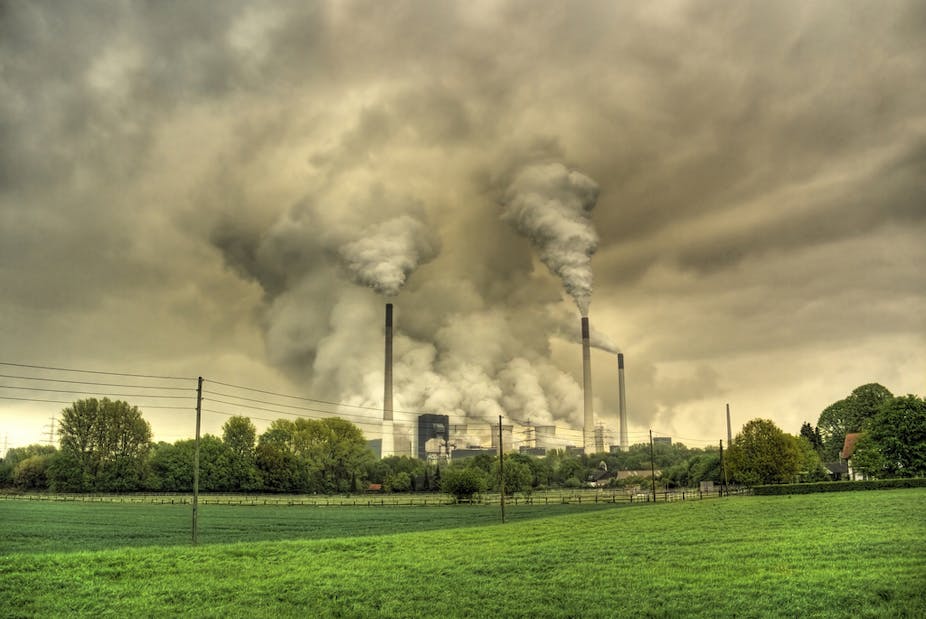
Coal’s heyday is coming to a close, but is gas a long-term solution? Guy Gorek

The past few years have seen the rapid expansion of the coal seam and shale gas industry. Combine this expansion with the recent introduction of a price on carbon here in Australia, and you end up with a bunch of intriguing questions.

What role will gas play in our future energy mix? Could gas be used as a stepping-stone to a clean-energy future? Or will we be seduced into a “half-clean” state from which escape could prove expensive?

In Australia, gas accounts for 18% of total power generation capacity and 11-14% of generated electricity. Unlike coal power stations, gas stations can be quickly ramped up and down, making gas valuable in trying to meet variable demand.

This flexibility overcomes the high price of gas when compared to coal – in Australia, wholesale gas prices are generally around $3-4 per gigajoule (GJ); coal is more like $1-2/GJ.

Australia has very significant reserves of gas. These have been growing with the emergence of new traditional gas fields – including those used for the Gorgon Project in Western Australia and those being mined in coal seam gas (CSG) developments in Queensland. This positive outlook has meant gas-fired power projects have combined with wind farms to dominate recent additions of new capacity.

Cleaner than coal?

Gas power emits less greenhouse gases than coal when burned – approximately 0.4 tonnes of CO₂ per megawatt hour (t/MWh) of electricity, versus 0.9t/MWh for black coal and 1.2t/MWh for brown coal.

Given these quantities, the recent introduction of a price on GHG emissions – $23 per tonne initially – will favour gas ahead of black and brown coal. This will add approximately $9/MWh to gas-fired power, compared with $18 for black coal and $28 for brown coal.

But the world is more complicated than that. For at least several years, demand from export markets will add more to the cost of our black coal and gas than the carbon tax will. After many decades of domestic east-coast prices being largely insulated from international forces, gas prices are moving towards export parity (the price the supplier could get on the export market).

Industry figures suggest a doubling (at least) of wholesale prices in the next few years, and this could move even higher.

The CSG explosion

The balance of global demand and supply for gas from non-traditional sources – such as CSG and shale – will be the largest influence on Australia’s domestic prices. Export prices for black coal have also been strong and will progressively flow through to domestic markets, pushing local prices up. Recent decisions like that of the New South Wales Government to effectively subsidise domestic coal prices can cushion such movements in the short term.

The nett result will therefore be in favour of brown coal power for a number of years, given there is little demand for brown coal overseas (it is very difficult to transport), and brown coal generators are commercially tied to their coal sources.

Fuel switching between existing coal and gas plants is possible. But given rising Australian gas prices, building new gas plants may still be challenging. To go further and shut down existing coal plants in favour of new gas plants will require a substantially higher emissions price – making gas considerably more attractive – than is envisaged in the first few years of the emissions trading scheme.

These factors do favour gas but there are clouds on the horizon that may mitigate its growth. For one, there are environmental objections regarding coal-seam gas extraction. There are also concerns that a major shift to gas could squeeze out renewable energy.

This could lead to Australian being locked-in to an asset mix from which it could be difficult (and expensive) to extract ourselves. This could then hinder our efforts to achieve decarbonisation of electricity by mid-century.

Gas vs. everything else

Competition for gas as a cleaner source of power will also come from renewable energy and the application of carbon capture and storage (CCS) technologies. Over the next 40 years, projections for gas generation are particularly sensitive to assumptions regarding the adoption and commercial deployment of CCS.

Such projections seem very optimistic given CCS is not in commercial operation anywhere in Australia. Estimates of the emissions price necessary to make CCS viable range from more than $100 per tonne of CO₂ to as low as $20 per tonne.

In the short term, gas is competitive with fossil fuels. A rising carbon price means gas will out-compete coal and begin competing with renewables. Gas will compete with renewable energy quite strongly for some time, but the application of other policies – including the renewable energy target and feed-in tariffs – tend to mean that, in projections, gas is displaced by wind and solar respectively.

At the same time, the use of gas for open-cycle gas turbine power plants is a key factor in addressing the intermittent nature of both wind and solar energy.

The nett result of these influences on gas for power generation shows up in a wide range of scenarios and projections, including those from the Australian Energy Market Operator (AEMO). Near-term projections are generally positive for gas, while projections beyond ten years or so begin to diverge sharply, depending on assumptions regarding the above factors.

Australia is blessed (or cursed?) with a bounty of energy choices. In the short term, the tide of change would seem to be flowing in favour of gas. In combination with wind and solar developments, gas can contribute strongly to the achievement of near-term climate change objectives.

However, this achievement may come at a higher price than many will find acceptable, and the environmental challenges are likely to become greater. Under most circumstances, gas looks to be a good bet, but whether today’s white knight becomes tomorrow’s evil prince is the more intriguing play.

Further reading:

Join the conversation

Comments (13)

  1. Permalink
    Byron Smith

    Byron Smith

    (PhD candidate in Christian Ethics at University of Edinburgh)

    Mr Wood, thank you for your article. I note that when discussing the emissions associated with gas, you rely on combustion only. Yet this seems a little narrow when there are other significant climate contributions associated with this energy source. There are an increasing number of studies attempting to account for its full life cycle of emissions. Although it can vary considerably, depending on location and assumptions, most (or at least many) of these studies seem to indicate that gas is not…

    show full comment

  2. Permalink
    wilma western

    wilma western

    (logged in via email @bigpond.com)

    As early adopters of roof top solar panels we've had plenty of time to note the fluctuation of our generation pattern, sometimes exporting to the grid and sometimes importing. And obviously wind blows more in some months,etc. so until better storage options for renewable electricity become commercial , and /or geothermal and more pumped hydro feed in , it seems there must be an increase in gas generation to support renewables. In the US gas prices came down....the important thing is to carefully coordinate new generation capacity so that not too much capital is sunk into a particular type of less-polluting capacity , so that other better options are delayed or excluded. Do we need a national energy authority to plan and issue permits for the new generators...? Leaving it to the market might not be the best answer.

  3. Permalink
    Chris Harries

    Chris Harries

    (logged in via Facebook)

    While all eyes have been on the remarkable growth of the wind power industry (albeit from a very small base) the silent winner in the Australian energy supply stakes during the past decade has been gas. Being seen as a cleaner fossil fuel, having the ability to supply peaking load and being relatively quick to be approved and build, much more gas power capacity has been added to the Australian grid than wind power capacity.

    Considering that global peak gas is predicted to arrive not long after peak oil, this rush to gas is taking us up a blind alley. Converting natural gas to electricity does not make good sense, it's an inefficient way to use this non-renewable product, but that's almost by the way. The real problem is that every new desperate way we entrench fossil fuels into our economic system will make it all the more difficult to extricate ourselves when the energy crunch hits us within the next two decades.

  4. Permalink
    Douglas Cotton

    Douglas Cotton

    (logged in via Facebook)

    I do wish people would stop worrying about what gas is "clean" and what's not - what's a pollutant, poisonous, dangerous etc etc. As you breathe out, right in front of your face are 50,000 parts per million of carbon dioxide.

    The more we pump into the atmosphere, the more there will be up there absorbing incoming infra-red solar insolation to the extent shown in the yellow troughs in the IR range shown in this chart. http://earth-climate.com/spectral-content.gif

    There's no two ways about…

    show full comment

    1. Permalink
      Chris Harries

      Chris Harries

      (logged in via Facebook)

      No need for peer review, Douglas.... hmmm!

      Seems that several thousand scientists all around the planet have got it all wrong and have all knowingly conspired to concoct a money making theory. Must be the most elaborate fraud in history.

      1. Permalink
        Douglas Cotton

        Douglas Cotton

        (logged in via Facebook)

        The spectral distribution and absorption information have already been measured and published. The concept of carbon dioxide absorbing infra-red radiation is pretty well documented I would suggest. The only difference is the radiation is coming down rather than going up.

        So it's up to you to decide if you want to believe what's blatantly obvious. It doesn't worry me one iota what you believe. If you want to worry, that's your prerogative. .

        Frankly, if the flat-Earth models of the IPCC can get peer-review with their glaring mathematical errors which assume the fourth root of an average is equal to the average of the fourth roots of each number ... well I don't think I'd ever believe another peer-reviewed paper reviewed by such peers.

      2. Permalink
        Douglas Cotton

        Douglas Cotton

        (logged in via Facebook)

        Indeed it is, as you say Chris, an "elaborate fraud." In November 2010 "Scientific American" announced results of their opinion poll in which a total of 83% of 5190 respondents considered the IPCC a corrupt organisation. The IPCC's deliberate omission of reference to this obvious cooling effect is just one of many examples. Their bluff that the surface can be warmed by second-hand lower energy than that which it is emitting is their number one fraud, being totally contrary to the laws of physics and easily disproved with two heated metal plates (one black, one grey) facing each other. Their use of flat Earth models (which were not at all necessary with computers) is yet another piece of pseudo-science. Few seem to even know the hockey stick has been exposed as a fraud.

        Believe them and their hand-picked peers if you wish. It's like picking your own jury.

    2. Permalink
      Tim Scanlon

      Tim Scanlon

      (Climate and Agronomic Extension at Department of Agriculture and Food - Western Australia)

      Doug Cotton making another unfounded claim and calling it all a conspiracy.

      I applaud your denial of facts and logic Doug, it must be hard to do with all that pesky science and facts on climate change proving you wrong.

        1. Permalink
          Tim Scanlon

          Tim Scanlon

          (Climate and Agronomic Extension at Department of Agriculture and Food - Western Australia)

          Do you hunt down these rubbish papers yourself, or does Anthony Watts do it for you?

          PSI is nothing more than a pal review publication. The article you reference would have been immediately invalidated by any decent journal for failing to reference the other major works in this field and the reasons for the disparity between the supposed observations and those of every other study in this area.

          Basically you can't throw out basic physics like this. The science proving the greenhouse effect is ~120yrs old. A bunch of deniers with a book to sell (Slaying the Dragon is even thanked in the acknowledgements as having reviewed the paper) need to have some pretty impressive rebuttals to large chunks of research.

    3. Permalink
      Tim Scanlon

      Tim Scanlon

      (Climate and Agronomic Extension at Department of Agriculture and Food - Western Australia)

      I'm not a fan of the "stepping stone" approach to energy production. We have renewables that work right now. We have technologies that will come on line shortly and improve rapidly with development. This is the direction we should be taking.

      Gas and nuclear are essentially looking at the leaking dam wall and putting our fingers in the holes. Doesn't fix the dam and if anything it means we keep prodding at the dam and increasing the pressure - burning gas still emits CO2, this is not something that helps!

    4. Permalink
      rob alan

      rob alan

      BotWatch (logged in via email @orakk.net)

      'As you breathe out, right in front of your face are 50,000 parts per million of carbon dioxide'

      And yeast dies in its own poop, around 13 to 17%. Overpopulation demands are part of the problem. That the problem has been created by expansionist belief systems which are also the opposing force to change is obvious.

      Toxicity is all around us, CO2 is just a start point and does try set a precedent in accountability. Taking responsibility for the mess you leave behind is I think what scares the smoggy lobby into outright denial mode.

      1. Permalink
        Douglas Cotton

        Douglas Cotton

        (logged in via Facebook)

        Yes, well, maybe you had better study this November 2011 peer-reviewed experiment which debunks the hypothesis that radiation from a cooler atmsophere can add further thermal energy to a warmer surface.
        http://principia-scientific.org/publications/New_Concise_Experiment_on_Backradiation.pdf

        This at last provides a repeatable experiment, supported by sound argument based on recognised physics, which debunks the greenhouse effect hypothesis.

        PS There is also a serious problem measuring back radiation as explained here http://principia-scientific.org/supportnews/latest-news/118-thermometer-manufacturer-destroys-greenhouse-gas-warming-myth