


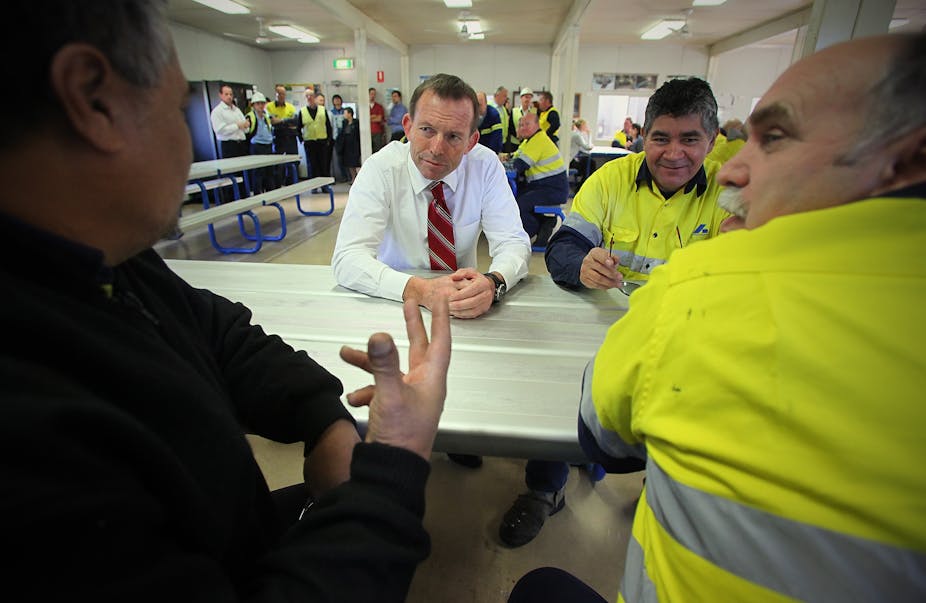
Opposition leader Tony Abbott claims the proposed carbon policy is “socialism by stealth”? I wish!
I suspect we do need some emphasis on the common good and public benefits to counter the attempts to sell us a tax change via short-term self interest - but this is not the case.
The whole justification for this package ought to be the future. A package that promises no pain for most of us undermines the possibilities of real political leadership that tweaks of our social conscience.
“We” rather than “me”
The one factor missing from the carbon debate is the appeal to our collective good-will by using the words ‘we’ and ‘us’.
‘What’s in it for me?’ is the primary driver of both the Abbott and Gillard battles for our hip pocket calculators.
What we, as citizens of a developed nation, should put into a making a cleaner environment is barely mentioned, except to point out it’s not us but the polluters who will be paying.
We need a bit more, or even much more, discussion of our possible engagement as responsible citizen with goodwill.
If one major party had taken such an approach, it may have given us the option of seeing this type of change as a joint nation building commitment to cleaning up the environment. Instead we have a Dutch auction for our votes.
Wider vision
We are capable of wider vision. Remember the gun buyback levy? The roads levy? And we have many other such responses of hypothecated taxes which people took on as their share of the common burden.
The evidence is there: in many tax studies people respond to extra taxes they know are being used for good purposes. Many objections to tax rises are based on distrust of government‘s use of the money. The more this is specifically tied to a good purpose, the more people are willing to pay.
Sure, tax the rich and the actual polluters; but most of the rest of us could also contribute and may well be prepared to.
If the government wants us to take climate change seriously, we need to buy in and make some commitment to it as well. Instead the tenor of the debate is that we are sitting at home trying to work out how to manage our income to maximise our tax cuts.
No gain without pain
Why should most of us not feel any pain - or in fact make some gain - from this process? Changing energy consumption needs to start with the consumer and the current policy does not put the wood on us at all.
Why take energy reduction seriously if it is not going to affect our overall spending?
Letting motorists off extra payment for petrol, so there is no incentive to cut car use, makes no sense. Yes, those with no public transport have no other options, but we have too many cars and many are new SUV gas guzzlers.
Now, no one has a financial prod to change behaviours.
Power bills go up regularly for many reasons, yet the climate rise will be offset by the compensation, so most households have no reason to cut the bills.
We have the second biggest houses in the world, so maybe having some penalty on heating and cooling all those empty rooms would be good for us.
Making high power use hurt, at least in some minor ways, for those of us with some discretionary spending, would be a good indicator of social responsibility.
Political self-interest
However, the message is that we can get away with political self-interest, so why bother being responsible for others?
The whole political debate has become increasingly bizarre as both major political parties treat voters as venal consumers looking for the best political bargain.
Abbott messages appears to be: Buy me as your political leader and I’ll save you more per week that she does.
This tone is sets up the whole debate and Gillard appears to accept it. To paraphrase Malcolm Fraser, the Coalition is much better at self-interest, so the ALP should not try and compete.
Good initiatives overlooked
Despite the good initiatives in the package, reporting has focused on what it will cost households, allowing the anomalies to be emphasised and good bits overlooked.
Yes, protecting the poor is good, but many of those getting extra, like those with the senior health cards, are not needy.
At the real bottom end, the people on benefits are getting less than those on pensions. This is absurd as they are already deeply underpaid and their power bills are no cheaper than those on age, disability and carer payments. So why do they get $120 per annum less?
These types of anomalies further suggest the packet is about the cynical buying votes from swingers in the middle and upper middle income areas and not even a serious redistribution. Socialism indeed!