


The Coronial Inquest into the police shooting of Melbourne teenager Tyler Cassidy concluded this week, with Coroner Jennifer Coate ruling there was “an urgent need for training to focus on how to deal with vulnerable young people like Tyler”.
Fifteen-year-old Tyler Cassidy was fatally shot by police officers on the night of December 11, 2008. Before police arrived on the scene, Tyler had been behaving erratically. He had been drinking and had acquired two knives from a nearby store, which he later used to threaten police officers who attended the scene.
While handing down the findings of the inquest, Coroner Coate rejected the idea that Tyler had been seeking “suicide by cop” and exonerated the officers from any wrongdoing. But she did find fault in the training of the police officers and concluded that the three who fired on the 15-year-old had “acted within the limitations of their training”.
Fatal shootings
Australia has an unfortunate history of police violence against individuals with mental illness, with fatal shootings of mentally ill people occurring in most states and territories. A particularly high profile case was the 1997 NSW police shooting of French photographer Roni Levi on Bondi Beach.
In May this year, Western Australian police officers shot a woman in the stomach at the front door of her home. According to the woman’s family, she was suicidal at the time and had a history of mental health problems.
As with Tyler Cassidy, these individuals were shot during a severe mental health crisis. They were wielding knives and officers involved later reported feeling remorseful and wished the outcomes had been different.
Police training
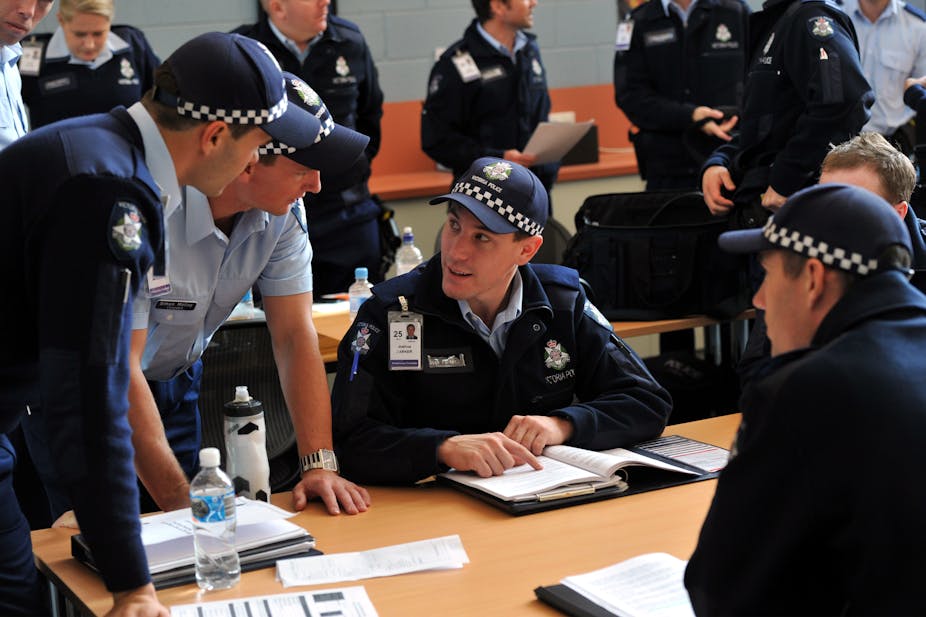
Training of police officers in how to respond to critical incidents is a cornerstone of recruit education. Much of this training reasonably focuses on confrontation procedures and maintaining officer safety.
Less attention is paid to the requirements of responding to mentally ill individuals. When a person has impaired comprehension and language abilities, along with intense anxiety or distress, officers need to employ “de-escalation” techniques and alter their body language and voice to try to reduce aggression at the scene.
Although the NSW police force instituted a specific, intensive four-day mental health training program for frontline officers in July 2009, the roll-out has been painfully slow and is only targeted to reach 10% of frontline officers by 2015.
Victoria Police has started to roll out a Mental Health First Aid Program (MHFA) to some officers, which teaches them how to recognise and assist individuals in mental health crises. The format is analogous to physical first aid and outlines the best way to proceed when faced with people showing signs of agitation, aggression and the possibility of violence.
Similar training packages are yet to be introduced by other police forces across Australia, despite calls for funding at the federal level.
A better way to respond to distress
It’s possible that even with training, the four officers who attended the scene in December 2008 would have still proceeded in the same way. When faced with a distressed, armed young person brandishing two knives who is advancing at officers – despite repeated requests to halt and disarm – it’s difficult to see how else officers could or should have reacted.
While police clearly need greater training in how to safely respond to vulnerable people in crisis, the Cassidy case also highlights the need for mental health education across the whole community.

Research about young people at risk of mental health crises shows there are warning signs that friends, family, teachers and other involved adults can look for and respond to. Actively engaging a young person in appropriate and timely treatment, well before a crisis point is reached, is the most effective avenue for stemming the collateral damage of mental illness in adolescence. It’s this message that has made Professor Patrick McGorry such a popular campaigner for youth mental health services.
In response to the findings of the inquest, Tyler Cassidy’s mother, Shani, this week stated she was “relieved that the Coroner found that Tyler did not deliberately take his own life but it distresses [her] greatly that on the night of his death Tyler was in crisis and clearly needed help”.
If everyone involved in the care of people having a mental health crisis – friends, family, teachers and even the local store attendants – were trained to recognise and respond to warning signs of young people having a mental health crisis, the need for critical police intervention may be averted in the future.
The Tyler Cassidy case highlights not only inadequate police training, but a much broader failure of national relevance. We have mental health education programs that help prevent such outcomes but these need to be better funded and rolled out on a broad community basis to be most effective in supporting young people at risk.