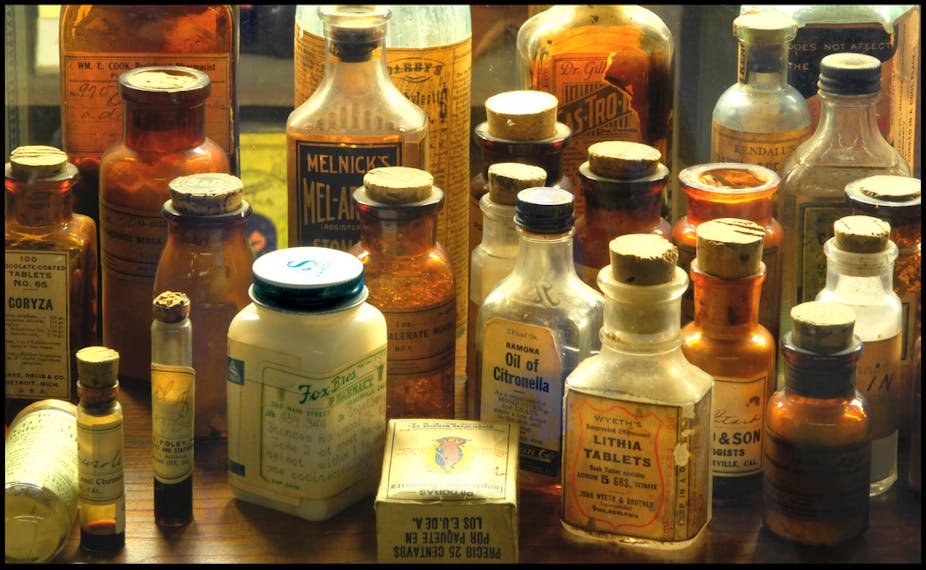
While drizzling treacle on your porridge or spreading it on your toast, you might consider the time when the calorie-laden condiment was an antidote for poison. Of course, these days the crushed vipers that supposedly gave theriac or theriacle (as it was known) power are off the ingredient list, but treacle’s fall from favour illuminates an important aspect of the debate around teaching courses in complementary and alternative medicine (CAM) at university.
This debate started when the newly formed Friends of Science in Medicine (FSM) called for universities to not teach CAM courses. But the articles that followed and the comments they’ve attracted reveal some confusion about the aims of the group. Their call is not to end research into the various modalities under the CAM umbrella; they’d like universities to not set up programs giving CAM vocational degrees.
This difference is the same as the one between teaching about astrology, and teaching a vocational course to produce astrologers. I don’t introduce astrology as a distraction. Astrology was once one of the four pillars of western medicine, and one of Galileo’s duties as a mathematician at Pisa was to teach it to medical students.

Those same students would prescribe medicinal treacles, and Venetian treacle (comprising of more than 50 ingredients, including crushed vipers) was particularly prized. Although it was meant to treat the poisoned, treacle was enjoying a renaissance as a treatment for plague at the time.
Astrology is no longer part of modern medicine, despite it being very popular and many people swearing by astrological predictions. Similarly, treacles are no longer part of medicine despite nearly 2,000 years of enthusiastic use and testimonies by famous physicians of antiquity.
No law of similarity
Herbal medicines are often used as a justification for teaching CAM in universities. Undoubtedly, many herbal medicines work – willow bark for headaches; foxglove extract for heart failure and; artemesinin for malaria. There is, in fact, an entire branch of medicine dedicated to finding active pharmaceuticals from natural sources (pharmacognosy) and about one in four current medicines are based on natural products.
But while there are many herbal medicines that work, there are many others that don’t. The medicinal treacles are a historical example, but there’s very strong evidence that echinacea, a herb used for preventing colds and flus, doesn’t work. But it’s still recommended by many complementary medicine practitioners.
This brings us back to what universities should teach. Universities have a variety of goals, one of the most important being to make their graduates capable of critical, independent thought. This is true of the vocational courses such as medicine, dentistry and nursing.

So what would a vocational course in CAM look like if they applied this principle? CAM consists of a variety of modalities, from herbalism, which has reasonably strong evidence for some of its treatments; to acupuncture, which has very weak evidence that it might work in very limited circumstances; to practices such as reiki and homeopathy, where there’s strong evidence they do nothing at all.
A true university course in CAM should look critically at these modalities, and the evidence for them, rather than just reiterating traditional teachings. In the end, there’d likely be very little left to teach because the fact that some herbs are therapeutic doesn’t justify other modalities.
Revealing hidden harms
More than half of all Australians use a CAM modality in any given year, and as most people don’t tell their medical practitioners about it (they don’t see herbal medicines as drugs). This can have a serious impact on patient health.
The classic example of such harm is from St. John Wort, a herb that’s an effective antidepressant, but can interact with other drugs to cause failure of HIV therapy and anti-rejection drugs (for organ transplants) among other serious side effects. We should make those studying health care aware of these issues, but this is very different to teaching a vocational course in CAM.

At the heart of this debate is our desire for autonomy in health-care decisions, but appeals to ancient traditions and popularity are not sufficient to establish vocational courses. Remember treacle? Its use was a 2,000-year-old tradition, and it was highly popular, with extensive testimonials. But it didn’t work for curing the plague or venomous bites.
Our ancestors weren’t stupid, and were keen observers of the natural world. Yet they were completely wrong about medicinal treacle. Treacle recipes could be very different (not all contained crushed vipers, for instance), but they all contained opium, sometimes in heroic amounts. While opium had no effect on the plague bacillus or viper venom, it did provide symptomatic relief, fooling generations.
What this shows is humans can fool themselves very easily, especially when faced with intractable conditions, where hope can blind us to reality. Conventional medicine has spent centuries developing ways to reduce the chances of fooling ourselves – the double-blind placebo-controlled trial being one important (but not the only) way. CAM avoids these measures.
So as you eat your breakfast, you may reflect that promoters of teaching vocational CAM courses in universities should be careful what they wish for. A rigorous, evidence-based university course would be devoid of the majority of CAM modalities – like your treacle is devoid of vipers' flesh.
Join the conversation
Comments (146)
Yoshua Wakeham
Graduate (logged in via email @gmail.com)
Excellent article, Ian – though I'm a little sad to hear that echinacea isn't all it's cracked up to be. I don't know how I'm going to break this to my mum!
Marcello Costa
(Professor of Neurophysiology, Department of Physiology at Flinders University)
Excellent article Ian,
now you can expect the usual ramble of opposing views repeating at nauseam the views about freedom of choices, openness to new ideas, tolerance to different views etc etc.
You show well that the most genuine freedoms and new ideas actually come from critical scientific attitudes not from blind beliefs in some magical cures or mysterious powers.
Well done
Grendels
(logged in via Twitter)
My first thought on reading this article was "How long will it be before I see someone advertising the 'ancient and reknowned medicinal treacle of Venice' on a website?". For added measure perhaps they will add a little of that soverign remedy, echinacea and produce the syrup on a production line underneath hanging crystals to add therapeutic harmonics.
My second thought was - I bet that will make a lot of money and sell a lot of sugary syrup. I wonder where one can obtain organic crushed viper and GMO free treacle...
This was a great article that outlined very well the difference between teaching people about something without the need to validate it by turning it into a course.
Ian Musgrave
(Senior lecturer in Pharmacology at University of Adelaide)
You need four vipers for the standard recipe, during the renaissance there was a preference for free range, rather than farmed vipers (but overly wild vipers were considered too strong).
During the renaissance there was a fierce debate in France about whether you could use the local vipers, or the ones specified by Galen, the traditionalists won. I'm not sure if customs will allow importation of Mediterranean vipers for free range farming.
No, I'm not making this up, one day I'm going to write a book.
Grendels
(logged in via Twitter)
Woe betide he who might think to substitute an asp...
The only vipers that AQIS will allow into the country are the species domesticated for use in the automotive industry in Europe where they are attached to cars to keep the drivers vision clear in inclement weather - the Vindscreen Viper.
I know, awful, just awful, and yet even as I typed it I knew I could not resist its lure.
Carole Hubbard
conservationist (logged in via email @iimetro.com.au)
In 50 years (I was going to say 100 but it won't take that long) chemo, radiation and surgery will be looked on as you now look on viper's flesh ian.
I'm sure your book will be rivetting.
Grendels
(logged in via Twitter)
Carole - I hope that in 50 years we can look back at Chemo in horror - not in the same way as we look back on Viper's flesh however. Our horror for Chemo will be that while it worked (but not always - and with significant side-effects) it was the best we had at the time along with surgery.
The interesting part will be what we are using to treat cancer - and how we figured that out. I can prognosticate here a little since I know the answer to the 'how' question already.
We'll get there using science to test ideas, we'll make lots of mistakes and in the process advance the knowledge about what does not work - and find a few gems of what does work.
I agree that Ian's book will be rivetting.
Michael Tam
(Lecturer in Primary Care at University of New South Wales)
Dear Ian,
Thank you for a fantastic article!
The division of therapeutic interventions and empiric claims about health into "Western"/"conventional" health care, and "complimentary"/"alternative" health care is a distraction. Interventions are interventions, and claims are claims regardless of philosophic "tradition", and they should be judged by a scientifically informed, evidence-based approach.
A common argument used by proponents of CAM is that their health claims are somehow worthy…
show full comment
William Bennett
Postdoctoral Researcher, Griffith University (logged in via email @griffith.edu.au)
Fantastic article Ian. I have thoroughly enjoyed all of your contributions to The Conversation - keep it up!
I sincerely hope that Australia's Universities listen to the FSM (of which I am proudly a member), and reject the teaching of CAM in their degrees. It's a shame that we even need to campaign against this nonsense!
Peter Fox
(logged in via email @gmail.com)
Great article, Ian. You explained the crux of this issue, which many of the pro-CAM lobby have difficulty accepting.
If they want to start a private college to teach about Energy Flow, that's all well and good, but it should not use the name of a legitimate University, and certainly should not attract any taxpayer funding.
Angela Doolan
Univeristy trained naturopath, Law student UNE (logged in via email @hotmail.com)
It is clear that the level of critical and independent thought expressed in this article and ensuing commentary would enormously benefit from doing even one introductory unit in herbal medicine taught in an Australian university.
Ian Musgrave
(Senior lecturer in Pharmacology at University of Adelaide)
To emphasise again, as I did in the article, the issue is not with herbal medicines _per__ se_ (there are other issues a University style course should address though), but the fact that therapies with poor or no evidence ride on the coat tails of herbalism.
Angela Doolan
Univeristy trained naturopath, Law student UNE (logged in via email @hotmail.com)
Hi Ian, thought you might like to read these if you haven't already. http://onlinelibrary.wiley.com.ezproxy.scu.edu.au/doi/10.1111/j.1755-5949.2010.00202.x/pdf And hot off the press - http://www.plosone.org/article/info%3Adoi%2F10.1371%2Fjournal.pone.0031424
Ian Musgrave
(Senior lecturer in Pharmacology at University of Adelaide)
The Curucmin one was very interesting, as it produces effects on fibrils the exact opposite of what we and most people find, yet still reduces toxicity.
Again, this re-enforces what I was saying about evidence. Curucumin works well in tissue cultures and model systems, but there is no way you can eat enough curry to get an anti-Alzheimer dose of curcumin from your diet. People are researching ways to make curcumin preps that WILL get enough into your body, but it's not simple.
Sue Ieraci
Public hospital clinician (logged in via email @healthcaresd.com)
Ms Doolan, would you please outline where you see the errors here and what your evidence is to correct them?
Shauna Murray
Research Fellow (logged in via email @unsw.edu.au)
I enjoyed this article. However, I very much agree with the above comment by Jana Harwick- that in the last 10 years, we now have a much deeper evidence-based understanding of some therapies that were previously considered CAM.
For example, the benefits of meditation, yoga, etc for treatment of chronic pain, depression and some purely medical conditions have been documented in well designed medical trials.
Therefore I disagree that a "CAM" degree that only focused on those treatments that were evidence-based would necessarily be brief. I think this would be an important step forward.
Sue Ieraci
Public hospital clinician (logged in via email @healthcaresd.com)
Therapies that are shown to be effective generally join the mainstream. Ideally, there would be "medicine" (things that have been shown to have benefit exceeding harm, and be cost-effective) and non-medicine (things that have not been shown to have benefit over placebo, present more risk than benefit, or marginal benefit at great cost).
A system of health care needs to embrace as many of the therapies and approaches that are meet these criteria as possible, and a minimal number of those that don;…
show full comment
Angela Doolan
Univeristy trained naturopath, Law student UNE (logged in via email @hotmail.com)
Hi Sue. If your first sentence is correct, why is St John's Wort not a first line treatment for mild to moderate depression especially in a vulnerable population like teenagers? I totally agree with your second paragraph. I am attaching an article on standardisation of herbal product as there are many issues around the concept. http://www.mediherb.com.au/pdf/tc_230a.pdf If alternatives have no additional value why are the public engaging them in prolific numbers?
Ian Musgrave
(Senior lecturer in Pharmacology at University of Adelaide)
Because there is a fair chance that the St. Johns Wort preparation will not contain any active ingredient, and the batch to batch variation is quite large in the ones that _do_ have actual amounts of St. John Wort in it.
http://www.ncbi.nlm.nih.gov/pubmed/14506510
http://www.ncbi.nlm.nih.gov/pubmed/20450158
When you actually look at what people are using, it's mainly vitamins (when they don't actually *need* vitamins). But, as the main theme of my articel states, people are good at fooling themselves, and when alternative health sites do not critically appraise the advice they offer, people will choose things thinking they have good advice, when they don't
Angela Doolan
Univeristy trained naturopath, Law student UNE (logged in via email @hotmail.com)
Hi Ian, I commend to you St John Wort preparation Ze 117 that has undergone a rigourous pharmaceutical grade standardisation process and multiple clinical trial efficacy and safety profiles, available at all good local naturopaths and herbalists who are acutely aware of the issues you raise.
Sue Ieraci
Public hospital clinician (logged in via email @healthcaresd.com)
Angela - you ask "If alternatives have no additional value why are the public engaging them in prolific numbers?" That is an important question - as people are vulnerable to many trends that can be costly or harmful - including cigarette smoking, gambling - to name just a couple. In general, my theory is that people find the interaction with the provider therapeutic. Ironically, though, they are not prepared to pay the same sort of prices for their own GP to spend as much time with them - in which case they could have the therapy of the interaction AS WELL as evidence-based medicine.
Angela Doolan
Univeristy trained naturopath, Law student UNE (logged in via email @hotmail.com)
Hi Sue. You raise some great points. I don't think examples of addictive and compulsive behaviour are potentially the best examples to illustrate why so many of the public is engaged with CAM. Some people are paying their integrative GPs significantly more (up to around $400 per hour) for a longer interaction and evidence based CAM which is significantly less than naturopaths charge who are also working in an evidence based paradigm. GPs might need to ask themselves why their clients are not choosing…
show full comment
Rachael Dunlop
(Researcher and Communications Officer at Heart Research Institute)
What you refer to Shauna are therapies not medicines and I think it is important to distinguish between the.
I recently reviewed an article looking at the benefits of tai chi in reducing falls in elderly people. Somewhat unsurprisingly, it proved beneficial as tai chi improves balance.
See http://onlinelibrary.wiley.com/doi/10.1111/j.2042-7166.2010.01070_11.x/abstract
Although I haven't seen any published evidence for yoga and meditation in depression and pain, I would be equally unsurprised to find that they help, probably purely as a placebo.
Jana Hamik
(logged in via Facebook)
I am a holistic nurse in private practice where I practice several integrative and mind-body modalities including guided imagery, acupressure, breath work and mindfulness approaches. I am also a chronic pain patient and so I am all for universities teaching their students some complimentary and alternative healing modalities. However,
Not Until They Do A Better Job Teaching Students About Pain, Both The Neuroscience of Pain and Pain Management
should they begin to focus on CAM. While CAM is…
show full comment
Lisa Simpson
Procrastinator (logged in via email @gmail.com)
While you make some good points about pain management Jana, its fallicious to argue that all CAM is justified just because CAM practitioners get some things right when it comes to patient care/patient interaction. Good medical practise includes all of the things you mention, a minority of doctors overlooking them does not make eg homeopathy justified.
Angela Doolan
Univeristy trained naturopath, Law student UNE (logged in via email @hotmail.com)
Just saw this Jana and thought of you. http://www.medscape.com/viewarticle/759254?sssdmh=dm1.762417&src=nldne Interesting.
Rachael Dunlop
(Researcher and Communications Officer at Heart Research Institute)
Ian, really great and clear article about this issue. Also congrats on dedicating so much time to commenting on other articles on this issue. Kudos
Ian Musgrave
(Senior lecturer in Pharmacology at University of Adelaide)
http://xkcd.com/386/
:-)
Rachael Dunlop
(Researcher and Communications Officer at Heart Research Institute)
Yes, I know, It's my problem too ;) I use this XKCD in all my lectures about why it's important to contribute to Web 2.0
Luke Weston
Physicist / electronic engineer (logged in via email @gmail.com)
Just because Pauling was a Nobel laureate (for his work on quantum chemistry and the nature of the chemical bond) doesn't mean that his claims that mega-high doses of Vitamin C as a cure-all panacea of some sort get away from our skepticism and scientific scrutiny with some sort of diluted standard of evidence.
That's such a simple example of a logical fallacy - false appeal to authority - but indeed, when dealing with CAM proponents, it's valuable to brush up on "Logical Fallacies 101"; you'll…
show full comment
Michael Bending
Researcher (logged in via email @health-freedom.com.au)
He who lives in a glass house should not throw stones….
“many herbal medicines work – willow bark for headaches; foxglove extract for heart failure and; artemesinin for malaria.”
I love how the sceptics, in one breath, infer that when scientifically proven and used in orthodox allopathic medicine many herbal medicines work, But on the other hand, when used in TCM and Naturopathy treatments they do not work as TCM and Naturopathy are quackery. The psuedo Sceptics want their cake and they want…
show full comment
Ian Musgrave
(Senior lecturer in Pharmacology at University of Adelaide)
You need to read the article again, as well as Rachael's point about formulation and safety, the other point is that the existence of some effective herbal medicines doesn't give the rest of the CAM armatorium (reki, acupuncture, homoepathy etc.) a free pass.
Ian Musgrave
(Senior lecturer in Pharmacology at University of Adelaide)
Oh yes, I forgot about the out-of-date assessments of effectiveness of medicines. See here for the truth.
http://theness.com/neurologicablog/index.php/how-much-modern-medicine-is-evidence-based/
Carole Hubbard
conservationist (logged in via email @iimetro.com.au)
I just don't think that Friends of Medical Research has got any place trying to tell CAM what and what not it should do.
In your article you say, "But while there are many herbal medicines that work, there are many others that don’t."
Might I point out that modern conventional medicine has a fail for its ability to treat so many conditions successfully, and must rely on lifelong ingestion of pharmaceutical drugs without any cures. That is if it even knows how to treat many conditions, so many remain…
show full comment
Grendels
(logged in via Twitter)
"Might I point out that modern conventional medicine has a fail for its ability to treat so many conditions successfully, and must rely on lifelong ingestion of pharmaceutical drugs without any cures"
Lets take HIV as an example there. Yup, medical science does not yet have a cure, but you know what? Anti-retroviral drugs allow a person to live with HIV and prevent the development of AIDS. Yes you have to take a cocktail of drugs for the rest of your life (or until a cure is found) and that sucks…
show full comment
Carole Hubbard
conservationist (logged in via email @iimetro.com.au)
Grendels, the fact that there are no suitable tests showing homeopathy works is probably due to the fact the wrong tests have been used due to the fact that there is no money in homeopathy for big pharma.
see http://www.sebahu.com/cancertutor/Other/NoCancer2.html
Part 3 - The Politics
How the Cancer Industry Suppresses The Truth
"More on "Scientific" Studies
I have talked about how Big Pharma makes a worthless substance look good. They use scientists who masterfully compare one type of toxic…
show full comment
Grendels
(logged in via Twitter)
So it is all a conspiracy? All those researchers and doctors and scientists? Millions of them all keeping some big dark secret?
Wow.
And only a few thousand of them actually work for pharmaceutical companies.
As for homoeopathy and money - is there any CAM that has profit margins as juicy as homoeopathy?
Water, a little lactose and no molecule of any active ingredient. Wow, so cheap!
I hope you were not hoping that the commentary you posted could be considered persuasive - ideologically…
show full comment
Sue Ieraci
Public hospital clinician (logged in via email @healthcaresd.com)
Ms Hubbard - you say "the fact that there are no suitable tests showing homeopathy works is probably due to the fact the wrong tests have been used due to the fact that there is no money in homeopathy for big pharma."
The reason that no suitable tests show that homeopathy works is that remedies that do not contain any therapeutic ingredients cannot work (beyond placebo effect.)
However, you also need to realise what an enormous profit-margin the homeopathic industry operates with. With marginal materials costs and no research or regulation clearance, these homeopathic "remedies" are sold at enormous profit by both the wholesalers and the prescribers.
Rachael Dunlop
(Researcher and Communications Officer at Heart Research Institute)
"I love how the sceptics, in one breath, infer that when scientifically proven and used in orthodox allopathic medicine many herbal medicines work, But on the other hand, when used in TCM and Naturopathy treatments they do not work as TCM and Naturopathy are quackery."
Michael, you miss a very important point here. This statement is correct owing to the difference in controls used in the manufacture of herbal meds versus pharmaceutical meds in Australia. There are no controls on supplements in…
show full comment
Ian Musgrave
(Senior lecturer in Pharmacology at University of Adelaide)
And more on the myth that modern medicine is not evidence based
http://www.veterinarywatch.com/CTiM.htm
Rachael Dunlop
(Researcher and Communications Officer at Heart Research Institute)
I also should add - full disclosure, my name is on the list of FSM peeps.
Stephanie Hagendyk
Manager (logged in via email @gmail.com)
You have put across an important issue with CAM...that the general public is not educated enough as to how many CAM treatments should be used. In response to your comment about CAM courses being devoid of many of the elements that make up the various natural therapies due to the fact that they try to avoid evidence based research is pretty much a really stupid comment. Sorry to say, but as a molecular pharmacologist, you of all people should know how to research before writing something that is for…
show full comment
Ian Musgrave
(Senior lecturer in Pharmacology at University of Adelaide)
There is indeed little evidence that (out side of some herbal medicines) so called complimentary medicines do anything significant. I gave some key examples with references in the the main text.
Looking at the list of subjects in the Naturopathy degree we see
Iridology - no evidence that it works and evidence it may cause harm
http://www.ncbi.nlm.nih.gov/pubmed/10213874
http://www.ncbi.nlm.nih.gov/pubmed/10636425
Homoeopathy - not good evidence it is better than giving sugar pills
http://www.publications.parliament.uk/pa/cm200910/cmselect/cmsctech/45/4502.htm
If a course was teaching about modalities with actual evidence, then neither iridology nor homoeopthay would be on this list.
Angela Doolan
Univeristy trained naturopath, Law student UNE (logged in via email @hotmail.com)
Ian, have you ever read Braun and Cohen's - Herbs and Natural Supplements - An Evidence Based Guide? I am strongly suspecting not in which case I highly recommend it to you.
Sue Ieraci
Public hospital clinician (logged in via email @healthcaresd.com)
Ms Doolan, have you read Katzung's Basic and Clinical Pharmacology? I recommend it to you.
Edward John Fearn
(logged in via Twitter)
Sue
I am interested in your critical view of Braun and Cohen's work, what in particular leads you to the opinion that the authors are lacking in an understanding of basic pharmacology? I am more than willing to listen to any intelligent critical feedback in this regard.
Sue Ieraci
Public hospital clinician (logged in via email @healthcaresd.com)
Mr Fearn - Braun and Cohen is not a pharmacology text - it is more like a pharmacopoeia. Pharmacology is a clinical science - it involves understanding the therapeutic effect of a remedy - whether plant derived or not - in the body. This requires an understanding of cellular structures and membrane receptors, the autonomic nervous system, the portal circulation - not name but a few. This is one of the main features of a science-based therapy - it requires not just scientific evidence of effect, but need to be BASED on science.
Grendels
(logged in via Twitter)
Edward, I don't recall anyone criticizing the Braun and Cohen text, and regardless of its scholarly value the problem within CAM is the way proponents tend to cling to any work that validates CAM from a scientific perspective while rejecting any scientific evidence that tends to run contrary to the conclusions they would prefer. This is not a criticism leveled at the authors as much a some of the ways their work used.
Rachael Dunlop
(Researcher and Communications Officer at Heart Research Institute)
I don't think Ian is questioning the efficacy/potential efficacy of herbs and some supplements. It's the CAMS which have been demonstrated to have no evidence which he is pointing his finger at.
John Harland
bicycle technician (logged in via email @gmail.com)
I would add a caveat that some therapies (conventional or otherwise) work for some people and not for others.
Population aggregates or averages are not the final word.
How do we test what works for whom, in what conditions?
Ian Musgrave
(Senior lecturer in Pharmacology at University of Adelaide)
Take codeine, around 1 in ten people will not get pain relief from codeine as they do not have a working CYP2D6 gene
http://en.wikipedia.org/wiki/CYP2D6
Compare this with Gingko, where there is no good evidence it helps anybody
http://summaries.cochrane.org/CD003120/there-is-no-convincing-evidence-that-ginkgo-biloba-is-efficacious-for-dementia-and-cognitive-impairment
Angela Doolan
Univeristy trained naturopath, Law student UNE (logged in via email @hotmail.com)
Really? Maybe you need to look here http://www.ncbi.nlm.nih.gov/pubmed?term=ginkgo%20
Ian Musgrave
(Senior lecturer in Pharmacology at University of Adelaide)
Which ones?
A Potential Drug-Herbal Interaction between Ginkgo Biloba and Efavirenz.
"Drugs that significantly inhibit or induce these enzymes would then be expected to increase or lower the levels of EFV potentially resulting in toxicity or therapeutic failure, respectively. The constituents of Ginkgo biloba extract have been demonstrated to induce gene expression of the CYP450 enzymes."
Anticoagulant activity of select dietary supplements.
Herb-Drug Interactions and Mechanistic and Clinical…
show full comment
Angela Doolan
Univeristy trained naturopath, Law student UNE (logged in via email @hotmail.com)
Hi Ian, I guess I take issue with broad, unqualified statements like "compare this with Ginkgo, where there is no good evidence it helps anybody." I do sympathize with your frustration regarding evidence for ginkgo in your area of study, but by quickly applying limits like human studies and clinical trials to the original pubmed search a body of evidence exposes your inital statement as inaccurate.
Ian Musgrave
(Senior lecturer in Pharmacology at University of Adelaide)
You did read the link I referenced, did you not?
If there are no good clinical trials showing ginkgo has benefits in humans, my statement stands. In vitro and surrogate marker research doesn't provide good evidence that it helps people.
As above, high quality clinical trails show Gingko has no effect on dementia or neurodegeeraton
How about claudication
"There is no evidence that Ginkgo biloba has a clinically significant benefit for patients with intermittent claudication."
From the Cochrane library: Ginkgo biloba for intermittent claudication.
Nicolaï SP, Gerardu VC, Kruidenier LM, Prins MH, Teijink JA.
Vasa. 2010 May;39(2):153-8.
Nutr Cancer. 2011 May;63(4):573-82.
Specialty supplements and prostate cancer risk in the VITamins and Lifestyle (VITAL) cohort.
"There were no associations for use of chondroitin, coenzyme Q10, fish oil, garlic, ginkgo biloba, ginseng, glucosamine, or saw palmetto."
Where is the *good* evidence that it helps anybody
Sue Ieraci
Public hospital clinician (logged in via email @healthcaresd.com)
Ms Doolan, have you read the list of references that you have linked to?
In the second paper listed in your PubMed reference list, the results section included this statement:
" The semi-quantitative scoring of liver HBx expression was highest in the control group at the 12 months. The semi-quantitative scoring of liver HBx, p53 and Bcl-2 expression was highest in the control group at the 18 months. They all appeared statistically different among the three groups."
Could you please explain the clinical significance of this finding?
Ian Musgrave
(Senior lecturer in Pharmacology at University of Adelaide)
Lets look at the first one on your list:
Indian J Pharmacol. 2012 Jan;44(1):118-21.
In vivo effects of Ginkgo biloba extract on interleukin-6 cytokine levels in patients with neurological disorders.
IL6 levels in people with undefined neurological disorders were reduced after Gingko consumption, but IL-1β and TNF-α levels were not. There were no control groups so we don't know if this variation was due to Gingko or not. However, even if this finding for IL6 is true, the fact remains that well conducted clinical trials show no effect on either Alzhemier's disease or general neurodegeration (see references in previous comments).
Edward John Fearn
(logged in via Twitter)
A Multicenter Randomized Double-Blind Study of Ginkgo Biloba Extract Versus Placebo in the Treatment of Tinnitus
B. Meyer
Service d'Oto-Rhino Laryngologie, Hospital Saint-Antoine, F 75012 Paris
Summary
This important multicenter study of 103 tinnitus out-patients during a 13-month treatment period was carried out by ten E.N.T. specialists, using the double blind, drug versus placebo method. The results were conclusive as regards the effectiveness of Ginkgo Biloba Extract and made it possible to determine the prognostic value of different parameters. Of special importance among these parameters were site and periodicity of the disease. However, the Ginkgo Biloba Extract treatment improved the condition of all the tinnitus patients, irrespective of the prognostic factor.
Grendels
(logged in via Twitter)
Anything 1986? Picking an older journal article leaves 26 years of research unexplored...
Edward John Fearn
(logged in via Twitter)
My last post should not imply in anyway that there is good evidence validating Ginko Biloba to the treatment of tinnitus. Simply that it may be of some clinical value in the absence of responsiveness to conventional treatment. If anything the positive improvement in all subjects would lead me to question the findings, It was posted simply as a discussion piece.
Grendels
(logged in via Twitter)
Discussion is good! And one of the best things about PubMed and similar research tool are the links they place beside the paper you have selected that relate to it in some way. Because this is an older paper there is a plethora of more recent work available from a range of disciplines. What becomes clear when you look at these papers, and the many reviews of prior research, is that Ginko has no value in easing tinnitus. This is disappointing - but just because there was no positive result it does not devalue any of the previous research than came before. In science a negative result is also a win because the goal is to learn more, not just validate a hypothesis.
John Harland
bicycle technician (logged in via email @gmail.com)
The diagnoses of a Natropath relative have often been helpful in pinpointing nutritional deficiencies that normal medical (and dental) practitioners had not.
Fortunately, she is a relative so I can take or leave the advice, and subject it to my own scrutiny. Other of her advice is useless but I have enough training in biosciences to be able to filter it reasonably.
Illnesses are frequently part of a larger pattern of lifestyle, nutrition and so forth. Short consultations with a practitioner are unlikely to give time to take stock of these.
Through generally-longer consultation times, CAM practitioners can more often see those linkages. Even if their therapies were not as immediately effective, they might start at a big advantage through actually addressing the cause, rather than the symptoms.
Sue Ieraci
Public hospital clinician (logged in via email @healthcaresd.com)
Mr harland, when you use your training in biosciences to filter which advice is useless, what criteria do you use? Does the advice have to be feasible in the light of known physiology, pathology, genetics, therapeutics? Which is the biosciences do you apply?
Sam Edwards
(logged in via Twitter)
This is far and away the best article that has been written on this topic so far. Well done.
Carole Hubbard
conservationist (logged in via email @iimetro.com.au)
The only problem with evidence-based studies is that up to 90% of them are flawed.
http://preview.tinyurl.com/35fe5kb
"In poring over medical journals, he [Ioannidis] was struck by how many findings of all types were refuted by later findings. Of course, medical-science “never minds” are hardly secret. And they sometimes make headlines, as when in recent years large studies or growing consensuses of researchers concluded that mammograms, colonoscopies, and PSA tests are far less useful cancer…
show full comment
Grendels
(logged in via Twitter)
So because science keeps searching and self correcting we should not do it? No good scientist ever claims to be totally right - you must always expect that at some point new evidence may emerge to change what you know to be true.
In your approach we should adopt something we have been told works because people have been using it for hundreds of years and not change even if there is evidence that comes along that shows us what we believed was wrong.
Climate science has suffered from the denial…
show full comment
Carole Hubbard
conservationist (logged in via email @iimetro.com.au)
Grendels, I am a climate change denier.
The problem is with evidence-based medicine is that many of the studies are being done by industry with vested interests, ie the pharmaceutical business with disease.
A good source to explain this is -
http://www.sebahu.com/cancertutor/Other/NoCancer2.html
Part 3 - The Politics
How the Cancer Industry Suppresses The Truth
"In prior sections I have discussed how the "Cancer Industry" (i.e. Big Pharma, the FDA, NIH, NCI, ACS, AMA, ad nauseum) uses statistics to lie about the lack of effectiveness of orthodox cancer treatments."
Grendels
(logged in via Twitter)
Of course you are a climate change denier! LOL
Throwing quotes from the internet around is no substitute for actual debate - you addressed not of my points.
Kthxbai.
John Harland
bicycle technician (logged in via email @gmail.com)
To the list of Nobel Laureates who made an ass of themselves outside their field of expertise we should add Macfarlane Burnett. His comments on the heritability of IQ were couched in a comment that made clear that he had little understanding of the concept of heritability as used by geneticists.
Rachael Dunlop
(Researcher and Communications Officer at Heart Research Institute)
This graphic gives a nice visual demonstration of the current evidence (as determined by the authors) for supplements.
http://www.informationisbeautiful.net/play/snake-oil-supplements/
Ian Musgrave
(Senior lecturer in Pharmacology at University of Adelaide)
That's beautiful, I'm stealing this link for my lectures.
Grendels
(logged in via Twitter)
It is a gem - as are many of the other infographics that David
McCandless puts together - we use his work extensively to model how data can be made more immediately relevent. The Snake Oil one is a favourite.
jerry sprom
(logged in via email @gmail.com)
@Sue
"The mainstream or "orthodox" health care system embraces counselling, manipulative therapies, watchful waiting, reassurance and dietary advice as well as pharmaceuticals and surgery. "
Generally speaking, that is not the experience of my clients (with the exception of Integrative Medicine Medicine practitioners).
Sue Ieraci
Public hospital clinician (logged in via email @healthcaresd.com)
Mr Sprom, as a self-described "researcher", I don't know who your "clients" are, but here are some examples where these modalities are standard therapy in orthodox medicine:
- Type 2 diabetes - diet/wt loss as a first line measure
- Mild to moderate depression - cognitive behaviour therapy
- Anxiety - relaxation therapy
- Low back pain, sprains and strains - physiotherapy
- Upper respiratory tract infections - watchful waiting.
These modalities are not necessarily all carried out by the same practitioner, but by team-work within medicine and the allied health professions.
Perhaps the clientele of a researcher are not the same as a medical practitioner.
Guy Hibbins
(Clinical evaluator of therapeutic goods at Monash University)
It is interesting to look at a medical textbook from a century ago and look at just how much of it was evidence based and indeed just how the truth of whether a remedy worked or not was arrived at.
I have a 1463 page book called Domestic Medical Practice from 1920 (Domestic Medical Society - New York) which was seemingly very popular in its day. It was written by leading specialists of the era. You can still obtain copies online.
This book was published the year after Sir William Osler…
show full comment
Greg Horgan
The Armchair Philosopher (logged in via Facebook)
Gee! Such an outpouring of evidence -based medicine. I feel like I have just attended a conference of - dare I say it - fundamentalists. Thou shalt not allow anything but our brand of education in universities. Where i come form we welcome discussion and vigorous debate. I thought education was about critical thinking and debate and exploration and so man other wonderful things. What I read here is everything but.
Patricia Reed
RN (logged in via email @gmail.com)
I guess Alan Smith, the NZ farmer who was brought back from the dead with IV Vit C, is glad his family didn't give in to the Dr's who wanted to turn off his life support :-)
Miracle or controversial ?
http://www.3news.co.nz/Living-Proof-Vitamin-C---Miracle-Cure/tabid/371/articleID/171328/Default.aspx
At least make the effort to watch it.
Sue Ieraci
Public hospital clinician (logged in via email @healthcaresd.com)
I have made the effort to watch this news story. It is not really about vitamin C - it is a story of how very advanced medical technology, including extracorporeal membrane oxygenation, saved a man close to death with respiratory failure from influenza. Against the odds, a few more days of this intensive therapy turned the corner. There is no mechanism by which Vitamin C could have had any effect here - despite the family's beliefs. This man would certainly died if ECMO had not been available.
Tom Hennessy
Retired (logged in via email @cool.zzn.com)
Quote: There is no mechanism by which Vitamin C could have had any effect here
Answer : Theoretically a large dose of vitamin C will become a chelator allowing for increased iron excretion in the urine. Iron is presently being targeted in cancer.
"A possible explanation for the differences seen with ascorbic acid on additional iron availability from the preparations could be related to its iron chelating and iron reducing properties."
"Iron chelators in cancer chemotherapy"
"Iron Chelation in Chemotherapy"
"Cell permeable iron chelators as potential cancer chemotherapeutic agents"
"Chelators at the Cancer Coalface"
Sue Ieraci
Public hospital clinician (logged in via email @healthcaresd.com)
Mr Hennessy - this man did not have cancer - he had respiratory failure following influenza pneumonitis. His condition had nothing to do with iron.
Grendels
(logged in via Twitter)
"Theoretically a large dose of vitamin C will become a chelator allowing for increased iron excretion in the urine"
If it worked we would use it with glee. It doesn't work, so we don't.
Sue Ieraci
Public hospital clinician (logged in via email @healthcaresd.com)
Perhaps because Vitamin C is not a chelator.
Carole Hubbard
conservationist (logged in via email @iimetro.com.au)
If you watch the whole video there is a point where the doctors stopped the vit c treatment without telling the family. The patient took a nosedive. The family had to see a solicitor to get the vit c reinstated, once again the patient started to improve. Not only did he make a much speedier recovery that astounded the doctors but he also recovered from his leukemia, thanks to vit c.
Sue Ieraci
Public hospital clinician (logged in via email @healthcaresd.com)
Ms Hubbard, what evidence is there that a man who was on ventilation and ECMO recovered "thanks to Vit C"? What did the vitamin c do in his body to help his lung start to work?
What actually astounded the doctors is that he did turn the corner and survive. Vitamin C is a red herring - he was saved by some very advanced medical technology, and a persistent family that insisted that the intensivists persist with therapy.
If the medical staff who managed him day and night through this critical illness didn't think the Vitamin C had any influence, why do you - a complete stranger - think that it did?
Carole Hubbard
conservationist (logged in via email @iimetro.com.au)
I think the convention is to use first name when replying.
I disagree that vit C is a red herring. This is what allopathic / pharmaceutical medicine would have people believe and like to deny the power of nutrients in any cure, as they can't be patented and is no money in their use. The cancer industry is a very lucrative business and like any business is in it for the money. See http://www.sebahu.com/cancertutor/Other/NoCancer2.html
How the Cancer Industry Suppresses The Truth
"The FDA will not…
show full comment
Grendels
(logged in via Twitter)
So there are two interventions going on, one thwt can be demonstrated to have a likely causal effect and the other thwt has no known mechanism for the same causal effect. You attribute it to the one least lie,Lyon to have been responsible? That is not medicine, that is ideology.
Grendels
(logged in via Twitter)
iOS typing fail "you attribute it to the one least likely to have been responsible"
Sue Ieraci
Public hospital clinician (logged in via email @healthcaresd.com)
Ms Hubbard - your ideology is getting in the way of logic. One of the most effective remedies, tested and recommended by medicine, is aspirin. This is low-cost and easily accessible almost all over the world - and is not hidden because of any lack of profitability. Vitamin C, on the other hand, makes a fortune for supplement and health product manufacturers, but is not promoted more widely because it has not been shown to have the benefits that many claim (except for Vit C deficiency, or scurvy…
show full comment
Russell Hamilton
Librarian (logged in via email @gmail.com)
"Universities have a variety of goals, one of the most important being to make ..." money.
Also to provide trained students for the needs of a very big business - CAM.
As you say, half the population uses CAM - are they all being misled, all the time? Or do many of the recommendations to CAM practitioners come from friends and colleagues who have tried something and found that it works, despite the lack of evidence that it should. I've never tried echinacea because I found long ago that loads…
show full comment
Ian Musgrave
(Senior lecturer in Pharmacology at University of Adelaide)
Sadly, people can be mislead quite often (which was the point of the post). The major use of CAM in Australia is the consumption of vitamin supplements by health people. All they are doing is paying to get expensive coloured urine.
Russell Hamilton
Librarian (logged in via email @gmail.com)
Have they been surveyed as to what benefits they think they are getting from them? Or do you not know why they are taking them, but simply assume you know why?
Ian Musgrave
(Senior lecturer in Pharmacology at University of Adelaide)
Australian use of complementary medicines have been extensively surveyed See
http://www.nps.org.au/news_and_media/media_releases/repository/complementary_medicine_usefirst_findings_from_nps_survey
http://www.healthissuescentre.org.au/documents/items/2008/04/205181-upload-00001.pdf
Martin Wardle
MD Student (logged in via email @gmail.com)
Actually vitamins do more than just produce expensive urine, they also cause premature death:
http://www.medscape.com/viewarticle/751263
The same is true for antioxidants:
http://www.ncbi.nlm.nih.gov/pubmed/15537682
And some vitamins (eg Vit A) are so toxic that they will cause major birth defects in the children of women taking Vit A supplements or death in an overdose (actually Xavier Mertz - the exploring partner of Douglas Mawson - died from the high levels of Vit A he consumed in dogs liver, when starving in Antarctica).
Surely no responsible health practitioner would suggest such therapy?
Tom Hennessy
Retired (logged in via email @cool.zzn.com)
THIS is where YOUR expertise , Ian , is SUPPOSED to come into the scenario. You are a pharmaceutical lecturer on the use of substances , chemical substances , in the treatment of disease in man. KNOWING therefore certain vitamins ARE natural iron chelators. Or are supposed to know that anyhow. The use of iron chelators in medicine is well known , IE: bleomycin , desferoxamine , quinine , tetracyclines , aspirin , indocin BUT you go on to say "vitamins will do nothing but give you expensive urine" revealing to everyone your sheer and utter incompetence. Or am I reading what you said wrong ?
Incompetence might be too strong a word. It is you are ignorant to the fact certain vitamins cause the body to excrete or directly chelate iron in the body thereby functioning in the SAME 'manner' as the aforementioned bleomycin , desferoxamine , quinine , tetracyclines , aspirin or Nobel Prize winning indocin ?
WHEN
Sue Ieraci
Public hospital clinician (logged in via email @healthcaresd.com)
Even aspirin now chelates iron? Mr Hennessy - please direct us to that evidence so we can toss out the expensive desferrioxamine and substitute aspirin in our toxicology armamentarium.
Tom Hennessy
Retired (logged in via email @cool.zzn.com)
Quote: Even aspirin now chelates iron?
Answer: If you have any questions , direct them at Mr. Wang.
A chelate theory for the mechanism of action of aspirin-like drugs
X. Wang
Department of Pathology, C-352, Cornell University Medical College, 1300 York Avenue, New York, NY 10021, USA Phone: +1212 746 6485, voice mail. +1212 249 6765, Fax: +1212 746 8302
Received 20 March 1997; accepted 13 May 1997.
Abstract
Two hundred years after the discovery of the pharmaceutical usefulness of…
show full comment
Ian Musgrave
(Senior lecturer in Pharmacology at University of Adelaide)
A 15 year old paper in a junk science journal? (Medical hypotheses is not peer reviewed, and is notorious for publishing work that is completely divergent from reality)
As it stands, we have now established that aspirin and it's related NSAIDS act by inhibiting cylocoxenase 1 and 2 (with the pain relief coming from inhibition of COX-2). The chelating theory is nonsense.
http://www.sciencedirect.com/science/article/pii/B0122267656000566
Tom Hennessy
Retired (logged in via email @cool.zzn.com)
Aspirin works for pain. The hypothesis is "aspirin binds iron". You say it doesn't. Acetaminophen too is a pain killer. It is an iron chelator.
"Our goal was to evaluate the iron-removing effectiveness of acetaminophen given ip or orally in the gerbil iron-overload model."
"Treatments with acetaminophen (ip or oral) or deferoxamine (ip) were equally effective in reducing cardiac iron content and in preventing cardiac structural and functional changes. Both agents also significantly reduced excess hepatic iron content, although acetaminophen was less effective than deferoxamine."
I can't think of any other pain killers off hand , oh yeah , morphine works by binding iron too.
"The formation of the Fe2+–ferrozine complex is not complete in the presence of morphine, indicating that morphine chelates iron."
One might think the "aspirin chelates iron" to be a valid hypothesis seeing the sheer number of pain killing iron chelators.
Ian Musgrave
(Senior lecturer in Pharmacology at University of Adelaide)
No one has shown any evidence that aspirin binds iron (in the article you quote, they are claiming, without evidence, that Aspirin binds calcium, not iron). Whereas we have overwhelming evidence that aspirin acts by covalently binding to OX-1 and COX-2 enzymes.
The second paper you cite shows no evidence of paracetamol binding iron (indeed, their second hypothetical idea, that the antioxidant activity of paracetamol may be reducing iron which is scavenged by other mechanisms, is more likely to…
show full comment
Tom Hennessy
Retired (logged in via email @cool.zzn.com)
Quote: It is well established that morphine works through opioid receptors
Answer: I tend to believe rather than "it is well established" you should have said "the consensus is".
I tend to believe since morphine binds iron and since those with MORE iron need MORE morphine , then morphine WORKS by binding iron.
"Ethnic differences in pain perception and patient-controlled analgesia
usage for postoperative pain"
"Indians using the highest amount of morphine"
"Asians, Pacific Islanders Have Highest Blood Iron Levels"
http://www.sciencedaily.com/releases/2005/04/050430222454.htm
Grendels
(logged in via Twitter)
"Aspirin works for pain. The hypothesis is "aspirin binds iron""
That may be your hypothesis - but it needs some science to back it up. Science says that aspirin is an enzyme inhibitor that attaches an acetyl group to the active site of COX-1 and COX-2 enzymes and prevent the synthesis of prostaglandins that act as pain messengers in the body.
That ain't chelation.
Tom Hennessy
Retired (logged in via email @cool.zzn.com)
Quote: Science says that aspirin is an enzyme inhibitor
Answer: Of course , in your world , iron has nothing to DO with enzymes , does it.
"Non-heme iron(II/III) complexes that model the reactivity of lipoxygenase"
"Chlorogenic acid inhibits lipopolysaccharide-induced cyclooxygenase-2 expression in RAW264.7 cells through suppressing NF-kappaB and JNK/AP-1 activation."
Grendels
(logged in via Twitter)
No Tom I did not say that iron has nothing to do with enzymes. What I said was Asprin is not an iron chelator.
It was pretty clear as a statement too.
I think you are 'hemephobic' :p
Ian Musgrave
(Senior lecturer in Pharmacology at University of Adelaide)
Maybe he is being confused by Salicylic acid which *does* chelate iron, and somewhat better than desferrioxamine (although the side effects of salicylic acid would be more undesirable). None the less salicylic acid is not able to pull Fe(III) out of red cell membranes whereas desferrioxamine can.
http://bloodjournal.hematologylibrary.org/content/88/1/349.full.pdf
Aspirin, acetyl-salicylic acid, has the iron chelating carboxyl groups blocked by the acetylgroups, so can't act as an efficient chelator.
Tom Hennessy
Retired (logged in via email @cool.zzn.com)
Quote: Aspirin, acetyl-salicylic acid, has the iron chelating carboxyl groups blocked by the acetylgroups, so can't act as an efficient chelator
Answer: "We conclude that aspirin enhances MDA production by hepatic microsomes and mitochondria via an aspirin-iron chelate and that this represents at least one mechanism by which aspirin may produce liver damage"
Sue Ieraci
Public hospital clinician (logged in via email @healthcaresd.com)
Mr Hennessy - in the theory of physiology that you follow, is there any biological process that is not dependent on the chelation of iron? Do you have a theory for inflammation, infection, recovery from injury for example?
Grendels
(logged in via Twitter)
I think he just doesn't want to face the truth that the all pervasive carbon atom is in fact the real culprit - and don't get me started on the evil nitrogen...
Tom Hennessy
Retired (logged in via email @cool.zzn.com)
Actually if you seem to wish to understand the concept of the iron involvement in disease as opposed to evil nitrogen then it is simple. Man is a obligate herbivore / frugivore. Man is unable to eat meat , because , the iron progressively builds in the body / uncontrolled , causes iron 'poisoning' / iron excess / "age-related iron accumulation".
The problem being man can only hold so much iron safely because it 'spills out' in the milieu within and causes oxidation , hence everyone and his dog telling…
show full comment
Ian Musgrave
(Senior lecturer in Pharmacology at University of Adelaide)
Humans are omnivores, not herbivores, and we can handle iron quite weel (like the Inuit, who are almost total carnivores and have very few problems with cardiovascular disease etc.)
Tom Hennessy
Retired (logged in via email @cool.zzn.com)
One cannot argue a food which KILLS an animal is a natural fod for that animal.
"Plant irons are most beneficial to the body because their absorption remains safely regulated, whereas iron from animal sources tends to accumulate to levels which increase free radical activity contributing to heart disease, cancer, and the aging process.
--Presented at the National Meeting of the American Chemical Society by Tung-Ching Lee, a food scientist at Rutgers University in New Brunswick, N.J., April 2000. reprinted from Good Medicine, PCRM, August 2000"
Which leads us to.
"Iron accumulation with age, oxidative stress and functional decline."
"These findings strongly suggest that the age-related iron accumulation in muscle contributes to increased oxidative damage and sarcopenia"
Tom Hennessy
Retired (logged in via email @cool.zzn.com)
This is an example of low iron intake versus moderate iron intake.
"Dietary iron content mediates hookworm pathogenesis in vivo"
"These data suggest that severe dietary iron restriction impairs hookworm development in vivo but that moderate iron restriction enhances host susceptibility to severe disease."
Tom Hennessy
Retired (logged in via email @cool.zzn.com)
I've pretty much told you that you are a twit ? You seem to have a hard time grasping the written word.
Marcello Costa
(Professor of Neurophysiology, Department of Physiology at Flinders University)
Russell, you admit that as no one has really a cure for psoriasis yet, and Medicine admits that is at infancy in understanding this complex disturbance, it may as well try random therapies to see if they work. Perhaps you should try vipers for psoriasis. Until you try according to your approach you should accept it as CAM. Precisely!
Your lapsus when you state about vitamin C that 'It's worked for me for 40 years, even if there's no evidence for it' reveals perhaps the profound contradiction of your thinking. Furthermore if something only works for you, sounds like a personal 'miracle'! Not very helpful for others unless you reveal the secret. C'mon, tell us.
I predicted Ian that you would start getting some confusing responses. Fortunately many are still full of common sense. Not the one of Russel though.
Russell Hamilton
Librarian (logged in via email @gmail.com)
Marcello - no, I didn't say one would try 'random therapies' but those recommended by friends or colleagues, that they had tried, and found that their condition had improved.
The vitamin c idea wasn't revealed to me by an angel - it's not a 'personal miracle' but a very, very common treatment for a cold. I believe it was a Nobel prize winner who popularised the idea.
I wonder if the corporatisation of universities has anything to do with this crusade against CAM, Marcello? Jealous of competitors, anxious to promote their 'brand'?
Michael Tam
(Lecturer in Primary Care at University of New South Wales)
Vitamin C has been demonstrated to be ineffective for the treatment of the common cold.
Yes, it was Linus Pauling who popularised the idea that high dose vitamin C could treat and prevent cancer and cardiovascular disease, among other disease. The overwhelming bulk of evidence suggests that he was wrong. It should be noted that both Pauling and his wife, long-time devotees of large regular doses of vitamin C, died from cancer.
Russell Hamilton
Librarian (logged in via email @gmail.com)
How old was he when he died?
Ian Musgrave
(Senior lecturer in Pharmacology at University of Adelaide)
"I believe it was a Nobel prize winner who popularised the idea."
Linus Pauling, and he was wrong. Vitamin C does nothing for colds.
The Cochrane Database of Systematic Reviews 2004, Issue
4. Art. No.: CD000980.pub2. DOI: 10.1002/14651858.CD000980.pub2.
"The failure of vitamin C supplementation to reduce the incidence of colds in the normal
population indicates that routine mega-dose prophylaxis is not rationally justified for
community use. "
Michael Tam
(Lecturer in Primary Care at University of New South Wales)
The therapeutic trials of vitamin C for the treatment of the common cold are disappointing; vitamin C doesn't appear to make a difference.
As Ian's article described, we are good at fooling ourselves into believing inert therapies are beneficial. Cognitives biases are powerful. The common cold is COMMON and it is self-limiting. It is easy to associate improvement with the administration of a deliberate intervention, rather than the natural history of the disease. Vitamin C has been well studied for the treatment of the common cold and it fairs no better than placebo.
Russell Hamilton
Librarian (logged in via email @gmail.com)
I just read that again - I don't take it to prevent getting a cold - is that what your Review was about? - I only take it when I start getting the cold, at the sore throat stage.
Ian Musgrave
(Senior lecturer in Pharmacology at University of Adelaide)
Doesn't matter, it still doesn't work (unless you are a downhill skier exercising to exhaustion, then it *might* modestly reduce symptoms, but normal folks under normal circumstances, no)
Russell Hamilton
Librarian (logged in via email @gmail.com)
Yet so very many people find that it works, very cheaply and very quickly.
Grendels
(logged in via Twitter)
Russell - a cold generally resolves quickly on its own - without any action at all on your part. Rest and decent nutrition allow you body to fight a cold effectively without the need for any supplements be they CAM or other pharmaceuticals. Surely that is the cheapest option of all?
The popularity of CAM is indeed widespread, that has little relevence to the question of the effectiveness of many CAM modalities however.
Russell Hamilton
Librarian (logged in via email @gmail.com)
Grendels - better we stick to the topic of the post, sort of. Maybe you will answer the question I've asked: would you discount Aboriginal knowledge of the medicinal properties of native plants, because this 'knowledge' hasn't been verified by our scientific method?
Michael Tam
(Lecturer in Primary Care at University of New South Wales)
The answer is a resounding "yes".
As I wrote earlier, the philosophical tradition of the intervention should not be relevant. What matters is whether a therapy has been empirically demonstrated to be effective, the context of other known therapies.
CAM practitioners (like many "conventional" practitioners) make the serious error of generalising limited evidence about treatment modalities to therapeutic recommendations.
Traditional Aboriginal knowledge about the medicinal properties of native plants is interesting and absolutely worthy of study. However, in the absence of quality evidence, it is highly questionable whether any of these treatments should be recommended when known effective treatments exist. The proper place for testing and using these traditional therapies is in a clinical trial.
Ian Musgrave
(Senior lecturer in Pharmacology at University of Adelaide)
I would modify Michaels answer thus.
Traditional aboriginal use of herbs is a pointer. We can test these herbs rigorously to see if they do contain effective medicines. Remember the main point of my article is that just because something is old and popular, doesn't mean it actually works.
Using traditional herbals before they have been rigorously tested is not helpful
Russell Hamilton
Librarian (logged in via email @gmail.com)
I thought that the main point of your article is that scientific testing is the gold standard of evidence, and that you won't have any truck with anything less.
Whereas many people will.
Russell Hamilton
Librarian (logged in via email @gmail.com)
"it is highly questionable whether any of these treatments should be recommended when known effective treatments exist."
But what if they don't exist, or aren't working - would you try a recommendation from someone who has that other kind of knowledge? or do nothing?
(BTW Linus Pauling was in his nineties when he died. When you wrote that "It should be noted that" he died of cancer, what exactly should we be noting?)
Grendels
(logged in via Twitter)
"BTW Linus Pauling was in his nineties when he died"
Which means nothing whatsoever in the context of vitamin C. The comment about cancer is in reference to the fact that Pauling believed that megadoses of vitamin C could prevent and cure cancer. It is somewhat ironic that he died of cancer, even at the ripe old age when so many other causes of death might have sufficed - He is, in any case, a single example, an anecdote that gives no credence to his own claims.
Clinical trials since his claims…
show full comment
Russell Hamilton
Librarian (logged in via email @gmail.com)
I just thought it was odd that we were told to note that Pauling died of cancer, when in fact he was in his nineties and I'm sure no one including Pauling thought that vitamin c would bestow immortality on its users.
Finding out why things work might be fun for you, but lots of people, like me, aren't interested. And if they have a condition that doctors say they have nothing for, will be happy to try a traditional remedy. You could die waiting for clinical trials to be done on everything before you tried them.
Ian Musgrave
(Senior lecturer in Pharmacology at University of Adelaide)
And so many people *found* that Venice Treacle was a wonderful specific against plague - yet it wasn't - humans can easily fool themselves. For example, oyr memory of past colds and flu's is subject to recall bias
http://en.wikipedia.org/wiki/Recall_bias
as well as any given seasons cold being different in course to a previous season. If you have been infected by a bad cold serotype, and next seasons take vitamin C when infected with a mild cold serotype, you will mistakenly think vitamin C reduced your cold symptoms.
Russell Hamilton
Librarian (logged in via email @gmail.com)
Ian, your only explanation for the incredible popularity of CAM is that "humans can easily fool themselves". That hubristic attitude hasn't deterred people from trying CAM - the horse has bolted already. Down the road from me is an Australian doctor who has done courses in Chinese medicine and prescribes Chinese herbs and Chinese diets. Down the road in the other direction is an Australian doctor who sends a sample of your hair off for testing in the U.S. then prescribes vitamins and minerals accordingly…
show full comment
Ian Musgrave
(Senior lecturer in Pharmacology at University of Adelaide)
Nearly 80% of UK residents read their horoscope each morning. This does not mean we should include astrology in astronomy courses.
Intriguingly, only 1/10th of those who read horoscopes regularly use their advice. In an interesting parallel, when users of complimentary medicine were asked if they were satisfied with their CAM therapies, they mostly answered yes, while around 50% of those same people thought they worked!
As I state in my article, we must teach bout CAM, but we should not teach vocational courses in CAM. If the doctor in question was aware that hair analysis is useless, he wouldn't be wasting his time and patients money on it.
Russell Hamilton
Librarian (logged in via email @gmail.com)
Astrology and astronomy have completely different purposes and methods, so, no, not compatible. Whereas CAM practitioners and conventional practitioners are aiming to do the same thing with the same problems, but, I suspect, regard different types of information in different ways.
I'm tempted to ask if you think theology should be allowed to be a university subject, but I won't - a thread derail too far.
Rachael Dunlop
(Researcher and Communications Officer at Heart Research Institute)
To add to your point Marcello, science often begins with an observation or an anecdote and then investigates it to determine if the effect is real. This is the point of departure between most CAM and EBM - the CAM peeps continue to cling to the therapy despite evidence to the contrary whereas science (mostly) ditches ideas if they are proven ineffective (mind you we are not perfect at this, as is evidenced by the length of time med sometimes takes to instigate new ideas).
To give you an example, for many years it was thought that anti-oxidants could help stop the progression of atherosclerosis, but after 20 years of research and huge clinical trials, it was concluded that they probably don't. We also figured that atherosclerosis is probably an inflammatory disorder not an oxidative stress problem, so now we approach the research quite differently.
Tom Hennessy
Retired (logged in via email @cool.zzn.com)
Quote: so now we approach the research quite differently
Answer: They use the powerful iron chelator DFO , an antioxidant , in this study. Soo contrary TO "we approach the research quite differently" , this study shows researchers are ACTIVELY and PRESENTLY using antioxidants in their research in SPECIFICALLY athersclerosis.
"Antioxidant capacity of desferrioxamine in biological systems."
"These data show that DFO inhibits inflammation and atherosclerosis in experimental mice, providing the proof-of-concept for an important role of iron in atherogenesis.
Whether eliminating excess iron is a useful adjunct for the prevention or treatment of atherosclerosis in humans remains to be investigated."
Grendels
(logged in via Twitter)
Tom, the first study you cited was from 1987 - hardly active or present. The second - which I assume is the Wei-Jian Zhang study (funded by Big-CAM) shows that an iron chelator removes iron from the liver and the blood - which is exactly what you would expect it to do. It does not demonstrate that atherosclerosis is linked to oxidative stress.
.
Tom Hennessy
Retired (logged in via email @cool.zzn.com)
Quote: It does not demonstrate that atherosclerosis is linked to oxidative stress.
Answer: Iron is KNOWN to cause oxidation. One might assume the removal of a substance KNOWN to cause oxidative stress might have one assume removal of an oxidizing substance and delivering recovery would thusly link it TO oxidative stress.
Grendels
(logged in via Twitter)
"Iron is KNOWN to cause oxidation. One might assume the removal of a substance KNOWN to cause oxidative stress might have one assume removal of an oxidizing substance and delivering recovery would thusly link it TO oxidative stress"
Tom - the question you need to answer here is not whether iron causes oxidisation that leads to oxidative stress, but where there is a link between oxidative stress and atherosclerosis. Current evidence suggests this is not the case. If that is so then taking an iron chelator will do nothing.
Tom Hennessy
Retired (logged in via email @cool.zzn.com)
"This is the first study to investigate thiamine for treating hepatitis
B infection.
There are several potential ways that the vitamin might fight the
infection, according to Wallace, an assistant professor of psychiatry
at Dartmouth Medical School in Hanover, New Hampshire."
"For example, thiamine binds to iron and thus reduces the iron load in
the liver. Past studies have linked high iron levels in the liver to more
severe HBV infection, as well as a worse response to interferon."
"Thiamine is so cheap, way cheaper than any of the treatments that are on the market," Wallace said. And, she noted, the vitamin has no side effects.
Sue Ieraci
Public hospital clinician (logged in via email @healthcaresd.com)
An assistantant professor of psychiatry is doing research on iron and Hepatitis B? Me Hennessy, would you please post the reference?
Tom Hennessy
Retired (logged in via email @cool.zzn.com)
Quote: would you please post the reference
Answer: Those skills I keep hearing about seem to be JUST as I figured.
http://www.nature.com/ajg/journal/v96/n3/abs/ajg2001193a.html
Grendels
(logged in via Twitter)
Was the follow up research conducted Tom? This was a case study, the conclusion of which was that further research should be conducted to determine if there was a relationship between the therapy and the patient outcomes. It was also 12 years ago. Plenty of time for follow-up.
Tom Hennessy
Retired (logged in via email @cool.zzn.com)
Quote: It was also 12 years ago. Plenty of time for follow-up
Answer: Actually it is about a natural substance used as an iron chelator. That is all it needs to be Whether or not she was ABLE to get the grant money to finish a long term study of the hypothesis is neither here nor there. It is the fact a natural / expensive urine , substance is ABLE to chelate iron , that is all it is meant to be. Now since a Doctor believes it is , says it is , then what are you doing here , on this thread ? You called her "an assistantant professor of psychiatry". Give her the credit she deserves. She is a Doctor. I know it behooves you to TRY to denigrate ANYONE who may be slightly akilter to YOURSELF , being a clinician and all , but seeing the sheer number of people who ARE akilter to yourself might make you think of taking another tack , due to the sheer number of people who actually ARE better than yourself. So , again , get over yourself.
Tom Hennessy
Retired (logged in via email @cool.zzn.com)
Whoops , thought I was responding to a different naysayer.
Grendels
(logged in via Twitter)
The Doctor herself indicated the need for further research.
Tom Hennessy
Retired (logged in via email @cool.zzn.com)
Quote: no one has really a cure for psoriasis
Answer: "Iron and ascorbic acid in psoriatic dermis"