The Conversation
Subscribe
  • Academic rigour, journalistic flair
  • For curious minds
  • Expert news and views
  • Debate and ideas
  • From the curious to the serious

Hot Topics

  1. Gay marriage
  2. Australia in the Asian Century
  3. Convergence review
  4. Federal Budget 2012
  5. War on drugs
  6. Bob Brown
  7. Explainer
  8. Square Kilometre Array
  9. Medical myths
  10. Transparency and medicine

Why would Australia want to grow genetically modified wheat?

The agricultural use of genetically modified (GM) plants has been a subject of disagreement, debate and bitter conflict around the globe. Sectors of Australian science experienced this recently when field trials of GM wheat were destroyed by protesters. Why should Australia consider producing GM wheat…

Wheat_aap
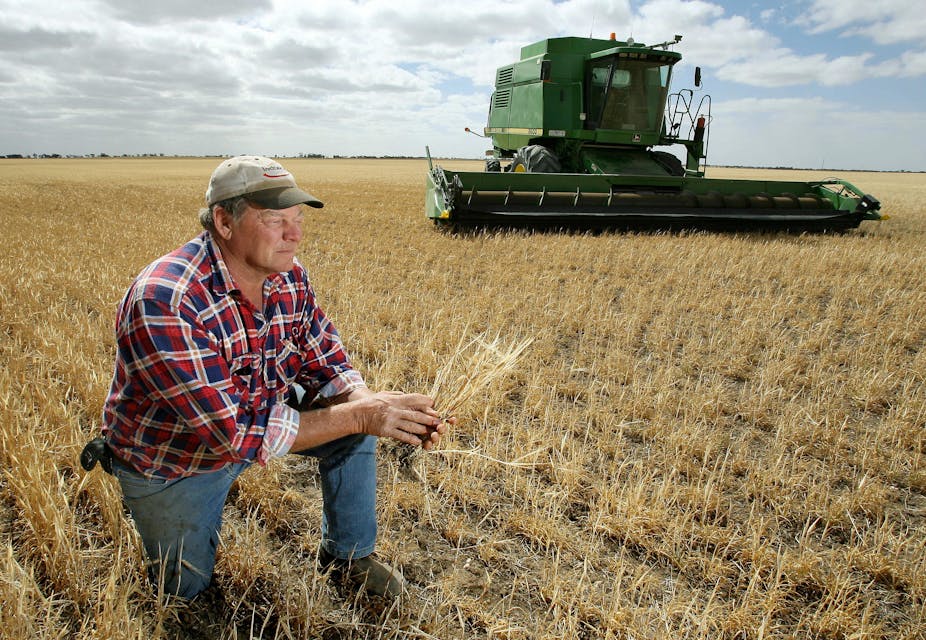
Hot, dry Australia isn’t a great place to grow wheat. AAP

The agricultural use of genetically modified (GM) plants has been a subject of disagreement, debate and bitter conflict around the globe. Sectors of Australian science experienced this recently when field trials of GM wheat were destroyed by protesters.

Why should Australia consider producing GM wheat? Is it a viable solution to the problems it seeks to address?

Why is Australia the place to grow GM wheat?

According to the Food and Agriculture Organization of the United Nations (FAOSTAT), Australia is the ninth-largest wheat producer in the world, in quantity and in value.

Interestingly, the eight countries ranked above Australia not only produce more wheat, they also produce more wheat per hectare.

On average, Australia manages only about half of the yield efficiency of the nine major producers. Of the top 20 wheat producing countries – including Afghanistan – only Kazakhstan has a lower yield efficiency than Australia. None of these countries grows GM wheat.

Clearly it seems that Australia is not an ideal place to grow wheat. That said, Australia is big and flat and therefore easy to mechanise for wheat planting and harvesting.

If the genetic makeup (or genotype) of wheat could be changed so the dry and hot conditions of Australia were to its liking, Australia mightn’t only become a good place to grow wheat, it might even become good at growing it.

GM wheat is still in trial stage in Australia. According to the Office of the Gene Technology Regulator, there have been 11 GM wheat products brought to field trial stage since 2005.

Many of these experimental cultivars are being tested for their “enhanced abiotic stress tolerance”. In other words, they are being tested for their ability to grow better under conditions such as too little water or too much heat.

How have they performed? It might be too early to tell. But over the decades of trialling similar traits, there are no commercially viable abiotic-stress tolerant GM crops, despite well over a thousand approvals for trials in the US alone.

What will make the Australian GM trials different from those already conducted, and failing, elsewhere? Will GM wheat raise Australia’s productivity? Will it raise it faster and more sustainably than alternatives?

Is Australia concentrating on the most important things?

One of the most important conclusions to come out of the International Assessment of Agricultural Knowledge, Science and Technology for Development (IAASTD), was that the goals of breeders – including those who use genetic engineering – take disproportionate resources from the science of the environment.

In other words, while money is being spent on genetic engineering, it’s not being spent on the environmental science that could make it unnecessary.

This means that unless current breeder priorities shift, at some point the soil will be just too dry, too depleted and too toxic for these plants to grow and provide healthy food, no matter what genes are put into them.

To feed the world, funding needs to focus not just on developing new and better agricultural crops, but also on the science and practice of restoring the environmental conditions necessary for crop productivity.

The recently destroyed field trials of GM wheat were not, however, trials with abiotic stress tolerant wheat. They were trials with wheat modified to have an altered starch composition. The idea was that these GM cultivars may contribute to healthier bowels by offering the potential of a white flour with enhanced fibre.

If the cause of bowel disease were simply the consumption of wheat, this advance would be truly welcome. But people have eaten wheat for thousands of years and the diseases of the bowel are a phenomenon of scale only in recent decades, and mainly in wealthy countries.

The problem is arguably not the wheat, but rather the modern diet based on highly processed foods and lacking in whole grains, fresh fruit and vegetables. People need to change their diets, not their wheat.

Nevertheless, the wheat could be considered “innovative” if it is marketed as healthier and attracts a price premium. Unfortunately, real solutions to the problem may not be as easy to sell for monetary profit; although we would all profit from them nonetheless.

What does Australia put at risk?

There is no guarantee that consumers and governments around the world will be as easily sold on the idea that eating GM wheat will cure bowel woes. Beyond not being willing to pay a price premium for the product, there may be outright market rejection or price penalties in export markets. This has indeed been the case with other GM crops.

Australia’s non-GM products bring a high price. They may lose this marketing edge if they are contaminated by GM products through either pollen or seed flow.

Failures to maintain GM crop segregation have caused disruption in many countries, including New Zealand, Canada and the USA. As the contamination of the US rice supply by a non-commercial research line illustrated, even small scale production can cause extensive financial damage.

Given the potential for contamination, Australia could look forward to much more litigation as a result of introducing GM wheat. Consider the Western Australian organic wheat and oat farmer who lost his organic certification when his farm was contaminated by GM canola. He is now suing the GM farmer for compensation.

Indeed, nearly 300,000 organic farmers in the US are also taking legal action against Monsanto over the company’s failure to contain its GM crops.

Attempting to plaster over the complex contextual causes of yield limitations and bowel disease by engineering plants takes resources away from lasting and sustainable solutions and creates new problems.

How should Australia prioritise its spending in science and innovation? What do we want from our agricultural sector? What incentives will help us to achieve its goals?

Answers should be sought in a broad-based and deliberative manner that allows discussions to focus not just on questions of risk and regulation but also on problem formulation and options assessment.

Without this, the future will only involve further protest, more litigation and continued environmental degradation.

Join the conversation

Comments (17)

  1. Permalink
    Mark Carter

    Mark Carter

    (logged in via Facebook)

    I actually liked the article, and although I didn't agree with the author's angle entirely I think the conclusion is mostly valid. This GM product is a dud.
    I'm not a biotech fanboy, but I'm no green luddite either. I am actually in favour of GM technology provided the risks are not just swept under the carpet and that the benefits are tangible and easily outweigh potential problems. I seem to be searching for a GM crop I can support in vain though- so far all proposed for Australia (like the wheat…

    show full comment

    1. Permalink
      David Thompson

      David Thompson

      (Research Officer In Men's Health at University of Western Sydney)

      Mark Carter - Tell me which you would prefer - 10-15 sprays per season over a cotton crop of organophosphate pesticide which kills insects, arachnids and other invertebrates indiscriminately, or a targeted, defined insertion of genes from a bacterial organism that specifically targets the larvae of pests that cause damage. That's genes from the same bacteria approved by the BFA as a spray-on application for home gardeners and organic growers.

      GM enabled the Australian cotton industry to reach where…

      show full comment

  2. Permalink
    Jack Heinemann

    Jack Heinemann

    (Professor of Molecular Biology and Genetics at University of Canterbury)

    Owen Craig questions whether we have a conflict of interest because we both research in the area of biosafety (including conducting research on the safety of GMOs) and work for a public university and a research foundation that is based on public funding. John Nicol accuses us of making a grab for funding that would be in competition with GM wheat researchers.

    Neither the University of Canterbury (JH’s main employer) or GenØk (FW’s employer and where JH has an adjunct position) benefits from producing…

    show full comment

    1. Permalink
      John Nicol

      John Nicol

      (logged in via Facebook)

      Dear Jack,

      I am sorry if I read a little too much into your article concerning research funding, but you had raised the issue your self by suggesting that GM research could be better spent on other environmental projects. I am not here now to defend what I said and I accept your later points.

      However, your questioning of the potential benefits to farmers of the possible outcomes from GM research even if the research to date has been disappointing, seems to represent restrictive thinking, given…

      show full comment

      1. Permalink
        Shirley Birney

        Shirley Birney

        retiree (logged in via email @tpg.com.au)

        @ John Nicol:

        1) “The shifting of livestock from WA to the East had nothing whatsoever to do with GM crops, and is simply a sensible strategy in the case of dry season.”

        Response:

        a) “All things are bound together, all things connect.”

        .Southwest Western Australia had its driest year on record (BoM). SA Agriculture Minister Michael O'Brien said “The movement of sheep and cattle (>1.3 million) from the drought-stricken west to SA and the eastern states is possibly the largest of its kind…

        show full comment

  3. Permalink
    stephen prowse

    stephen prowse

    (logged in via Twitter)

    I still find it surprising that we are still having this discussion. Surely the use of GM crops is a matter of risk and benefit. If a GM wheat variety was developed for Australian conditions that gave significantly greater yields per unit area at a lower cost (including the environmental cost), why would you not grow it? We need to use all the tools available to us to increase crop yields and reduce the impact. GM is one of a range of tools. It seems to me that both agri-business and the organic farming sector (and the environment sector) needs to take a long hard look at the GM issue (again). The agri-business approach still seems to be based on rather odd thinking eg the potential for GM wheat to reduce bowel disease. The organic sector arguments seem to be based on an anti-agribusiness position, not on risks and benefits.

  4. Permalink
    Owen Craig

    Owen Craig

    Communication Manager (logged in via email @csiro.au)

    Dear Editors,
    How can the two authors above declare they are not benefiting in any way from this article,which argues against the use of Gene Technology in Australian wheat research, when they work for (and I’m assuming are paid by) an organisation that: “... focuses in particular on the environmental and health related consequences of the application of gene technology and gene modification. GenØk is also engaged in the broad dissemination of information and offers advisory and consulting services in its field of expertise.” ? Source: http://www.genok.com/about_genok

  5. Permalink
    Shirley Birney

    Shirley Birney

    retiree (logged in via email @tpg.com.au)

    Response to John Nicol’s post continued.........

    It is interesting to note that glyphosate resistant weeds were first discovered in Australia where the G resistant weeds are now on rampage and colonies have increased a hundred fold which are costing a mint. Similar reports around the world on G weed resistance include that of the Missouri Valley Integrated Crop Management in the US:

    As at 2004, “Soybeans acres now are over 80 percent glyphosate tolerant varieties. Resistant horseweed was first…

    show full comment

  6. Permalink
    Jeremy Tager

    Jeremy Tager

    Extispicist (logged in via email @gmail.com)

    It wasn't long ago that GM was the saviour of the world - food security, salinity, drought and even climate change were going to be solved by GM. Now, according the same clan, it is just one more tool in the tool box. The World Bank's assessment of agriculture, on the other hand, suggests that GM is the equivalent to a shotgun in a jeweler's tool box; virtually useless. That's generous. GM and the biotech companies that produce it - are just the opposite of a solution. They are dangerous corporation intent on owning our food supply.

  7. Permalink
    Shirley Birney

    Shirley Birney

    retiree (logged in via email @tpg.com.au)

    The elephant in the GM room is that our scientists are reduced to collaborating with corporations that perpetrate injustice, pollute the environment, and destroy communities.

    Very often those involved in Australia’s biotech industry comment that “if we are to feed the world……”

    Australia already feeds some 60 million people and has no obligation to “feed the world” while it fails to effectively address the dire ramifications of dryland salinity and nutrient poor soils, particularly in WA…

    show full comment

    1. Permalink
      John Nicol

      John Nicol

      (logged in via Facebook)

      Shirley,

      I am not sure if you have any experience at all in farming but what you have described does not indicate a very close relationship with the industry, which is still one of Australia's main export earners and helps to allow Australians to maintain a lifestyle which is the envy of people in most other countries. However, if we do not maintain our advantage in these industries and increase our production, this will be a loss for all of us.
      There is always a risk in any production, even…

      show full comment

  8. Permalink
    Grendels

    Grendels

    (logged in via Twitter)

    I found the article a little disappointing - particularly where it departed into a discussion of whether eating wheat is responsible for bowel disease. It would have been well to focus on the core issue - and on that it fell short also.

    Since the trials are not complete, why try to call "failure". This seems both presumptious and very poor science. Each failure is a lesson to build on, not an indictment of the science.

    Also I have criticism of the comments about funding - I do not think you could say that one branch of science 'takes' funds from another in quite such a sweeping way. In my view all areas of science are drastically underfunded forcing priorities to compete when they should not have to.

    This was an oddly presented and ill-balanced piece, not what I have become used to on The Conversation.

  9. Permalink
    John Nicol

    John Nicol

    (logged in via Facebook)

    Shirley,

    I don't think you have made a case for the direct connection between shipping livestock and the GM debate. That is all I am saying. I don't believe that GM crops lead to WA having its largest shipment of livestock or its major drought last year. Neither can I see any connection between GM and the statement form the manager of Hampton Hill or the drying up of their bores, which does happen in a dry time.

    I would strongly agree that there must be a large separartion between GM crops and…

    show full comment

  10. Permalink
    wilma western

    wilma western

    (logged in via email @bigpond.com)

    Claiming that cattle from pastoral properties have been deprived of water by GM canola growers or other croppers is just ill-informed. Were the crops allegedly irrigated or were they rain fed? The first impact of drought is lack of pasture growth rather than lack of drinking water for stock .Cattle farmers managing drought circumstances have to make decisions well before their cattle start to become too poor in condition . Sell non-breeders or if it's likely to be more profitable, truck them to…

    show full comment

    1. Permalink
      John Nicol

      John Nicol

      (logged in via Facebook)

      Mrs Wilma Western. I agree with you entirely. It is amazing how many people respond to these articles who have little or no understanding of the situation in farming and grazing as well as other aspects of producing food and fibre in the bush. Hopefully comments such as yours do help to educate people a little more provided they are prepared to read and to listen intelligently. The input to farming nowadays by the extension officers you have mentioned reaches out to a lot of people and my experience…

      show full comment

  11. Permalink
    Shirley Birney

    Shirley Birney

    retiree (logged in via email @tpg.com.au)

    Yes well on the other hand, the one million critters that were trucked interstate from WA during the summer months last year were deprived of water for 48 hours. This is standard procedure in the treatment of transboundary livestock. This is an industry that remains unfit to own sentient species and an industry that obscures its cruel practices from the public.

    @ John Nicol: “GM crops are another tool, which when used intelligently, can provide great benefits to both farmers and consumers…

    show full comment